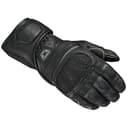
What “CE certified” actually means on a glove
EN 13594:2015 is the European standard for motorcycle gloves, and it is a real test: abrasion, cut, tear, seam strength and impact. A glove that passes gets a level — Level 1 or Level 2— and if it has certified knuckle protection it carries a KP marking on top of that. SATRA, one of the notified bodies that runs the test, publishes the detail if you want it.
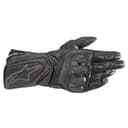
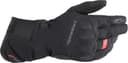
The part that matters to a buyer is the gap between a printed clause and a vibe. Of the five gloves here, two print the whole thing: the SP-8 V3 and the Tourer W-7 V2, which states “CE Certified Category II EN 13594:2015 LEVEL 1 KP” — standard, year, level and KP, all four. Two say “CE Level 1” without citing the EN 13594 test directly. And one — the Cortech Scarab V3 — publishes no EN 13594 certification at all, which is why it ranks last on this page despite having the most hardware per dollar of anything here.
That is not us calling the Scarab a bad glove. It is a goat leather gauntlet with a waterproof membrane, PrimaLoft on both sides of the hand, Superfabric overlays and a four-year warranty for budget money. It is us saying that for a rider’s first pair, a printed certification is worth more than an extra feature, because you do not yet have the experience to judge which features you will use. Our guide to CE armor ratings covers how the same logic applies across the rest of your gear.
Short cuff or gauntlet?
This is the one structural decision on the page, and new riders usually get it by accident rather than on purpose.
A gauntlet cuff goes over your jacket sleeve and covers the wrist. A short cuff stops at or below the wrist bone. The wrist is the joint that takes the load in a fall and the place where a sleeve and a glove can part company and leave skin exposed at exactly the wrong moment. The SP-8 V3, Tourer W-7 and Scarab V3 are gauntlets; the SMX-1 Air V2 and Faster are short.
Short gloves are quicker on and off, cooler, and easier to live with on a fifteen-minute commute — which is a real argument, not a weak one. But if you are buying one pair and you want the coverage, buy the gauntlet.
How much to spend on your first pair
Less than you think, and not nothing. Gloves are the best protection-per-dollar item in a beginner’s kit: a certified pair costs a fraction of a helmet and covers the body part most likely to hit the ground. Our guide to how much to spend on motorcycle gear puts real numbers on the whole head-to-toe setup and explains the allocation order — and gloves are the one item on that list where we would tell you not to buy the cheapest option available.
The specific trap is the $25 unbranded “motorcycle glove” with a plastic knuckle and no published standard anywhere. It is not gear, it is a costume. Every glove on this page is from a maker that publishes a spec sheet you can read, and that is the floor we would set.
What to buy with them
Gloves are one item on a list. If you are building a first kit from scratch, our ATGATT checklist is the head-to-toe order and our budget gear setupis a complete working kit at the lowest sensible money. For the helmet — which is the one item that outranks gloves in priority — start at the best helmets for beginners or our starter helmet guide.
One year on, when you know what sort of rider you actually are, the specialist rankings are there: our winter glove ranking if cold is your problem, our touring glove ranking if long days are, and the general glove ranking if you just want the best pair available.
How we ranked these
On published specifications, read from each maker’s or retailer’s own page on the date recorded in that glove’s write-up above. We have not worn any of these gloves.We own no units, run no lab and have crash-tested nothing — how we reviewsets out the method and its limits in full. Where a maker does not publish a figure, the table says “Not published” rather than supplying a guess. Prices come from a live feed and carry the date they were checked.