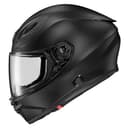
The Lid Test

The Safest Motorcycle Helmets

Nobody can tell you which helmet will save your life. What we can do is rank helmets on the certifications they actually carry — Snell, ECE 22.06, DOT and rotational-management systems — because that is the only part of helmet safety that gets independently tested and published.

By Stephen V.Last verified How we compare

“Safest motorcycle helmet” is the most searched question in this category and the one most sites answer dishonestly. Nobody — not us, not a magazine, not a YouTube channel — can rank helmets by how well they protect a specific head in a specific crash. Impact protection depends on the speed, the angle, the surface and, more than anything, on whether the helmet fits you. What can be ranked is how much independent testing a helmet has been through, and that is exactly what this page does.

Every helmet below is ordered by its certification stack: how many standards it passes, how demanding those standards are, and whether it manages rotational forces as well as straight-line impact. A helmet carrying DOT plus ECE 22.06 plus Snellhas been through three different testing philosophies run by three different organizations. That is a real, verifiable difference from a helmet carrying DOT alone — and it is a difference we can cite rather than assert. Read our safety-ratings guide for what each protocol puts a helmet through.

How this is funded:we earn a commission if you buy through our links, at no extra cost to you. It never changes which helmet we recommend, and we’ll tell you plainly when a cheaper or lighter one is the better buy. Full disclosure.

Quick picks

Ranked on our spec score — certification, weight, features and value. Select a row to jump to the full write-up. We have not tested these helmets; here is exactly how we compare them instead.

#HelmetBest forOur scorePrice
1
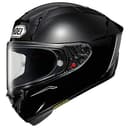
Shoei X-Fifteen

Shoei X-Fifteen

Shoei's race flagship — the Marquez lid — with DOT, ECE 22.06 and Snell M2025R, wind-tunnel aero and seven closable intakes. It is built for a tucked track position, which is exactly why it is not the one to buy for upright commuting.

Most certifications9.0
$979.99 · View on Amazon

Price as of August 31, 2026. #ad How we’re funded

2
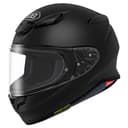
Shoei RF-1400

Shoei RF-1400

The full-face benchmark most riders are quietly measuring everything else against. Snell M2025 plus DOT, a hand-laid AIM+ composite shell, and Shoei's quietest, most refined shield system — it earns the price on the spec sheet, not the badge.

Best Snell road helmet9.3
$541.00 · View on Amazon

Price as of August 31, 2026. #ad How we’re funded

3
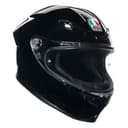
AGV K6 S

AGV K6 S

A carbon-aramid shell at roughly 1,255 g makes the K6 S one of the lightest DOT-and-ECE-22.06 full-faces you can buy, with a genuinely wide 190-degree eye port. If you notice helmet weight on a long day, this is the short list.

Best ECE 22.06 pick9.1
$639.00 · View on Amazon

Price as of August 31, 2026. #ad How we’re funded

4
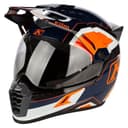
Klim Krios Pro

Klim Krios Pro

The benchmark ADV lid for a reason: a full carbon shell at a published 1,450 g in Large makes it one of the lightest adventure helmets made, and it reconfigures for street, adventure, dual-sport or dirt without buying a second helmet.

Safest adventure helmet9.1
$600.99 · View on Amazon

Price as of August 31, 2026. #ad How we’re funded

5
Scorpion EXO-R430

Scorpion EXO-R430

The budget standout, because it carries the current Snell M2025 on top of DOT — a genuine top-tier impact rating for well under $200. It's also comm-ready with an EXO-COM port, so a Bluetooth setup is a clean add later.

Safest under $2008.1
$184.95 · View on Amazon

Price as of August 31, 2026. #ad How we’re funded

6
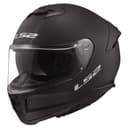
LS2 Stream II

LS2 Stream II

The value pick that punches above its ~$150 price: DOT and ECE 22.06 certification, a built-in drop-down sun visor, and LS2's AREM rotational-energy management — features usually reserved for helmets costing twice as much.

Best budget 22.068.2
$149.98 · View on Amazon

Price as of August 31, 2026. #ad How we’re funded

7
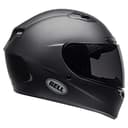
Bell Qualifier DLX MIPS

Bell Qualifier DLX MIPS

The budget helmet that adds MIPS — a rotational-impact system usually found on pricier lids — plus a photochromic shield that tints itself in sunlight. For a first full-face under $350, that combination is hard to argue with.

Best budget MIPS7.9
$228.99 · View on Amazon

$329.9531% off

Price as of August 31, 2026. #ad How we’re funded

The picks in full

#1Most certificationsOur score9.0

Shoei X-Fifteen

Shoei's race flagship — the Marquez lid — with DOT, ECE 22.06 and Snell M2025R, wind-tunnel aero and seven closable intakes. It is built for a tucked track position, which is exactly why it is not the one to buy for upright commuting.

Strengths

  • Triple-certified: DOT, ECE 22.06 and the race-specific Snell M2025R
  • Wind-tunnel aero — Shoei cites a 6.1% drag reduction over the X-14 — with 7 intakes and 6 exhausts
  • Adjustable, replaceable interior and E.Q.R.S. emergency cheek-pad release

Trade-offs

  • Aero and airflow are tuned for a tucked posture; less ideal fully upright
  • One of the most expensive helmets here — you're paying for the race pedigree
CertificationsDOT, ECE 22.06, Snell M2025R
Weight1624 g
ShellAIM+ six-ply matrix (fiberglass with organic and high-performance fibers)
Head shapeIntermediate oval
SizesXS-2XL
Internal sun visorNo
Pinlock-readyYes

Notable. Wind-tunnel aerodynamics; 7 intakes / 6 exhausts; race-position interior

Specs read from the manufacturer / retailer listing, on July 19, 2026. “Not published” means the maker does not state that figure.

#2Best Snell road helmetOur score9.3

Shoei RF-1400

The full-face benchmark most riders are quietly measuring everything else against. Snell M2025 plus DOT, a hand-laid AIM+ composite shell, and Shoei's quietest, most refined shield system — it earns the price on the spec sheet, not the badge.

Strengths

  • Carries both DOT and Snell M2025 — the stricter Snell impact protocol on top of the US legal minimum
  • AIM+ multi-composite shell in multiple sizes keeps the fit true and the weight sensible for a fiberglass lid
  • CWR-F2 shield and vortex generators are aimed squarely at wind noise, the thing most riders complain about

Trade-offs

  • Premium money — you're paying for the shell and finish, not gadgets
  • No drop-down internal sun visor (Shoei's design choice; you swap to a tinted shield instead)
CertificationsDOT, Snell M2025
Weight1651 g
ShellAIM+ multi-composite (interwoven fiberglass and organic fibers)
Head shapeIntermediate oval
SizesXS-3XL
Internal sun visorNo
Pinlock-readyYes

Notable. CWR-F2 shield with vortex generators; 3D Max-Dry liner; emergency quick-release cheek pads

Specs read from the manufacturer / retailer listing, on July 19, 2026. “Not published” means the maker does not state that figure.

#3Best ECE 22.06 pickOur score9.1

AGV K6 S

A carbon-aramid shell at roughly 1,255 g makes the K6 S one of the lightest DOT-and-ECE-22.06 full-faces you can buy, with a genuinely wide 190-degree eye port. If you notice helmet weight on a long day, this is the short list.

Strengths

  • Carbon-aramid shell — AGV's published 1,255 g is class-leadingly light for the segment
  • Certified to ECE 22.06, the newest standard with rotational and multi-point impact testing
  • Ultravision visor gives a 190-degree horizontal field of view and ships Pinlock-ready

Trade-offs

  • No internal sun visor — a tinted shield is a separate purchase
  • Sport-leaning fit and shell shape suit an intermediate-oval head best
CertificationsDOT, ECE 22.06
Weight1255 g
ShellCarbon-aramid fiber
Head shapeIntermediate oval
SizesXS-2XL
Internal sun visorNo
Pinlock-readyYes

Notable. 190-degree Ultravision visor (Optical Class 1); 5-density EPS; ARK comms-ready

Specs read from the manufacturer / retailer listing, on July 19, 2026. “Not published” means the maker does not state that figure.

#4Safest adventure helmetOur score9.1

Klim Krios Pro

The benchmark ADV lid for a reason: a full carbon shell at a published 1,450 g in Large makes it one of the lightest adventure helmets made, and it reconfigures for street, adventure, dual-sport or dirt without buying a second helmet.

Strengths

  • Full carbon shell — 1,450 g in Large is remarkably light for an ADV helmet with a peak
  • DOT and ECE 22.06, plus Koroyd energy-absorbing structure
  • Four ride modes (street, ADV, dual-sport, dirt) and a photochromic shield included

Trade-offs

  • Premium price — you're paying for carbon and versatility
  • No internal sun visor (the photochromic shield does that job instead)
CertificationsDOT, ECE 22.06
Weight1450 g
ShellFull carbon fiber (hand-laid)
Head shapeIntermediate oval
SizesXS-3XL
Internal sun visorNo
Pinlock-readyNo

Notable. Koroyd construction; four ride modes; photochromic shield; goggle-compatible

Specs read from the manufacturer / retailer listing, on July 19, 2026. “Not published” means the maker does not state that figure.

#5Safest under $200Our score8.1

Scorpion EXO-R430

The budget standout, because it carries the current Snell M2025 on top of DOT — a genuine top-tier impact rating for well under $200. It's also comm-ready with an EXO-COM port, so a Bluetooth setup is a clean add later.

Strengths

  • Carries DOT plus the current Snell M2025 — a real, up-to-date Snell rating at a budget price
  • EXO-COM comm-ready port and Bluetooth speaker pockets for an easy comms add
  • Ellip-Tec latching face shield with EverClear anti-fog coating

Trade-offs

  • Polycarbonate shell is heavier (~1,642 g) than a composite helmet
  • Stock shield is EverClear anti-fog, not Pinlock (a Pinlock-prepared shield is sold separately); no internal sun visor
CertificationsDOT, Snell M2025
Weight1642 g
ShellAdvanced polycarbonate
Head shapeIntermediate oval
SizesXS-4XL
Internal sun visorNo
Pinlock-readyNo

Notable. Snell M2025; Ellip-Tec latching shield with EverClear anti-fog; EXO-COM comm-ready

Specs read from the manufacturer / retailer listing, on July 19, 2026. “Not published” means the maker does not state that figure.

#6Best budget 22.06Our score8.2

LS2 Stream II

The value pick that punches above its ~$150 price: DOT and ECE 22.06 certification, a built-in drop-down sun visor, and LS2's AREM rotational-energy management — features usually reserved for helmets costing twice as much.

Strengths

  • ECE 22.06 certified at a budget price — the newest standard, rarely found this cheap
  • Built-in drop-down sun shield, which most premium full-faces here don't have
  • Pinlock-ready face shield and a rear spoiler with flow-through ventilation

Trade-offs

  • Kinetic Polymer Alloy shell is heavier and less premium than a composite lid
  • Fit and finish are good for the price, not flagship-grade
CertificationsDOT, ECE 22.06
Weight1550 g
ShellKinetic Polymer Alloy (KPA)
Head shapeIntermediate oval
SizesXS-3XL
Internal sun visorYes
Pinlock-readyYes

Notable. AREM rotational-energy management; drop-down sun visor; Pinlock-ready shield

Specs read from the manufacturer / retailer listing, on July 19, 2026. “Not published” means the maker does not state that figure.

#7Best budget MIPSOur score7.9

Bell Qualifier DLX MIPS

The budget helmet that adds MIPS — a rotational-impact system usually found on pricier lids — plus a photochromic shield that tints itself in sunlight. For a first full-face under $350, that combination is hard to argue with.

Strengths

  • Includes MIPS, which addresses rotational forces the DOT test alone doesn't
  • ProTint photochromic shield darkens in sun and clears at night — no swapping
  • Comfortable padded wind collar and adjustable ventilation for the money

Trade-offs

  • Only DOT certification was listed on the page we verified (no ECE/Snell stated)
  • Polycarbonate shell; the face shield is not Pinlock-ready
CertificationsDOT
Weight1619 g
ShellPolycarbonate
Head shapeIntermediate oval
SizesXS-3XL
Internal sun visorNo
Pinlock-readyNo

Notable. MIPS rotational system; ProTint photochromic self-tinting shield

Specs read from the manufacturer / retailer listing, on July 19, 2026. “Not published” means the maker does not state that figure.

What “safest” can and cannot mean

Start with the uncomfortable part. In the United States, DOT FMVSS 218 is the legal minimum, and it is largely a self-certification regime: a manufacturer tests to the standard and declares compliance, with NHTSA buying helmets off shelves afterwards to spot-check. That is not nothing, but it is a floor rather than a ranking. Every helmet on this page carries DOT, so DOT alone does not separate them.

What separates them is what sits on top of DOT. ECE 22.06, the current European regulation, is verified by an approval authority before a helmet may be sold, and its revision of the older 22.05 added the things that protocol missed: oblique impacts that measure rotational acceleration, impacts at multiple speeds, tests at more points on the shell, and accessory testing for sun visors. Snell M2025is different again — a voluntary, privately-run standard from the Snell Memorial Foundation with higher impact energies and a random-sample program that pulls certified helmets from the market and retests them. A helmet that carries both has satisfied two organizations that disagree with each other about how to test.

The honest limit: none of these standards ranks helmets against each other.They are pass/fail. A helmet that passes Snell M2025 by a hair and one that sails through it are both simply “Snell M2025”. The only public program that produces a comparative score is the UK government’s SHARP five-star rating, and it tests a UK-market sample that does not map cleanly onto US models. So this ranking is “most thoroughly certified”, not “most protective”. Anyone claiming the second thing is inventing it.

Rotational protection: the axis that changed

For decades helmet testing measured a straight drop onto a flat anvil. Real crashes are angled, and an angled impact twists the head as well as compressing it — which is the mechanism behind a large share of serious brain injury. Two things on this list address it. MIPS is a low-friction liner that lets the shell rotate a few millimeters relative to your head, shedding some of that twist; it is the reason the budget Bell Qualifier DLX earns a place here at all. ECE 22.06attacks the same problem from the regulatory side by testing oblique impacts directly, so a 22.06 helmet has had its rotational behavior measured whether or not it uses a branded system. LS2’s AREM liner and the multi-density EPS in several picks are manufacturers’ own answers to it.

Reading the ranking

The Shoei X-Fifteen tops the list on paperwork alone: DOT, ECE 22.06 andSnell M2025R, which is the rare triple. It is also a $980 race helmet built for a tucked riding position, so treat it as the certification ceiling rather than a recommendation for a commuter — our track-day roundup is where it belongs. The Shoei RF-1400 is the version of that answer most road riders actually want: DOT plus Snell M2025 in a hand-laid composite shell designed for upright riding.

The AGV K6 Srepresents the other testing philosophy — DOT plus ECE 22.06, with a published 1,255 g carbon-aramid shell. Weight belongs in a safety conversation: a lighter helmet puts less load through your neck in an impact and is less tiring to wear, and fatigue is its own hazard. The Klim Krios Pro carries 22.06 in an adventure shell with Koroyd crushable tubing alongside conventional EPS, and it is the pick if your riding takes you off pavement.

The bottom three are the point of this page. The Scorpion EXO-R430 carries a current Snell M2025rating for well under $200 — the single best certification-per-dollar answer on the site, in a polycarbonate shell that weighs more than the composites above it. The LS2 Stream II brings ECE 22.06 and an AREM rotational liner at a similar price, plus a drop-down sun visor the Scorpion lacks. The Bell Qualifier DLXhas neither Snell nor ECE on its US listing, but it does have MIPS — and for a first helmet, a rotational system you can afford beats a Snell rating you cannot. See the budget roundup for the wider value field.

The two things that outrank every certification

Fit. A helmet that is a half-size too large moves on your head during an impact and stops managing energy the way it was tested to. A correctly sized DOT helmet protects better than a loose Snell one, and this is not a close call. Measure your circumference and identify your head shapebefore you shortlist anything, and fasten the strap properly — our guide on wearing a helmet correctly covers the mistakes that leave a good lid useless.

Age.Certification is a snapshot of the day the helmet was made. EPS liners compress, adhesives age and the shell absorbs UV, which is why the industry consensus is a five-year replacement cycle and an immediate replacement after any impact. Every helmet has its manufacture date stamped inside it — here is how to find and read it, and when to act on it. A ten-year-old Snell helmet is not a safe helmet.

Frequently asked questions

What is the safest motorcycle helmet standard?

There is no single 'safest' standard, because they test different things. ECE 22.06 is the most comprehensive regulatory standard — it is verified by an approval authority before sale and tests oblique (rotational) impacts, multiple speeds and multiple shell points. Snell M2025 uses higher impact energies and is the only program that buys certified helmets off the shelf and retests them. DOT is the US legal minimum and is largely self-certified. A helmet carrying DOT plus ECE 22.06 plus Snell has satisfied three different testing philosophies, which is the most verification you can get.

Is a more expensive helmet safer?

Not directly. Price mostly buys shell material, weight, quiet, ventilation and finish rather than certification. The Scorpion EXO-R430 on this list carries a current Snell M2025 rating for under $200, while plenty of $500 helmets carry DOT alone. What money reliably buys is a lighter composite shell — which reduces neck loading and fatigue — and a helmet you are more willing to wear on every ride. Buy on certification and fit first, then spend what is left on weight and comfort.

Do I need a Snell-rated helmet for street riding?

No. Snell is a voluntary standard originally aimed at racing, and most track organizations that require it accept ECE 22.06 too. For street riding, a current ECE 22.06 helmet has been tested against rotational and multi-point impacts that Snell's protocol does not emphasize, so it is not a step down. Treat Snell as additional evidence rather than a requirement — and if a helmet carries both, that is genuinely more testing than either alone.

Does MIPS make a helmet safer?

MIPS addresses rotational force, which straight-line impact testing historically ignored and which is implicated in a large share of serious brain injury. The low-friction layer lets the shell move slightly relative to your head during an angled impact. Whether that translates into a measurable real-world injury reduction is still debated, but the mechanism is sound and independently tested. On a budget helmet like the Bell Qualifier DLX it is a genuine reason to choose that helmet over an equally-priced one without it.

How can I tell if a helmet is really certified?

Look for physical labels, not marketing copy. A DOT helmet carries the DOT FMVSS 218 sticker on the back of the shell. An ECE helmet has a white sewn label inside the chin strap showing the regulation number (22-06 or 22-05) and an approval code. A Snell helmet carries a Snell sticker inside the shell, and the Snell Memorial Foundation publishes a searchable list of certified models on its own site. Novelty helmets sold with fake DOT stickers exist — if the shell is unusually thin and the price is implausible, it is not certified.

Is a full-face helmet safer than a modular?

A full-face has no hinge, so it is structurally simpler and typically lighter, and it is the conservative choice. But a modular certified to ECE 22.06 has been tested with the chin bar in the closed position and, where it carries the dual P/J marking, in the open position too. The difference for a well-certified modular is smaller than the internet suggests — we work through the evidence in our guide on whether modular helmets are as safe as full-face.

Sources

Keep reading