How we ranked these
Vent count and vent architecture first.A helmet with seven intakes and six exhausts is not marginally better ventilated than one with two and one — it is a different design brief. We took the intake and exhaust counts each maker publishes, and gave weight to helmets whose shells are built around airflow rather than having vents added to a closed shape.
Weight second.Composite and carbon shells run several hundred grams lighter than polycarbonate, and on a 95-degree day that difference stops being abstract. A 1,255 g helmet after two hours in traffic is a materially different experience from an 1,800 g one. Every weight we quote comes from the manufacturer’s own page.
Configuration third.The most effective hot-weather feature is not a vent at all — it is the ability to open the helmet up when you are moving slowly enough that no vent can help. Below roughly 25 mph there is not enough dynamic pressure to drive meaningful airflow through any full-face, which is why a removable chin bar earns a place here on its own merits.
Match the pick to your summer
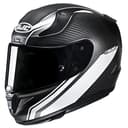
The HJC RPHA 11 Prois our overall pick because it is the best balance of the three criteria. HJC’s ACS full-airflow system is a front-to-back airflow path rather than a set of holes, the PIM+ carbon-fiberglass-aramid shell keeps it at a published 1,417 g, and it costs meaningfully less than the flagships — more so now that HJC has replaced it with the ECE 22.06 RPHA 12 and the 11 Pro has become the outgoing generation. It is the summer helmet we would put most riders in, and the RPHA 11 Pro against the AGV K6 S is the comparison worth reading before you commit.
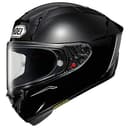
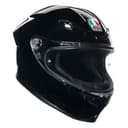
The Shoei X-Fifteenhas the most ventilation on this page by a distance — seven intake vents and six exhaust vents, developed in Shoei’s own wind tunnel for riders working hard in a tucked position. It is also a $980 race helmet with a race interior, so it is the right answer for hot track days and the wrong one for a commute. The AGV K6 S takes the weight route instead: at a published 1,255 g of carbon-aramid it is the lightest lid we rank, and its 190-degree eye port means more open air across your face. It carries ECE 22.06.
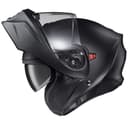
The Scorpion EXO-GT930 Transformeris on this list for a reason no vent count captures: the chin bar comes off. In stop-and-go summer traffic, where no full-face ventilates because you are not moving fast enough to force air through it, running as an open-face is the only thing that genuinely works — then the chin bar goes back on for the highway leg. It is heavy and it is polycarbonate, and it is still the most effective hot-weather helmet here for city riding. Riders on cruisers should also see the cruiser roundup.
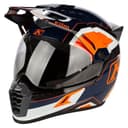
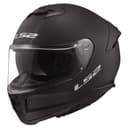
For riding that leaves pavement, the Klim Krios Pro is the answer: adventure helmets are the best-ventilated category in motorcycling because they are designed for slow, hot, high-effort riding, and the Krios Pro adds a hand-laid carbon shell with Koroyd tubing and four configurable ride modes at a published 1,450 g. And the LS2 Stream IIis the budget pick — a drop-down sun visor matters more in summer than in any other season, and getting that plus ECE 22.06 for under $200 is the sensible answer for a second summer lid. The wider value field is in the budget roundup.
What actually keeps you cool, in order
Ride when it is cooler, and hydrate before you are thirsty. No helmet solves noon in July. Heat exhaustion on a bike is a genuine crash risk and it arrives as poor judgment before it arrives as discomfort.
Open every vent, and check they are open. Vent sliders get closed in winter and stay closed. It sounds trivial; it is the single most common reason a well-ventilated helmet performs like a sealed one.
Wear a thin balaclava or skull cap.Counter-intuitive, but a wicking layer moves sweat off your scalp to where moving air can evaporate it, instead of letting it pool in the comfort liner. It also keeps the liner cleaner, which matters more in summer than at any other time — our cleaning guide covers washing one properly.
Do not size up for comfort.The instinct in heat is to buy a looser helmet. A loose helmet is louder, moves on your head, and protects worse — and it does not run cooler, because airflow is driven by the vent channels, not by slack around your ears. Get the size right and let the vents do the work.
The helmet is one item. Our guide to what to wear on a motorcycle in summer covers the rest of the kit on the same principle — mesh and a damp wicking layer beat bare skin once the air is hotter than you are — and our open-face vs full-face comparison is the one to read before you trade a chin bar for airflow.