The Lid Test

The Best Motorcycle Helmets for Beginners

Certified, comfortable, sensibly-priced first helmets — the ones that get the protection right without draining the budget you just spent on the bike.

By Stephen V.Last verified How we compare

A first helmet has one job: protect your head properly without costing so much that you skimp on the rest of your gear. New riders don’t need a $600 flagship—the protection standard a budget helmet is tested to is the same one the flagship meets. What the premium money buys is lower weight, less wind noise and nicer materials, and those are upgrades you can make later, once you know you’re sticking with riding.

So we picked beginner helmets on certification (all meet DOT, and we favored ones that add ECE 22.06, Snell or MIPS), comfort and fit, useful beginner-friendly features (a sun visor, a self-tinting shield, built-in comms), and a sensible live price. The Bell Qualifier DLX wins overall because it puts MIPS and a photochromic shield into a genuinely affordable helmet. But all four are helmets we’d happily hand a new rider. Get the fit right first—it matters more than which of these you pick.

How this is funded:we earn a commission if you buy through our links, at no extra cost to you. It never changes which helmet we recommend, and we’ll tell you plainly when a cheaper or lighter one is the better buy. Full disclosure.

Quick picks

Ranked on our spec score — certification, weight, features and value. Select a row to jump to the full write-up. We have not tested these helmets; here is exactly how we compare them instead.

#HelmetBest forOur scorePrice
1
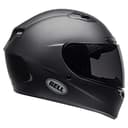
Bell Qualifier DLX MIPS

Bell Qualifier DLX MIPS

The budget helmet that adds MIPS — a rotational-impact system usually found on pricier lids — plus a photochromic shield that tints itself in sunlight. For a first full-face under $350, that combination is hard to argue with.

Best overall for beginners7.9
$230.99 · View on Amazon

$329.9530% off

Price as of July 20, 2026. #ad How we’re funded

2
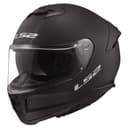
LS2 Stream II

LS2 Stream II

The value pick that punches above its ~$150 price: DOT and ECE 22.06 certification, a built-in drop-down sun visor, and LS2's AREM rotational-energy management — features usually reserved for helmets costing twice as much.

Best budget8.2
$149.98 · View on Amazon

Price as of July 20, 2026. #ad How we’re funded

3
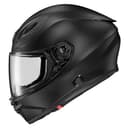
Scorpion EXO-R430

Scorpion EXO-R430

The budget standout, because it carries the current Snell M2025 on top of DOT — a genuine top-tier impact rating for well under $200. It's also comm-ready with an EXO-COM port, so a Bluetooth setup is a clean add later.

Best safety-per-dollar8.1
$184.95 · View on Amazon

Price as of July 20, 2026. #ad How we’re funded

4
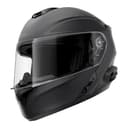
Sena Outrush R

Sena Outrush R

The shortcut to a helmet-and-comms setup: the Outrush R builds Bluetooth speakers, a mic and a 4-way intercom into the shell, so there is no external unit to buy, clamp on or charge separately. DOT-certified, with a sun visor, at a single sensible price.

Best all-in-one8.1
$315.92 · View on Amazon

$359.0012% off

Price as of July 20, 2026. #ad How we’re funded

The picks in full

#1Best overall for beginnersOur score7.9

Bell Qualifier DLX MIPS

The budget helmet that adds MIPS — a rotational-impact system usually found on pricier lids — plus a photochromic shield that tints itself in sunlight. For a first full-face under $350, that combination is hard to argue with.

Strengths

  • Includes MIPS, which addresses rotational forces the DOT test alone doesn't
  • ProTint photochromic shield darkens in sun and clears at night — no swapping
  • Comfortable padded wind collar and adjustable ventilation for the money

Trade-offs

  • Only DOT certification was listed on the page we verified (no ECE/Snell stated)
  • Polycarbonate shell; the face shield is not Pinlock-ready
CertificationsDOT
Weight1619 g
ShellPolycarbonate
Head shapeIntermediate oval
SizesXS-3XL
Internal sun visorNo
Pinlock-readyNo

Notable. MIPS rotational system; ProTint photochromic self-tinting shield

Specs read from the manufacturer / retailer listing, on July 19, 2026. “Not published” means the maker does not state that figure.

#2Best budgetOur score8.2

LS2 Stream II

The value pick that punches above its ~$150 price: DOT and ECE 22.06 certification, a built-in drop-down sun visor, and LS2's AREM rotational-energy management — features usually reserved for helmets costing twice as much.

Strengths

  • ECE 22.06 certified at a budget price — the newest standard, rarely found this cheap
  • Built-in drop-down sun shield, which most premium full-faces here don't have
  • Pinlock-ready face shield and a rear spoiler with flow-through ventilation

Trade-offs

  • Kinetic Polymer Alloy shell is heavier and less premium than a composite lid
  • Fit and finish are good for the price, not flagship-grade
CertificationsDOT, ECE 22.06
Weight1550 g
ShellKinetic Polymer Alloy (KPA)
Head shapeIntermediate oval
SizesXS-3XL
Internal sun visorYes
Pinlock-readyYes

Notable. AREM rotational-energy management; drop-down sun visor; Pinlock-ready shield

Specs read from the manufacturer / retailer listing, on July 19, 2026. “Not published” means the maker does not state that figure.

#3Best safety-per-dollarOur score8.1

Scorpion EXO-R430

The budget standout, because it carries the current Snell M2025 on top of DOT — a genuine top-tier impact rating for well under $200. It's also comm-ready with an EXO-COM port, so a Bluetooth setup is a clean add later.

Strengths

  • Carries DOT plus the current Snell M2025 — a real, up-to-date Snell rating at a budget price
  • EXO-COM comm-ready port and Bluetooth speaker pockets for an easy comms add
  • Ellip-Tec latching face shield with EverClear anti-fog coating

Trade-offs

  • Polycarbonate shell is heavier (~1,642 g) than a composite helmet
  • Stock shield is EverClear anti-fog, not Pinlock (a Pinlock-prepared shield is sold separately); no internal sun visor
CertificationsDOT, Snell M2025
Weight1642 g
ShellAdvanced polycarbonate
Head shapeIntermediate oval
SizesXS-4XL
Internal sun visorNo
Pinlock-readyNo

Notable. Snell M2025; Ellip-Tec latching shield with EverClear anti-fog; EXO-COM comm-ready

Specs read from the manufacturer / retailer listing, on July 19, 2026. “Not published” means the maker does not state that figure.

#4Best all-in-oneOur score8.1

Sena Outrush R

The shortcut to a helmet-and-comms setup: the Outrush R builds Bluetooth speakers, a mic and a 4-way intercom into the shell, so there is no external unit to buy, clamp on or charge separately. DOT-certified, with a sun visor, at a single sensible price.

Strengths

  • Bluetooth 5.1 comms are built in — speakers, mic and a 4-way ~900 m intercom, up to 18 hours talk
  • One purchase covers helmet plus comms; nothing to clamp to the side
  • Includes a drop-down sun visor

Trade-offs

  • Polycarbonate shell; DOT listed but no ECE/Snell on the pages we verified
  • Built-in comms means you can't swap to a Cardo mesh system later
CertificationsDOT
Weight1730 g
ShellPolycarbonate ABS with multi-density EPS
Head shapeIntermediate oval
SizesS-2XL
Internal sun visorYes
Pinlock-readyNo

Notable. Integrated Bluetooth 5.1 comms (4-way intercom, ~900 m, 18 h talk); sun visor

Specs read from the manufacturer / retailer listing, on July 19, 2026. “Not published” means the maker does not state that figure.

What actually matters for a first helmet

Certification, then fit.Never buy an uncertified novelty helmet. Beyond the DOT minimum, extras like ECE 22.06 (the LS2 Stream II), current Snell (the Scorpion EXO-R430) or MIPS (the Bell Qualifier DLX) mean the shell has been vetted against rotational forces the basic test doesn’t cover. Then get the size and head shape right—a helmet that doesn’t fit protects worse than a cheaper one that does.

Prioritize features that reduce hassle.As a new rider, you have enough to think about. A drop-down sun visor (LS2 Stream II) or a self-tinting photochromic shield (Bell Qualifier DLX) means one less thing to manage when the sun drops. Built-in comms (Sena Outrush R) keeps navigation prompts in your ear so you’re not stopping to check your phone.

Don’t overspend on the helmet at the expense of the rest. The money you save here should go toward gloves, a jacket with armor, and boots. A great helmet and bare hands is a worse setup than a good helmet and full gear. Our first-gear checklist builds the whole kit head to toe.

Frequently asked questions

How much should a beginner spend on a motorcycle helmet?

Enough for a certified, well-fitting helmet — but you don't need a flagship. A good beginner helmet with current certification costs a fraction of a premium lid and passes the same safety tests. Spend what you save on gloves, an armored jacket and boots, because a great helmet with no other gear is a worse setup than a solid helmet with full protection.

What certification should a beginner's helmet have?

At minimum, DOT — it's the US legal requirement. Better still is a helmet that also carries ECE 22.06 or Snell, or includes MIPS, because those add testing for the rotational forces a basic impact test doesn't cover. Every pick in this list clears DOT and most add one of those extra layers.

Is a full-face helmet best for a beginner?

Generally, yes. A full-face gives a new rider the most coverage and the best protection for the face and chin, which take the first hit in many falls. Modular and Bluetooth options are fine too — the Sena Outrush R here is a modular with built-in comms — but a well-fitting full-face is the safe default for a first helmet.

How do I know a beginner helmet fits correctly?

It should be snug enough to move your scalp when you shift it, not slide on your skin, with even pressure and no hard spots. It shouldn't rock forward or lift off when fastened. Getting the size and head shape right is the single most important step — our helmet sizing guide walks through measuring and reading head shape.

Sources

Keep reading