The Lid Test

The Best Motorcycle Helmets for Touring

A touring helmet is judged on the things that only show up after hour three: how quiet it is, whether it has a sun visor, how cleanly it takes comms, how it breathes, and how much it weighs on your neck at the end of a 400-mile day.

By Stephen V.Last verified How we compare

Touring asks more of a helmet than any other kind of riding, because you wear it longer. A helmet that feels fine for a 30-minute commute can become a headache, literally, on the third hour of a highway slab. So the criteria that decide a touring helmet are different from the ones that sell a track lid: quiet comes first, then a drop-down sun visorso you aren’t swapping shields at every fuel stop, then clean comms integration for music and group talk over long distances, then ventilation for the hot middle of the day, and only then weight and price.

That criteria set is why modular helmets dominate this list. Flipping the chin bar up at a gas stop, a toll booth or a photo pause without unstrapping is a genuine touring convenience, and the best touring modulars are engineered hard enough around sealing that they rival full-faces for quiet. But a full-face still earns a place here for riders who want the lightest, quietest single-piece shell and don’t care about flipping it open. Every helmet below is certified for US street use, and every spec we cite is read from the manufacturer or retailer page it links to. We don’t run a wind tunnel or a lab, so we rank on the design features that produce a good touring helmet, not on a comfort score we invented.

How this is funded:we earn a commission if you buy through our links, at no extra cost to you. It never changes which helmet we recommend, and we’ll tell you plainly when a cheaper or lighter one is the better buy. Full disclosure.

Quick picks

Ranked on our spec score — certification, weight, features and value. Select a row to jump to the full write-up. We have not tested these helmets; here is exactly how we compare them instead.

#HelmetBest forOur scorePrice
1
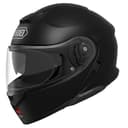
Shoei Neotec 3

Shoei Neotec 3

The touring modular the class is measured against. DOT and ECE 22.06, an AIM composite shell, a bigger QSV-2 sun visor and a Defogger-equipped shield — plus the cleanest integration for Shoei's own comms system. It is expensive and worth understanding why.

Best overall for touring9.2
$942.85 · View on Amazon

Price as of August 8, 2026. #ad How we’re funded

2
Shoei RF-1400

Shoei RF-1400

The full-face benchmark most riders are quietly measuring everything else against. Snell M2025 plus DOT, a hand-laid AIM+ composite shell, and Shoei's quietest, most refined shield system — it earns the price on the spec sheet, not the badge.

Best full-face9.3
$541.75 · View on Amazon

Price as of August 8, 2026. #ad How we’re funded

3
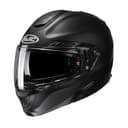
HJC RPHA 91

HJC RPHA 91

HJC's composite touring modular splits the difference: a P.I.M. EVO carbon-blend shell and a drop-down sun visor at a mid price, ready for HJC's own SMART Bluetooth. Not as quiet as a Schuberth, a lot cheaper than one.

Best value modular8.5
$559.99 · View on Amazon

Price as of August 8, 2026. #ad How we’re funded

4
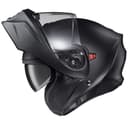
Sena Outrush R

Sena Outrush R

The shortcut to a helmet-and-comms setup: the Outrush R builds Bluetooth speakers, a mic and a 4-way intercom into the shell, so there is no external unit to buy, clamp on or charge separately. DOT-certified, with a sun visor, at a single sensible price.

Best with built-in comms8.1
$359.00 · View on Amazon

Price as of August 8, 2026. #ad How we’re funded

5
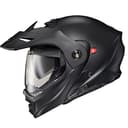
Scorpion EXO-AT960

Scorpion EXO-AT960

The Swiss-army ADV lid on a budget: it's modular AND adventure — flip-up chin bar, drop-down sun visor, removable peak — so it works as a touring modular or a dirt-road adventure helmet. DOT and ECE 22.06 for around $300.

Best adventure-touring8.0
$329.95 · View on Amazon

Price as of August 8, 2026. #ad How we’re funded

6
Scorpion EXO-GT930 Transformer

Scorpion EXO-GT930 Transformer

The trick here is a genuinely removable chin bar — the GT930 runs as a full-face or, with the bar off, a proper open-face, which few modulars actually allow. Add a sun visor and a sub-$300 price and it's the value convertible.

Best budget7.9
$279.95 · View on Amazon

Price as of August 8, 2026. #ad How we’re funded

The picks in full

#1Best overall for touringOur score9.2

Shoei Neotec 3

The touring modular the class is measured against. DOT and ECE 22.06, an AIM composite shell, a bigger QSV-2 sun visor and a Defogger-equipped shield — plus the cleanest integration for Shoei's own comms system. It is expensive and worth understanding why.

Strengths

  • DOT and ECE 22.06 in a composite AIM shell — not the polycarbonate most modulars use
  • QSV-2 internal sun visor is larger than the old QSV-1, and the CNS-3C shield is Pinlock-ready with a defogger
  • Purpose-built channel for the SRL3/COMLINK comms unit — no bulky external clamp

Trade-offs

  • The most expensive modular here by a wide margin
  • Comms unit is a separate, Shoei-specific purchase
CertificationsDOT, ECE 22.06
Weight1700 g
ShellAIM composite
Head shapeIntermediate oval
SizesXS-2XL
Internal sun visorYes
Pinlock-readyYes

Notable. QSV-2 sun visor; CNS-3C Pinlock shield with defogger; SRL3/COMLINK-ready

Specs read from the manufacturer / retailer listing, on July 19, 2026. “Not published” means the maker does not state that figure.

#2Best full-faceOur score9.3

Shoei RF-1400

The full-face benchmark most riders are quietly measuring everything else against. Snell M2025 plus DOT, a hand-laid AIM+ composite shell, and Shoei's quietest, most refined shield system — it earns the price on the spec sheet, not the badge.

Strengths

  • Carries both DOT and Snell M2025 — the stricter Snell impact protocol on top of the US legal minimum
  • AIM+ multi-composite shell in multiple sizes keeps the fit true and the weight sensible for a fiberglass lid
  • CWR-F2 shield and vortex generators are aimed squarely at wind noise, the thing most riders complain about

Trade-offs

  • Premium money — you're paying for the shell and finish, not gadgets
  • No drop-down internal sun visor (Shoei's design choice; you swap to a tinted shield instead)
CertificationsDOT, Snell M2025
Weight1651 g
ShellAIM+ multi-composite (interwoven fiberglass and organic fibers)
Head shapeIntermediate oval
SizesXS-3XL
Internal sun visorNo
Pinlock-readyYes

Notable. CWR-F2 shield with vortex generators; 3D Max-Dry liner; emergency quick-release cheek pads

Specs read from the manufacturer / retailer listing, on July 19, 2026. “Not published” means the maker does not state that figure.

#3Best value modularOur score8.5

HJC RPHA 91

HJC's composite touring modular splits the difference: a P.I.M. EVO carbon-blend shell and a drop-down sun visor at a mid price, ready for HJC's own SMART Bluetooth. Not as quiet as a Schuberth, a lot cheaper than one.

Strengths

  • P.I.M. EVO shell blends carbon, glass and linen fibers — lighter than a polycarbonate modular
  • Drop-down sun visor and a Pinlock-ready face shield included
  • Purpose-made for the SMART HJC 21B/50B Bluetooth units

Trade-offs

  • The page we verified listed DOT only (no ECE/Snell stated)
  • Comms is HJC-specific; heavier than the flagship composites
CertificationsDOT
Weight1742 g
ShellP.I.M. EVO (carbon, carbon-glass and linen fiber)
Head shapeIntermediate oval
SizesXS-2XL
Internal sun visorYes
Pinlock-readyYes

Notable. Drop-down sun visor; Pinlock-ready shield; SMART HJC Bluetooth-ready

Specs read from the manufacturer / retailer listing, on July 19, 2026. “Not published” means the maker does not state that figure.

#4Best with built-in commsOur score8.1

Sena Outrush R

The shortcut to a helmet-and-comms setup: the Outrush R builds Bluetooth speakers, a mic and a 4-way intercom into the shell, so there is no external unit to buy, clamp on or charge separately. DOT-certified, with a sun visor, at a single sensible price.

Strengths

  • Bluetooth 5.1 comms are built in — speakers, mic and a 4-way ~900 m intercom, up to 18 hours talk
  • One purchase covers helmet plus comms; nothing to clamp to the side
  • Includes a drop-down sun visor

Trade-offs

  • Polycarbonate shell; DOT listed but no ECE/Snell on the pages we verified
  • Built-in comms means you can't swap to a Cardo mesh system later
CertificationsDOT
Weight1730 g
ShellPolycarbonate ABS with multi-density EPS
Head shapeIntermediate oval
SizesS-2XL
Internal sun visorYes
Pinlock-readyNo

Notable. Integrated Bluetooth 5.1 comms (4-way intercom, ~900 m, 18 h talk); sun visor

Specs read from the manufacturer / retailer listing, on July 19, 2026. “Not published” means the maker does not state that figure.

#5Best adventure-touringOur score8.0

Scorpion EXO-AT960

The Swiss-army ADV lid on a budget: it's modular AND adventure — flip-up chin bar, drop-down sun visor, removable peak — so it works as a touring modular or a dirt-road adventure helmet. DOT and ECE 22.06 for around $300.

Strengths

  • Modular flip-up chin bar plus a removable ADV peak — two helmets in one
  • Drop-down SpeedView sun visor and an EverClear fog-free shield
  • DOT and ECE 22.06 at a budget price

Trade-offs

  • Polycarbonate shell is heavy (~1,858 g in M) — the heaviest lid here
  • Jack-of-all-trades design isn't as focused as a dedicated street or dirt helmet
CertificationsDOT, ECE 22.06
Weight1858 g
ShellAdvanced LG polycarbonate
Head shapeIntermediate oval
SizesXS-3XL
Internal sun visorYes
Pinlock-readyNo

Notable. Modular flip-up chin bar; SpeedView sun visor; removable ADV peak

Specs read from the manufacturer / retailer listing, on July 19, 2026. “Not published” means the maker does not state that figure.

#6Best budgetOur score7.9

Scorpion EXO-GT930 Transformer

The trick here is a genuinely removable chin bar — the GT930 runs as a full-face or, with the bar off, a proper open-face, which few modulars actually allow. Add a sun visor and a sub-$300 price and it's the value convertible.

Strengths

  • Removable chin bar converts between full-face and open-face configurations
  • SpeedView drop-down internal sun visor and EXO-COM Bluetooth-ready pockets
  • DOT and ECE 22.05 certified at a budget price; includes a detachable peak

Trade-offs

  • Certified to the older ECE 22.05, not 22.06
  • Polycarbonate shell is heavy (~1,814 g) — one of the weightier lids here
CertificationsDOT, ECE 22.05
Weight1814 g
ShellAdvanced polycarbonate
Head shapeIntermediate oval
SizesXS-3XL
Internal sun visorYes
Pinlock-readyNo

Notable. Removable chin bar (full-face to open-face); SpeedView sun visor; EXO-COM-ready

Specs read from the manufacturer / retailer listing, on July 19, 2026. “Not published” means the maker does not state that figure.

How we ranked these

Noise.Wind noise is the number-one long-distance complaint, and at a sustained 75 mph it isn’t just tiring — it damages hearing over the years. A padded wind collar that seals the gap under your chin, tight shield seals and an aero shell all cut it. The quietest-helmet ranking goes deeper on this, and the honest note there applies here too: a good set of earplugs cuts more noise than the difference between any two helmets on this page.

Sun visor.A built-in drop-down sun shield is close to essential for touring, because you ride into low morning and evening sun for hours and you don’t want to carry a second tinted shield to swap in a parking lot. Most of the picks here have one; the premium full-faces deliberately don’t, expecting you to fit a tinted shield instead.

Comms. Long days are where a good intercomearns its keep — music, turn-by-turn navigation and talking to the riders you’re with. Some helmets here build the comms in; others leave a clean, purpose-shaped recess for a Cardo or Sena unit. Either is fine; a helmet that fights the install is not.

Ventilation and weight.A touring helmet has to move air on a slow, hot afternoon and stay light enough that your neck isn’t sore by evening. Composite and carbon shells are lighter than polycarbonate, which is the single biggest comfort difference over a long day.

The touring modular case, briefly

If you only tour, buy a modular. The flip-up chin bar is the feature you use constantly — talking to a passenger, ordering food, cooling off at a stop, drinking water — without removing the helmet or your glasses. The old knock on modulars was noise and weight from the hinge mechanism, and it’s still true at the budget end, but a premium touring modular like the Shoei Neotec 3 is sealed and quiet enough that most riders never miss a full-face. The trade-off is money and a little weight; the payoff is convenience you feel at every single stop.

The exception is the rider who wants the outright lightest, quietest lid and is happy to fully remove it at stops. For them a full-face like the RF-1400is lighter and has one fewer seam for air to find. It’s the purist’s touring helmet.

Match the pick to your trip

The Shoei Neotec 3is the touring benchmark and our overall pick: a composite shell, a large sun visor and the cleanest integration for Shoei’s SRL comms in the category, engineered around sealing so it stays quiet at speed. It is flagship money, and worth it if you tour enough to live in it. The Shoei RF-1400is the full-face answer — lighter and quieter still, with DOT and Snell M2025, for the rider who’d rather remove the helmet than flip it.

The HJC RPHA 91is the value modular: a composite P.I.M. EVO shell and a drop-down sun visor at a mid price, ready for HJC’s own SMART Bluetooth units. It gives up some of the Neotec’s refinement and, on the page we verified, listed DOT only rather than dual certification — but it covers the touring essentials for meaningfully less. The Sena Outrush Ris the all-in-one: a modular with Bluetooth speakers, a mic and a four-way intercom built into the shell, so your comms and helmet are a single purchase and there’s nothing to clamp on. It also includes a sun visor. The catch is that you can’t later swap to a Cardo mesh system, so it suits riders whose groups run Sena or who mostly ride two-up.

The Scorpion EXO-AT960is the pick if your touring includes gravel and fire roads: it’s a modular andan adventure helmet, with a flip-up chin bar, a drop-down sun visor and a removable peak, carrying DOT and ECE 22.06. It’s heavy, but it’s two helmets in one. And the Scorpion EXO-GT930 is the budget touring modular: a genuinely removable chin bar lets it run as a full open-face at slow speeds, plus a sun visor and comm-ready pockets, for well under premium money. Its polycarbonate shell is the heaviest here, which is the honest cost of the low price.

What to buy alongside the helmet

Two additions do more for touring comfort than any helmet upgrade. First, earplugs— foam or filtered, worn every ride; they cut fatigue and protect your hearing. Second, a comms unitif the helmet doesn’t have one built in, for navigation prompts and music that mean you aren’t fishing for your phone. If you’re still deciding between a flip-up and a one-piece shell, our full-face vs modular guide lays out the trade the way a tourer should think about it. And whichever you choose, get the fit right first — a helmet that’s a half-size too big is loud and tiring no matter how good its aerodynamics are.
Frequently asked questions

Is a modular or a full-face helmet better for touring?

For most tourers, a modular. Flipping the chin bar up at stops — for fuel, food, drinks, talking to a passenger — without removing the helmet or your glasses is a convenience you use constantly on a long trip, and a premium touring modular like the Shoei Neotec 3 is sealed enough to rival a full-face for quiet. A full-face is lighter and has one fewer seam for wind, so it suits the rider who prefers to remove the helmet at stops rather than flip it.

Do I need a sun visor for touring?

It's close to essential. On a long day you ride into low morning and evening sun for hours, and a built-in drop-down sun shield means you don't have to carry and swap a separate tinted shield in a parking lot. Most of our touring picks include one; the premium full-faces deliberately skip it, expecting you to fit a tinted shield instead.

What actually makes a touring helmet comfortable over a long day?

Quiet first — a padded wind collar and tight shield seals cut the sustained noise that fatigues you and, over years, damages hearing. Then a sun visor, clean comms for navigation and music, real ventilation for hot afternoons, and a lighter composite or carbon shell so your neck isn't sore by evening. Fit underpins all of it: a helmet a half-size too big is loud and tiring regardless of its design.

Can I add a Bluetooth intercom to any of these helmets?

Yes. The Sena Outrush R has comms built in, and several picks (the HJC RPHA 91, the Scorpion models) leave a purpose-shaped recess for a specific unit. Any of the others will take a standard clamp-on Cardo or Sena. If comms matter to you, our best-intercoms ranking covers which unit suits solo, two-up and group riding.

Are these helmets quiet enough for highway touring?

The premium picks (Neotec 3, RF-1400) are among the quietest helmets we rank, and the mid and budget picks are acceptable rather than exceptional. But no helmet is silent at 75 mph, and the single biggest noise reduction you can make is wearing earplugs on every ride — they cut more sustained wind noise than the difference between any two helmets on this list.

Sources

Keep reading