The Lid Test

The Best Smart Motorcycle Helmets

Helmets with the intercom, the speakers and in some cases the lighting designed into the shell. Six DOT-certified picks ranked on what the electronics actually do — mesh or Bluetooth, quoted range, group size, talk time — and honest about the one thing a smart helmet asks you to accept.

By Stephen V.Last verified How we compare

A smart helmet is a helmet with the electronics built in rather than bolted on: speakers and a microphone in the shell, an intercom radio under the side panel, an app, firmware updates, and on the newer ones LED lighting wired into the bodywork. You buy one box, charge one thing, and there is nothing clamped to the side of your head. That is the pitch, and for the right rider it is a good one.

Two things are worth knowing before you spend, and neither appears in the marketing. The first is that in the US this category is effectively one brand. Sena builds the helmets; the other comms makers build units that attach to somebody else’s. We looked for alternatives and we say below exactly which ones we found and why they are not ranked here. The second is that the radio is not removable — when the intercom generation dates, it dates inside a helmet you already own. That is the trade this whole page is about.

We ranked on the electronics first, because that is what you are paying the premium for: mesh intercom or Bluetooth only, the maker’s quoted range, how many riders the group holds, talk time, and whose speakers are in there. Then on the helmet underneath — certification, shell material, sun visor, Pinlock readiness, weight — because a mediocre helmet with a great radio is still a mediocre helmet. Every spec below was read from Sena’s own US product pages on September 24, 2026, and each product carries the date it was read. We have not worn any of these helmets, and here is exactly how we compare them instead. Prices in the text stay qualitative; the live number sits on each buy button.

How this is funded: we earn a commission if you buy through our links, at no extra cost to you. It never changes which helmet we recommend, and we’ll tell you plainly when a cheaper or lighter one is the better buy. Full disclosure.

Quick picks

Ranked on our spec score — certification, weight, features and value. Select a row to jump to the full write-up. We have not tested these helmets; here is exactly how we compare them instead.

#HelmetBest forOur scorePrice
1
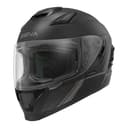
Sena Phantom

Sena Phantom

The most complete version of the idea: a composite fiberglass full-face with Mesh Intercom 3.0, Bluetooth 5.3, second-generation Harman Kardon speakers and LED lighting wired into the shell, quoted at 35 hours of talk time. It is the only helmet in this category whose electronics are current rather than inherited, and it is still a DOT-only shell — you are buying the radio, not the rating.

Best overall8.5
$549.00 · View on Amazon

Price as of September 24, 2026. #ad How we’re funded

2
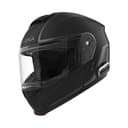
Sena Specter

Sena Specter

The flip-up version of the Phantom's electronics, in the best shell Sena publishes: fiberglass with DuPont Kevlar fiber, a built-in sun visor and a Pinlock 120XLT-ready shield. It is the only helmet here whose European twin carries P/J dual homologation, and the only one that pairs a sun visor with a current radio.

Best modular8.4
$599.00 · View on Amazon

$649.008% off

Price as of September 24, 2026. #ad How we’re funded

3
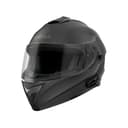
Sena Stryker

Sena Stryker

The previous-generation full-face, and the cheapest route to a composite shell with Harman Kardon audio, Mesh Intercom 3.0 and a retractable sun visor. The radio is a generation behind the Phantom's and the quoted mesh talk time is roughly a third of it — that is the trade you are making for the money.

Best with a sun visor8.0
$499.00 · View on Amazon

Price as of September 24, 2026. #ad How we’re funded

4
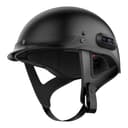
Sena Cavalry 2

Sena Cavalry 2

A composite-shell half helmet with Sena's current Mesh Intercom 3.0 built into it, which removes the thing that makes comms awkward on a half helmet: there is nowhere sensible to clamp a unit. At 950 g it is also the lightest helmet on this page, and the intercom hardware is the part carrying the price.

Best half helmet8.0
$259.00 · View on Amazon

$349.0026% off

Price as of September 24, 2026. #ad How we’re funded

5
Sena Outrush 2

Sena Outrush 2

The cheapest helmet with real mesh in it. Sena put Mesh Intercom 3.0, Wave Intercom and Bluetooth 5.2 into a polycarbonate flip-up and left the Harman Kardon badge off — the speakers are Sena's own second-generation HD units. For a rider who wants group comms and does not care whose logo is on the drivers, that is the honest bargain of this page.

Best value mesh helmet7.9
$379.99 · View on Amazon

Price as of September 24, 2026. #ad How we’re funded

6
Sena OutForce

Sena OutForce

The entry point, and the one helmet here with no mesh in it at all: a polycarbonate full-face with an inner sun visor and a four-way Bluetooth intercom quoted at 900 m and 12 hours. For two riders who talk to each other and nobody else, the missing mesh costs nothing — for a group, it is the whole point of the category.

Best budget7.4
$199.00 · View on Amazon

$299.0033% off

Price as of September 24, 2026. #ad How we’re funded

The picks in full

#1Best overallOur score8.5

Sena Phantom

The most complete version of the idea: a composite fiberglass full-face with Mesh Intercom 3.0, Bluetooth 5.3, second-generation Harman Kardon speakers and LED lighting wired into the shell, quoted at 35 hours of talk time. It is the only helmet in this category whose electronics are current rather than inherited, and it is still a DOT-only shell — you are buying the radio, not the rating.

Strengths

  • Mesh Intercom 3.0 with Bluetooth 5.3, quoted at 2 km (1.2 mi) in open terrain and Group Mesh for 24 participants
  • 35 hours of quoted talk time from a 2.5-hour charge — the longest published figure of any helmet on this page
  • Front LED flashlight plus rear LEDs that work as running and brake lights, built into the shell instead of stuck to it
  • Composite fiberglass shell at 1,690 ±50 g in a Medium, with a Pinlock-ready shield
  • Second-generation Harman Kardon speakers and microphone, and over-the-air firmware updates through Sena's app

Trade-offs

  • Sena's spec sheet gives the US version DOT and the European version ECE R22.06 — the helmet sold here carries DOT alone, and no Snell
  • Sena does not state an internal sun visor for the Phantom on any page we could read, so we record none and you should plan on your own eyewear
  • The electronics are not removable: when the radio generation dates, it dates inside the helmet
  • Premium money for a DOT-only fiberglass shell — if comms are not the point, the same spend buys a Snell-rated full-face
CertificationsDOT
Weight1690 g
ShellComposite fiberglass shell
SizesS-XXL (55-64 cm)
Internal sun visorNot published
Pinlock-readyYes
IntercomMesh Intercom 3.0 + Bluetooth 5.3
Range (bike to bike)2 km (1.2 mi) in open terrain
Max riders (group)24
Talk time35 hours
SpeakersHarman Kardon (2nd generation)

Notable. Front LED flashlight and rear LED running/brake lights; Mesh Intercom 3.0 with Group Mesh for 24; over-the-air updates via the Sena Motorcycles app

Specs read from the manufacturer / retailer listing, on September 24, 2026. “Not published” means the maker does not state that figure.

#2Best modularOur score8.4

Sena Specter

The flip-up version of the Phantom's electronics, in the best shell Sena publishes: fiberglass with DuPont Kevlar fiber, a built-in sun visor and a Pinlock 120XLT-ready shield. It is the only helmet here whose European twin carries P/J dual homologation, and the only one that pairs a sun visor with a current radio.

Strengths

  • Fiberglass and DuPont Kevlar fiber shell — the only aramid-reinforced layup Sena publishes across this range
  • Built-in internal sun visor, which the Phantom's spec sheet does not state
  • Mesh Intercom 3.0 with Bluetooth 5.3, 2 km (1.2 mi) quoted range, Group Mesh for 24 and Open Mesh participants Sena calls unlimited
  • 30 hours of quoted talk time, and a Pinlock 120XLT-ready shield on the DOT version
  • Second-generation Harman Kardon speaker, and the European version is P/J dual homologated — rated to ride with the chin bar up as well as down

Trade-offs

  • The P/J homologation belongs to the ECE version; the US helmet is DOT, and DOT has no equivalent chin-bar-up rating
  • The most expensive helmet on this page, and the flip mechanism buys convenience rather than protection
  • 1,700 ±50 g with the reference size not stated on Sena's page, so compare that number to the others loosely
  • Same lock-in as the rest: the intercom generation is the helmet's generation
CertificationsDOT
Weight1700 g
ShellFiberglass with DuPont Kevlar fiber
SizesS-XXL
Internal sun visorYes
Pinlock-readyYes
IntercomMesh Intercom 3.0 + Bluetooth 5.3
Range (bike to bike)2 km (1.2 mi) in open terrain
Max riders (group)24
Talk time30 hours
SpeakersHarman Kardon (2nd generation)

Notable. Flip-up fiberglass/Kevlar shell with a built-in sun visor and a Pinlock 120XLT-ready shield; Mesh Intercom 3.0 with Bluetooth 5.3

Specs read from the manufacturer / retailer listing, on September 24, 2026. “Not published” means the maker does not state that figure.

#3Best with a sun visorOur score8.0

Sena Stryker

The previous-generation full-face, and the cheapest route to a composite shell with Harman Kardon audio, Mesh Intercom 3.0 and a retractable sun visor. The radio is a generation behind the Phantom's and the quoted mesh talk time is roughly a third of it — that is the trade you are making for the money.

Strengths

  • Retractable sun visor — the practical advantage over the two newer helmets on this page, neither of which states one
  • Composite fiberglass shell, the same construction family as the Phantom, at 1,750 ±50 g in a Medium
  • Mesh Intercom 3.0 with a quoted 2 km (1.2 mi) range and Group Mesh for 24 riders
  • Premium speakers and microphone with sound by Harman Kardon
  • Integrated LED taillights, so the helmet is lit from behind as well as connected

Trade-offs

  • Bluetooth 5.0, a generation behind the Phantom and the Specter
  • Sena quotes up to 13 hours on Mesh (20 hours on Bluetooth intercom) against 35 hours for the Phantom, and says LED use shortens both
  • The European version is ECE 22.05, the superseded standard; the US version is DOT only
  • The Pinlock anti-fog insert is an accessory, not something Sena includes
CertificationsDOT
Weight1750 g
ShellComposite fiberglass shell
SizesS-XXL
Internal sun visorYes
Pinlock-readyYes
IntercomMesh Intercom 3.0 + Bluetooth 5.0
Range (bike to bike)2 km (1.2 mi) in open terrain
Max riders (group)24
Talk time13 hours
SpeakersHarman Kardon

Notable. Retractable sun visor and integrated LED taillights; Mesh Intercom 3.0 with Harman Kardon speakers; Pinlock insert sold as an accessory

Specs read from the manufacturer / retailer listing, on September 24, 2026. “Not published” means the maker does not state that figure.

#4Best half helmetOur score8.0

Sena Cavalry 2

A composite-shell half helmet with Sena's current Mesh Intercom 3.0 built into it, which removes the thing that makes comms awkward on a half helmet: there is nowhere sensible to clamp a unit. At 950 g it is also the lightest helmet on this page, and the intercom hardware is the part carrying the price.

Strengths

  • Sena Mesh Intercom 3.0 built in, quoted at up to 0.8 miles bike-to-bike in open terrain, with Group Mesh for up to 24 participants
  • Wave Intercom works over cellular data, so range stops being a distance problem when riders spread out
  • Composite fiberglass shell over an EPS liner, and 950 ±30 g in a size Medium — the lightest lid here
  • 18 hours of talk time, Bluetooth 5.2, integrated speakers and mic, and over-the-air firmware updates

Trade-offs

  • DOT only; no ECE and no Snell is stated on Sena's US page
  • Sena's specification does not state an internal sun visor, so glare is on your sunglasses
  • The comms hardware is not removable — when the electronics date, they date inside the helmet
  • Costs multiples of a plain half helmet, and you are paying for the intercom, not the shell
CertificationsDOT
Weight950 g
ShellComposite fiberglass shell over EPS
Head shapeNot published
SizesS-2XL (55-64 cm)
Internal sun visorNot published
Pinlock-readyNo

Notable. Built-in Sena Mesh Intercom 3.0 and Wave Intercom, Bluetooth 5.2, 18 hours talk time, integrated premium speakers and mic, double D-ring chinstrap

Specs read from the manufacturer / retailer listing, on August 31, 2026. “Not published” means the maker does not state that figure.

#5Best value mesh helmetOur score7.9

Sena Outrush 2

The cheapest helmet with real mesh in it. Sena put Mesh Intercom 3.0, Wave Intercom and Bluetooth 5.2 into a polycarbonate flip-up and left the Harman Kardon badge off — the speakers are Sena's own second-generation HD units. For a rider who wants group comms and does not care whose logo is on the drivers, that is the honest bargain of this page.

Strengths

  • Mesh Intercom 3.0 plus Wave Intercom, which runs over cellular data so distance stops being the limit when a group spreads out
  • Bluetooth 5.2, 20 hours of quoted talk time and a 2.5-hour charge
  • Pinlock 70-ready flip-up shield, at a price where a Pinlock-ready shield is unusual
  • Group Mesh for 24 participants, and Open Mesh participants Sena calls unlimited
  • The successor to the Outrush R with mesh added — the R is Bluetooth only

Trade-offs

  • ABS polycarbonate shell rather than composite, and the heaviest helmet here at 1,800 ±50 g in the DOT version
  • Sena names no audio partner: the page says "2nd Generation HD Speakers", so we record the speaker brand as not published
  • Quoted mesh range is 1.2 km (0.8 mi), against 2 km for the Phantom, Specter and Stryker
  • Sena's spec sheet does not state an internal sun visor for the Outrush 2, so we do not assume one
CertificationsDOT
Weight1800 g
ShellABS polycarbonate shell (DOT version)
SizesS-XXL
Internal sun visorNot published
Pinlock-readyYes
IntercomMesh Intercom 3.0 + Wave Intercom + Bluetooth 5.2
Range (bike to bike)1.2 km (0.8 mi) in open terrain
Max riders (group)24
Talk time20 hours
SpeakersNot published

Notable. Mesh Intercom 3.0 and Wave Intercom over cellular data in a Pinlock 70-ready flip-up; Bluetooth 5.2 and 20 hours of talk time

Specs read from the manufacturer / retailer listing, on September 24, 2026. “Not published” means the maker does not state that figure.

#6Best budgetOur score7.4

Sena OutForce

The entry point, and the one helmet here with no mesh in it at all: a polycarbonate full-face with an inner sun visor and a four-way Bluetooth intercom quoted at 900 m and 12 hours. For two riders who talk to each other and nobody else, the missing mesh costs nothing — for a group, it is the whole point of the category.

Strengths

  • The cheapest helmet with comms designed into the shell rather than clamped to it
  • Inner sun visor, which the two most expensive helmets on this page do not state
  • Lightest full-face here at 1,600 ±50 g in a Medium, because there is less electronics inside it
  • Single-shell polycarbonate ABS over multi-density EPS, DOT certified

Trade-offs

  • Bluetooth only — no Mesh Intercom, so a group falls back to a four-rider chain at up to 900 m
  • 12 hours of quoted talk time, roughly a third of the Phantom's
  • Sena states no Pinlock readiness and names no speaker brand for this helmet
  • Polycarbonate shell and DOT alone: this is a budget helmet with a radio in it, not a budget premium helmet
CertificationsDOT
Weight1600 g
ShellSingle-shell polycarbonate ABS with multi-density EPS
SizesS-XXL
Internal sun visorYes
Pinlock-readyNot published
IntercomBluetooth intercom, four-way (no Mesh)
Range (bike to bike)900 m (0.6 mi) in open terrain
Max riders (group)4
Talk time12 hours
SpeakersNot published

Notable. Four-way Bluetooth intercom and an inner sun visor at the lowest price of any helmet with comms built in

Specs read from the manufacturer / retailer listing, on September 24, 2026. “Not published” means the maker does not state that figure.

How we ranked these

Certification is the gate, and it is the same low gate for all six. Every helmet here is DOT FMVSS 218 and nothing else. There is a wrinkle worth understanding, because it is the easiest thing on this page to get wrong: Sena’s spec sheets print the US and European ratings together. The Phantom’s page reads “USA: DOT — Europe: ECE R22.06”; the Specter’s adds “P/J Dual homologation” to the European line; the Outrush 2’s splits its weight and shell material into a “(DOT)” version and an “(ECE)” version. Those European ratings belong to helmets sold in Europe. The helmet that arrives at a US address is the DOT one, so we record ECE as not published on all six and rank on what you can actually buy. Our safety-ratings guide explains what each standard tests and who verifies it.

Mesh versus Bluetooth is the first real differentiator. A Bluetooth intercom chains riders together in a fixed order: if the rider in the middle drops out or rides out of range, the chain breaks and somebody re-pairs at the next gas stop. A mesh network is self-healing — riders join, leave and move around the group without anybody touching a button. Five of these six have Sena’s Mesh Intercom 3.0 built in and one, the OutForce, is Bluetooth only with a four-rider limit. If you ride in a group of any size, that single line decides the purchase, and our Bluetooth vs mesh guide is the long version of why.

Then range, group size and talk time, in that order. The spread here is wider than the prices suggest. The Phantom, Specter and Stryker are quoted at 2 km (1.2 mi) bike to bike in open terrain; the Outrush 2 at 1.2 km (0.8 mi); the Cavalry 2 at 0.8 miles; the OutForce at 900 m. Group Mesh holds 24 riders on every mesh helmet here. Talk time is where the generations separate: 35 hours quoted on the Phantom, 30 on the Specter, 20 on the Outrush 2, 13 on the Stryker in mesh mode, and 12 on the OutForce. Treat all of those as maker figures measured in the maker’s conditions — Sena itself notes the Stryker’s figure falls when you run the LEDs.

Then the helmet, which is where the money stops buying technology. Three of the six are composite fiberglass shells (Phantom, Stryker, Cavalry 2), one adds DuPont Kevlar fiber (Specter), and two are polycarbonate (Outrush 2, OutForce). Weight runs from 950 g for the Cavalry 2 half helmet to 1,800 g for the Outrush 2. For scale, the Phantom’s 1,690 g and the Stryker’s 1,750 g both sit above the 1,651 g Shoei RF-1400 — a composite full-face with no electronics in it at all — because batteries, speakers and antennas weigh what they weigh. If low weight is the priority, our lightest-helmets ranking starts at 1,255 g and none of those helmets has a radio in it.

And a sun visor, which is not a given at this money. The Stryker and the OutForce state a drop-down sun visor. The Specter states a built-in one. Sena publishes no sun visor for the Phantom, the Outrush 2 or the Cavalry 2 on any page we could read — so we record “Not published” rather than assuming a feature the most expensive helmet here might not have. That blank is the finding.

Why this page is almost entirely one brand

We went looking for a cross-brand ranking and could not honestly build one. The helmet makers whose shells we rate highest — Shoei, Arai, AGV, HJC, Schuberth — do not build the electronics in. They do the opposite: they tool a recess into the shell for their partner’s module and sell it separately. That is the comms-ready approach, it is a genuinely good answer, and it is ranked on our Bluetooth helmets page rather than this one, because a helmet with an empty module recess is not a smart helmet until you buy the module.

Cardo, the one comms brand with the scale to compete with Sena, builds units rather than helmets. So in the US market, on the retailer we link, an integrated smart helmet means Sena. We would rather say that plainly than pad a ranking with marketplace helmets whose “smart” claim is a no-name Bluetooth module in a shell with nothing published behind its DOT sticker.

The honest alternative: keep the helmet, add the radio

For a lot of riders this is the better buy, and it would be dishonest not to lead with it. If you already own a helmet that fits you properly, a standalone mesh intercom clamps to it, uses the same Mesh 3.0 network as the helmets on this page, and can be moved to your next helmet or sold on when you upgrade. You keep the freedom to buy a Snell-rated or ECE 22.06 shell — something no helmet on this page offers — and you separate two products with very different lifespans. Our mesh intercom roundup ranks the units, and the wider intercom roundup covers the Bluetooth-only options if your group is two people.

Buy the integrated helmet instead when one of these is true: you are buying a helmet and comms at the same time and want it to be one decision; you want a half helmet with comms, where there is nowhere sensible to clamp a unit; or you specifically want the things only an integrated design can do — the Phantom’s brake-light LEDs and front flashlight, or speakers seated in purpose-made pockets rather than pressed against your ears by a liner that was not designed around them.

The lock-in nobody prints on the box

Helmets and consumer electronics age on completely different clocks. The common industry guidance is to replace a helmet around five years from first use, and immediately after any impact — our guide to when to replace a helmet covers the reasoning. A rechargeable battery and a Bluetooth radio are on a shorter clock than that, and firmware support is on a shorter one still. With a clamp-on intercom, those two clocks are independent: the radio dies, you buy a radio. With a smart helmet they are welded together.

Two practical consequences. First, a crash writes off both at once — the helmet is done, and the several hundred dollars of electronics inside it are done with it. Second, an upgrade means a new helmet. None of that makes these helmets a bad buy; it makes them a different kind of purchase from the one the price tag suggests, and worth going in with your eyes open.

What the makers do not publish

Three blanks run across this whole category, and we would rather list them than quietly fill them in. Head shape: Sena publishes an internal head shape for none of these helmets, where Shoei, Arai and HJC all do — so if you know you have a long oval or a round head, you are ordering without that information, and our head-shape guide explains what to check when it arrives. Speaker brand: Sena names Harman Kardon on the Phantom, Specter and Stryker, and names nobody on the Outrush 2 (“2nd Generation HD Speakers”) or the OutForce, so we record those as not published rather than assuming the same drivers. Noise: none of the six helmets here has a published noise level, which is normal — across our entire registry exactly one helmet carries a maker’s decibel figure, and our quietest-helmets page explains why that is. The nearest thing to an exception is Sena’s separate Phantom ANC variant, whose page claims active noise cancellation “reduces high-speed wind noise by 20 dB” — a reduction claim, not a measured level, and not a figure you can rank one helmet against another with.

Match the pick to your riding

The Sena Phantom is the one to buy if you want the current generation of everything: Mesh Intercom 3.0 with Bluetooth 5.3, 2 km quoted range, 35 hours of talk time, second-generation Harman Kardon speakers, a composite fiberglass shell at 1,690 g, and LED lighting that works as running and brake lights with a flashlight at the front. The catches are the ones that apply to the category — DOT only in the US, no published sun visor, no way to upgrade the radio — plus the plain fact that it is premium money for a helmet whose shell would not be premium without the electronics.

The Sena Specter is the same electronics in a flip-up, and it is the best-built helmet here: fiberglass with DuPont Kevlar fiber, a built-in sun visor, and a Pinlock 120XLT-ready shield. If you tour, commute in traffic, or want to talk to somebody at a stop without removing your helmet, this is the shape to buy — and it is the only pick that pairs a sun visor with the newest radio. It is also the most expensive thing on the page, and the P/J dual homologation that makes it interesting on paper belongs to the European version, not the DOT one you will receive. Our modular safety guide covers what P/J actually means.

The Sena Stryker is the value play among the composite full-faces, and the reason to choose it over the Phantom is specific: it states a retractable sun visor and the Phantom does not. You give up a radio generation (Bluetooth 5.0) and a lot of battery — 13 quoted hours in mesh mode against 35 — and the European version is ECE 22.05, the superseded standard, which tells you roughly when this helmet was designed. Harman Kardon speakers and integrated LED taillights come with it.

The Sena Cavalry 2 is the specialist, and the only helmet here whose integrated design is clearly better than the alternative rather than merely tidier. On a half helmet there is no good place to clamp a unit and no shell to shield the speakers, so building them in is the right answer. It is a 950 g composite half helmet with Mesh Intercom 3.0, Wave Intercom over cellular data, 18 hours of talk time, and no sun visor Sena will confirm. For group cruiser riding it has no real competition; for protection, read our open-face and half helmet roundup, which is blunt about what a half helmet gives up.

The Sena Outrush 2 is the value pick and, for many riders, the sensible one. It is the cheapest helmet you can buy with real mesh in it — Mesh 3.0 plus Wave Intercom over cellular data, Bluetooth 5.2, 20 hours of talk time, Group Mesh for 24 — in a Pinlock 70-ready flip-up. What you give up is material and polish: an ABS polycarbonate shell, the heaviest helmet here at 1,800 g, a shorter 1.2 km quoted range, and speakers Sena will not put a brand name on. If your reason for buying is “I want to talk to my group,” it does that for the least money of anything on this page.

The Sena OutForce is the entry point, and the one pick where we would push back on the buyer’s own framing. It has no mesh at all — a four-way Bluetooth intercom quoted at 900 m and 12 hours — so it solves music, calls and a two-up conversation, not group riding. At that price it is genuinely good value for a solo or two-up rider who wants an inner sun visor and nothing clamped on. If you are buying it because you ride with a group, buy the Outrush 2 instead or keep a cheaper helmet and add a mesh unit.

What we left out, and why

Cameras and heads-up displays are the two features people picture when they hear “smart helmet,” and neither is honestly buyable on this page today. Sena lists a Phantom Camera variant with dash and action camera capability, but we found no stocked listing for it at the retailer we link, so we cannot put a buy button under it. The older Momentum INC Pro, which had an integrated QHD camera, is down to single-unit closeout listings — the same reason we leave discontinued helmets off every roundup. On HUD, the helmets marketed with a rearview camera and a projected display come from makers who publish no certification documentation we could check, and a protection claim we cannot check against something a manufacturer put in writing is one we will not rank.

The Forcite MK1S is the real answer to the HUD question and it is not here for a different reason. It is a carbon-shelled smart helmet with a chin-mounted HD camera, Harman Kardon speakers and a peripheral-vision light strip that feeds the rider alerts, at around $1,100 through Tucker Powersports’ dealer network. We found no stocked Amazon listing, so a buy row here would send you to a search page rather than a product. It is named because a page about smart helmets that pretends it does not exist would be a worse page.

The Sena Impulse was researched and not ranked. It is a real, currently stocked flip-up with Harman Kardon audio, a retractable sun visor, a Pinlock 120 insert included and Mesh Intercom 3.0, at 1,760 g with Bluetooth 5.0 — but it sits between the Specter and the Outrush 2 on price while carrying the older radio, and there is no rider we could honestly send to it ahead of one of those two. The Sena Outrush R is left out as well: it is Bluetooth only, it is this page’s predecessor rather than a member of it, and it is already the top pick on our Bluetooth helmets roundup. And we left out the marketplace “smart helmets” sold for less than the price of a decent intercom on its own, for the reason we always give: the DOT sticker is the only claim they make, and there is nothing published behind it.
Frequently asked questions

What is a smart motorcycle helmet?

A helmet with the communication hardware designed into the shell instead of clamped to the outside: speakers and a microphone in purpose-built pockets, an intercom radio under a side panel, a phone app and firmware updates, and on newer models LED lighting wired into the bodywork. The distinction that matters when you shop is between a smart helmet (electronics included, not removable) and a comms-ready helmet (a recess and wiring channel designed for a module you buy separately).

Is a smart helmet better than adding an intercom to a helmet you own?

Not automatically, and for many riders it is the worse buy. A standalone mesh intercom joins the same network, costs less than the price gap between a smart helmet and a comparable plain one, moves to your next helmet, and leaves you free to choose a Snell-rated or ECE 22.06 shell — which no smart helmet currently on sale in the US offers. The integrated helmet wins when you are buying the helmet and the comms together anyway, when you want a half helmet with comms, or when you want something only integration can do, such as brake-light LEDs wired into the shell.

Do smart helmets have mesh intercom or just Bluetooth?

Both exist and the difference is the single most important spec on the page. Five of our six picks have Sena's Mesh Intercom 3.0, which is a self-healing network — riders join, leave and move around a group of up to 24 without re-pairing. The Sena OutForce is Bluetooth only, which chains up to four riders in a fixed order and breaks when one drops out. If you ride in a group, buy mesh.

Are smart helmets DOT approved?

The ones on this page are: every pick is certified to DOT FMVSS 218, the US federal standard. Watch one detail on the spec sheets. Sena prints the US and European ratings on the same page — 'USA: DOT' alongside 'Europe: ECE R22.06' — and those European ratings apply to the version sold in Europe, not the helmet shipped to a US address. We record ECE as 'not published' for all six for exactly that reason, and none of them claims a Snell rating.

What happens when the battery or the electronics in a smart helmet die?

That is the real trade-off in this category. The radio and the battery are built into the shell, so you cannot swap them for a newer unit the way you can unclip a clamp-on intercom and move it to another helmet. A crash writes off the helmet and the electronics together, and an upgrade to a newer intercom generation means a new helmet. Helmets are usually replaced around five years from first use anyway, so the clocks are not as mismatched as they first look — but plan for the electronics to be the part that dates first.

Can you buy a motorcycle helmet with a built-in camera or a heads-up display?

Barely, and not from the picks here. Sena lists a Phantom Camera variant with dash and action camera capability, but we found no stocked listing for it at the retailer we link. The older Sena Momentum INC Pro had an integrated QHD camera and is now down to single-unit closeout listings. For HUD, the Forcite MK1S is the credible product — carbon shell, chin-mounted camera, peripheral light alerts, around $1,100 through a dealer network rather than Amazon. The cheap 'HUD helmets' on the marketplaces publish no certification documentation we could verify, so we do not rank them.

How much should you spend on a smart helmet?

Work backwards from the group you ride with. If it is you and one passenger, the cheapest Bluetooth-integrated helmet does everything you need. If you ride in a group, mesh is the feature you are buying and the cheapest helmet with real mesh in it is the sensible floor — spending more up the range buys a newer radio, longer quoted talk time, a better shell and, on the newest model, lighting. Above that, compare the total against a plain helmet you actually want plus a standalone mesh unit; that combination often costs about the same and ages better.

Sources

  • NHTSA — Motorcycle SafetyThe US regulator behind the DOT FMVSS 218 helmet standard (accessed July 19, 2026)
  • UNECE — Vehicle RegulationsThe UN body behind ECE Regulation 22.06, the European helmet standard (accessed July 19, 2026)
  • SenaSena's official site — mesh and Bluetooth intercom specifications (accessed July 19, 2026)
  • Sena — PhantomThe maker's own spec sheet: "USA: DOT" / "Europe: ECE R22.06", composite fiberglass shell, 1,690 ±50 g in a Medium, Mesh Intercom 3.0 with Bluetooth 5.3, 2 km quoted range, Group Mesh for 24, 35 hours talk time, 2nd-generation Harman Kardon speakers, front flashlight and rear running/brake LEDs (accessed September 24, 2026)
  • Sena — SpecterThe maker's own spec sheet: "USA: DOT - Europe: ECE R22.06 P/J Dual homologation", fiberglass with DuPont Kevlar fiber, 1,700 ±50 g (reference size not stated), built-in internal sun visor, "DOT: Pinlock 120XLT ready", Mesh Intercom 3.0 with Bluetooth 5.3, 30 hours talk time (accessed September 24, 2026)
  • Sena — StrykerThe maker's own spec sheet: DOT (US) / ECE 22.05 (Europe), composite fiberglass shell, 1,750 ±50 g in a Medium, retractable sun visor, Mesh Intercom 3.0 with Bluetooth 5.0, up to 20 hours Bluetooth and 13 hours Mesh talk time, Harman Kardon speakers, integrated LED taillights, Pinlock insert listed as an accessory (accessed September 24, 2026)
  • Sena — Outrush 2The maker's own spec sheet: "ABS polycarbonate shell (DOT) / ABS shell (ECE)", 1,800 ±50 g in a Medium (DOT) against 1,750 ±50 g (ECE), Pinlock 70 ready, Mesh Intercom 3.0 and Wave Intercom with Bluetooth 5.2, 1.2 km quoted range, 20 hours talk time, "2nd Generation HD Speakers" with no named audio partner (accessed September 24, 2026)
  • Sena — OutForceThe maker's own spec sheet: DOT, single-shell polycarbonate ABS with multi-density EPS, 1,600 ±50 g in a Medium, inner sun visor, a four-way Bluetooth intercom quoted at up to 900 m and 12 hours — and no Mesh Intercom (accessed September 24, 2026)
  • Cardo SystemsCardo's official site — Packtalk mesh intercom specifications (accessed July 19, 2026)

Keep reading