The Lid Test

The Best Motorcycle Helmets for Rain

Nobody buys a helmet for the rain until the first time they cannot see out of one. A wet-weather lid is judged on four things: whether it takes a Pinlock, whether its vents close, how well the shield seals, and whether it has a sun visor for a sky that has gone dark.

By Stephen V.Last verified How we compare

Ask a rider what goes wrong in the rain and they will not say “water got in”. They will describe pulling up at a light with a visor that has grayed over from the inside, cracking it open to see, and taking the rain in the face instead. Rain is a fogging problem before it is a waterproofing problem— cold, wet air outside and warm, humid breath inside is precisely the condition that condenses on a shield, and it gets worse the moment you stop moving.

So this ranking is built on four criteria in this order: whether the helmet is Pinlock-ready (the only fix that solves fogging rather than delaying it), whether its vents close properly so you can seal the helmet when the temperature drops, how well the shield and neck roll seal against water tracking in, and whether there is a drop-down sun visor— because a storm front means a dark sky, and a tinted shield you cannot remove at the roadside is a hazard. Every spec we cite is read from the manufacturer’s page; prices in the text are qualitative, and the live number sits on each buy button.

How this is funded:we earn a commission if you buy through our links, at no extra cost to you. It never changes which helmet we recommend, and we’ll tell you plainly when a cheaper or lighter one is the better buy. Full disclosure.

Quick picks

Ranked on our spec score — certification, weight, features and value. Select a row to jump to the full write-up. We have not tested these helmets; here is exactly how we compare them instead.

#HelmetBest forOur scorePrice
1
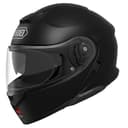
Shoei Neotec 3

Shoei Neotec 3

The touring modular the class is measured against. DOT and ECE 22.06, an AIM composite shell, a bigger QSV-2 sun visor and a Defogger-equipped shield — plus the cleanest integration for Shoei's own comms system. It is expensive and worth understanding why.

Best overall9.2
$935.00 · View on Amazon

Price as of August 31, 2026. #ad How we’re funded

2
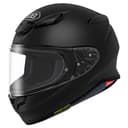
Shoei RF-1400

Shoei RF-1400

The full-face benchmark most riders are quietly measuring everything else against. Snell M2025 plus DOT, a hand-laid AIM+ composite shell, and Shoei's quietest, most refined shield system — it earns the price on the spec sheet, not the badge.

Best full-face9.3
$541.00 · View on Amazon

Price as of August 31, 2026. #ad How we’re funded

3
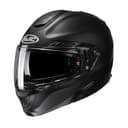
HJC RPHA 91

HJC RPHA 91

HJC's composite touring modular splits the difference: a P.I.M. EVO carbon-blend shell and a drop-down sun visor at a mid price, ready for HJC's own SMART Bluetooth. Not as quiet as a Schuberth, a lot cheaper than one.

Best value modular8.5
$559.99 · View on Amazon

Price as of August 31, 2026. #ad How we’re funded

4
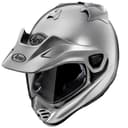
Arai XD-5

Arai XD-5

Arai's take on ADV keeps the round, smooth shell and adds a convertible peak that lets you run shield, shield-plus-peak or goggles. DOT plus Snell M2025 in a fiberglass Super Fiber shell — the touring-heavy ADV pick.

Best adventure8.9
$799.00 · View on Amazon

Price as of August 31, 2026. #ad How we’re funded

5
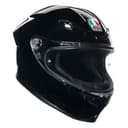
AGV K6 S

AGV K6 S

A carbon-aramid shell at roughly 1,255 g makes the K6 S one of the lightest DOT-and-ECE-22.06 full-faces you can buy, with a genuinely wide 190-degree eye port. If you notice helmet weight on a long day, this is the short list.

Best lightweight9.1
$639.00 · View on Amazon

Price as of August 31, 2026. #ad How we’re funded

6
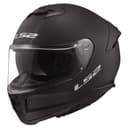
LS2 Stream II

LS2 Stream II

The value pick that punches above its ~$150 price: DOT and ECE 22.06 certification, a built-in drop-down sun visor, and LS2's AREM rotational-energy management — features usually reserved for helmets costing twice as much.

Best budget8.2
$149.98 · View on Amazon

Price as of August 31, 2026. #ad How we’re funded

The picks in full

#1Best overallOur score9.2

Shoei Neotec 3

The touring modular the class is measured against. DOT and ECE 22.06, an AIM composite shell, a bigger QSV-2 sun visor and a Defogger-equipped shield — plus the cleanest integration for Shoei's own comms system. It is expensive and worth understanding why.

Strengths

  • DOT and ECE 22.06 in a composite AIM shell — not the polycarbonate most modulars use
  • QSV-2 internal sun visor is larger than the old QSV-1, and the CNS-3C shield is Pinlock-ready with a defogger
  • Purpose-built channel for the SRL3/COMLINK comms unit — no bulky external clamp

Trade-offs

  • The most expensive modular here by a wide margin
  • Comms unit is a separate, Shoei-specific purchase
CertificationsDOT, ECE 22.06
Weight1700 g
ShellAIM composite
Head shapeIntermediate oval
SizesXS-2XL
Internal sun visorYes
Pinlock-readyYes

Notable. QSV-2 sun visor; CNS-3C Pinlock shield with defogger; SRL3/COMLINK-ready

Specs read from the manufacturer / retailer listing, on July 19, 2026. “Not published” means the maker does not state that figure.

#2Best full-faceOur score9.3

Shoei RF-1400

The full-face benchmark most riders are quietly measuring everything else against. Snell M2025 plus DOT, a hand-laid AIM+ composite shell, and Shoei's quietest, most refined shield system — it earns the price on the spec sheet, not the badge.

Strengths

  • Carries both DOT and Snell M2025 — the stricter Snell impact protocol on top of the US legal minimum
  • AIM+ multi-composite shell in multiple sizes keeps the fit true and the weight sensible for a fiberglass lid
  • CWR-F2 shield and vortex generators are aimed squarely at wind noise, the thing most riders complain about

Trade-offs

  • Premium money — you're paying for the shell and finish, not gadgets
  • No drop-down internal sun visor (Shoei's design choice; you swap to a tinted shield instead)
CertificationsDOT, Snell M2025
Weight1651 g
ShellAIM+ multi-composite (interwoven fiberglass and organic fibers)
Head shapeIntermediate oval
SizesXS-3XL
Internal sun visorNo
Pinlock-readyYes

Notable. CWR-F2 shield with vortex generators; 3D Max-Dry liner; emergency quick-release cheek pads

Specs read from the manufacturer / retailer listing, on July 19, 2026. “Not published” means the maker does not state that figure.

#3Best value modularOur score8.5

HJC RPHA 91

HJC's composite touring modular splits the difference: a P.I.M. EVO carbon-blend shell and a drop-down sun visor at a mid price, ready for HJC's own SMART Bluetooth. Not as quiet as a Schuberth, a lot cheaper than one.

Strengths

  • P.I.M. EVO shell blends carbon, glass and linen fibers — lighter than a polycarbonate modular
  • Drop-down sun visor and a Pinlock-ready face shield included
  • Purpose-made for the SMART HJC 21B/50B Bluetooth units

Trade-offs

  • The page we verified listed DOT only (no ECE/Snell stated)
  • Comms is HJC-specific; heavier than the flagship composites
CertificationsDOT
Weight1742 g
ShellP.I.M. EVO (carbon, carbon-glass and linen fiber)
Head shapeIntermediate oval
SizesXS-2XL
Internal sun visorYes
Pinlock-readyYes

Notable. Drop-down sun visor; Pinlock-ready shield; SMART HJC Bluetooth-ready

Specs read from the manufacturer / retailer listing, on July 19, 2026. “Not published” means the maker does not state that figure.

#4Best adventureOur score8.9

Arai XD-5

Arai's take on ADV keeps the round, smooth shell and adds a convertible peak that lets you run shield, shield-plus-peak or goggles. DOT plus Snell M2025 in a fiberglass Super Fiber shell — the touring-heavy ADV pick.

Strengths

  • Carries DOT and Snell M2025 — the stricter Snell protocol, uncommon on ADV lids
  • VAS-A tool-less Max Vision shield with Pinlock included
  • Convertible peak/shield/goggle setup for mixed street-and-trail use

Trade-offs

  • No internal sun visor; premium Arai pricing
  • Peak generates more wind buffeting at highway speed than a pure street helmet
CertificationsDOT, Snell M2025
Weight1683 g
ShellSuper Fiber PB-cLc (vacuum-formed fiberglass composite)
Head shapeIntermediate oval
SizesXS-2XL
Internal sun visorNo
Pinlock-readyYes

Notable. VAS-A tool-less shield (Pinlock incl.); convertible peak/shield/goggle

Specs read from the manufacturer / retailer listing, on July 19, 2026. “Not published” means the maker does not state that figure.

#5Best lightweightOur score9.1

AGV K6 S

A carbon-aramid shell at roughly 1,255 g makes the K6 S one of the lightest DOT-and-ECE-22.06 full-faces you can buy, with a genuinely wide 190-degree eye port. If you notice helmet weight on a long day, this is the short list.

Strengths

  • Carbon-aramid shell — AGV's published 1,255 g is class-leadingly light for the segment
  • Certified to ECE 22.06, the newest standard with rotational and multi-point impact testing
  • Ultravision visor gives a 190-degree horizontal field of view and ships Pinlock-ready

Trade-offs

  • No internal sun visor — a tinted shield is a separate purchase
  • Sport-leaning fit and shell shape suit an intermediate-oval head best
CertificationsDOT, ECE 22.06
Weight1255 g
ShellCarbon-aramid fiber
Head shapeIntermediate oval
SizesXS-2XL
Internal sun visorNo
Pinlock-readyYes

Notable. 190-degree Ultravision visor (Optical Class 1); 5-density EPS; ARK comms-ready

Specs read from the manufacturer / retailer listing, on July 19, 2026. “Not published” means the maker does not state that figure.

#6Best budgetOur score8.2

LS2 Stream II

The value pick that punches above its ~$150 price: DOT and ECE 22.06 certification, a built-in drop-down sun visor, and LS2's AREM rotational-energy management — features usually reserved for helmets costing twice as much.

Strengths

  • ECE 22.06 certified at a budget price — the newest standard, rarely found this cheap
  • Built-in drop-down sun shield, which most premium full-faces here don't have
  • Pinlock-ready face shield and a rear spoiler with flow-through ventilation

Trade-offs

  • Kinetic Polymer Alloy shell is heavier and less premium than a composite lid
  • Fit and finish are good for the price, not flagship-grade
CertificationsDOT, ECE 22.06
Weight1550 g
ShellKinetic Polymer Alloy (KPA)
Head shapeIntermediate oval
SizesXS-3XL
Internal sun visorYes
Pinlock-readyYes

Notable. AREM rotational-energy management; drop-down sun visor; Pinlock-ready shield

Specs read from the manufacturer / retailer listing, on July 19, 2026. “Not published” means the maker does not state that figure.

How we ranked these

Pinlock readiness is the gate. A Pinlock insert is a second lens that seals against the inside of the shield with a silicone bead, creating a double-glazed air gap. It is the difference between a visor that stays clear at a wet stoplight and one that does not, and it is not something you can retrofit to a shield without the two mounting pins. Four of our six picks are Pinlock-ready from the factory; the two that are not earn their places another way and are flagged as such.

Closable vents, and a shield that latches.Rain usually arrives with a temperature drop, and an open brow vent in a downpour puts cold water on your forehead. Positive, glove-operable vent sliders matter more than vent count here — the opposite of our hot-weather ranking. A shield that latches shut rather than resting closed also stops the low-speed lift that lets water track along the top edge.

A sun visor, not a tinted shield. This is the practical one. Riding into a storm means the light drops fast, and swapping a tinted shield at the roadside in the rain is exactly when you do not want to be handling a wet visor. A drop-down internal sun shield flicks out of the way with a lever and is the correct wet-weather answer.

Match the pick to your riding

The Shoei Neotec 3 is the best rain helmet we rank, and it is not close. Its CNS-3C shield ships Pinlock-ready andadds a defogger system, the QSV-2 drop-down sun visor handles the dark-sky problem, and the shell is the quietest and best-sealed in Shoei’s touring line. Being a modular is a bonus in the wet: flipping the chin bar up at a fuel stop without removing a soaked helmet is a small mercy. It is premium money, and it is what serious all-weather tourers buy — see also the touring roundup.

If you want a one-piece shell, the Shoei RF-1400is the full-face answer: a Pinlock-ready CWR-F2 shield, the tightest sealing in the class, and Shoei’s aero work paying off as less turbulence pulling water around the shield edge. Its trade-off is honest — no internal sun visor, so you are on tinted or clear shields and should be running clear if rain is likely. The HJC RPHA 91 is the value version of the Neotec proposition: a composite modular that is Pinlock-ready with a drop-down sun visor at roughly half the flagship price, which is why it lands as our best value modular. The Neotec 3 against the RPHA 91 is the comparison to read if that gap interests you.

For adventure riders, the Arai XD-5 is the pick, and the reason is specific: the VAS-A shield system ships witha Pinlock insert included rather than merely prepared for one, and the peak comes off entirely — which matters, because an ADV peak in highway rain catches wind and channels water in ways a road shell does not. The AGV K6 S is the lightweight pick: a Pinlock-ready 190-degree eye port that gives you more usable vision in poor visibility, and a published 1,255 g so the helmet is not adding fatigue to a miserable ride.

The LS2 Stream IIis the budget answer and a genuinely well-suited one. Pinlock-ready shield, a drop-down sun visor, ECE 22.06, and it costs under $200 — which makes it the sensible choice for a second helmet you are willing to ride in filthy weather rather than exposing a flagship to road salt every winter. Two of our picks are worth flagging honestly: the RF-1400 and the K6 S have no internal sun visor, and neither the Scorpion nor the Bell budget lids we rank elsewhere are Pinlock-ready, which is why they are not on this page at all. See the budget roundup for the full value picture.

What the helmet cannot fix

Water comes up, not down.The route into a helmet in sustained rain is rarely the top — it is water running down your neck and being drawn up behind the neck roll by the low-pressure zone at the back of the shell. A chin curtain and a properly overlapping jacket collar do more about this than any shell design. Fit the chin curtain your helmet came with; most people leave it in the box.

Rain-X and household glass cleaner will wreck a visor.Shield coatings and Pinlock inserts are soft and chemically sensitive. Ammonia-based glass cleaners strip anti-scratch and anti-fog coatings, and automotive rain-repellents are not formulated for polycarbonate. Warm water, mild soap and a soft cloth — our cleaning guide has the full routine, including the parts of a Pinlock you must not scrub.

A wet helmet needs drying, not stuffing in a bag.Pull the liner and cheek pads out and let them air-dry at room temperature away from direct heat. A radiator or a hairdryer degrades the EPS and the adhesives. A permanently damp liner is how a helmet starts to smell and how the shell’s inner surfaces age faster than they should — which brings forward the day you need to replace it.

Visibility is a gear problem as much as a helmet problem. In heavy rain you are hardest to see exactly when drivers are least able to look, so a high-visibility or light-colored shell and a waterproof jacket with reflective panels are doing safety work the helmet cannot. Slow down, increase following distance, and treat the first ten minutes of rain as the most slippery.
The rain kit that costs less than a tank of fuel

A wet ride goes wrong in one specific way: the visor grays over at the first stoplight and you are riding blind in traffic. Fixing that is cheap, and it is the highest-value thing you can buy for wet-weather riding.

We haven’t tested these any more than we’ve tested the helmets — they’re here because they solve the problem this page is about, and they’re cheap enough to be worth saying so. Prices are live and dated on each button.

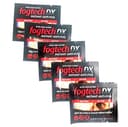
  • Pinlock anti-fog insert

    A visor that grays over at every stoplight

    The one fix that solves fogging rather than delaying it — a second lens that seals inside the shield like double glazing. Inserts are made per shield, so this link is a search: check your visor for the two small Pinlock pins, then match the insert to your exact helmet and shield model.

  • Molecule helmet anti-fog spray

    Molecule helmet anti-fog spray

    Fogging on a shield that has no Pinlock pins

    The fallback for shields that can't take an insert. A coating is a maintenance item — it wears off and wants reapplying — so treat it as the second-best answer to fogging, not the first.

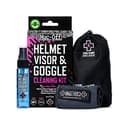
  • Muc-Off visor, lens & goggle cleaning kit

    Muc-Off visor, lens & goggle cleaning kit

    Baked-on bugs, and the glass cleaner under the sink

    Warm water and mild soap do this job for nothing, and we'd say so before we'd sell you a kit. What the money buys is a visor-safe cleaner and a cloth that live in the garage — so the ammonia-based glass cleaner never ends up on your shield and strips its coatings.

    $22.84 · View on Amazon

    Price as of August 31, 2026. #ad How we’re funded

Frequently asked questions

Are motorcycle helmets waterproof?

No helmet is sealed like a dry bag, and none claims to be. A well-designed helmet sheds water off the shell and keeps it out of the eye port with a shield gasket, but the vents are open holes by design and water can track in behind the neck roll. What separates a good rain helmet is that its vents close positively, its shield seals and latches, and it fits a chin curtain that blocks the updraught at the back. Expect a damp liner after a long downpour; expect to dry it out afterwards.

How do I stop my visor fogging in the rain?

Fit a Pinlock insert. It is a second lens that seals inside the shield on two pins and creates a double-glazed air gap, and it is the only fix that solves fogging rather than delaying it. Most premium shields are Pinlock-prepared and many ship with the insert included. If your shield has no Pinlock pins, a dedicated anti-fog coating is the fallback, but it wears off and needs reapplying. Cracking the shield to its first detent and opening the chin vent helps in a pinch.

Is a modular helmet a bad idea in the rain?

No — several of the best rain helmets are modulars, and being able to flip the chin bar up at a fuel stop without pulling a soaked helmet off is a genuine convenience. A modular has more seams than a full-face, so a poorly-built one can let water in around the chin-bar mechanism, but a well-made composite modular like the Shoei Neotec 3 or HJC RPHA 91 seals properly. Choose on shield and vent quality rather than on the hinge.

Should I use Rain-X on my helmet visor?

No. Automotive rain repellents and ammonia-based glass cleaners are formulated for glass, not for the polycarbonate and soft coatings used on motorcycle shields, and they can haze the surface or strip anti-scratch and anti-fog treatments. Clean the shield with warm water and mild soap only. If you want water to bead off, a dedicated motorcycle visor treatment is the correct product — and a Pinlock insert plus a clean shield does more for wet-weather vision than any repellent.

Do I need a clear visor for riding in the rain?

Yes, if there is any chance of riding into dusk or a dark storm front. A tinted shield in heavy rain under a black sky is genuinely dangerous, and swapping a shield at the roadside in a downpour is the worst possible time to do it. That is why we weight a drop-down internal sun visor so heavily on this page: it lets you run a clear shield permanently and flick the sun shade down only when the sun reappears.

How do I dry a soaked helmet?

Remove the comfort liner and cheek pads if they come out, and let everything air-dry at room temperature with the shield propped open. Do not use a radiator, a hairdryer or direct sun — heat degrades EPS foam and the adhesives holding a helmet together, which is real damage rather than cosmetic. A fan pointed at the open helmet speeds it up safely. Never put a damp helmet away in a closed bag; that is how liners start to smell.

Sources

Keep reading