The Lid Test

The Quietest Motorcycle Helmets

The helmets engineered to cut wind noise — aero shells, wind collars and tight seals — ranked on the design features that reduce it, with an honest note on how quiet you can really expect.

By Stephen V.Last verified How we compare

Wind noise is the single most common complaint riders have about their helmets—and at highway speed, sustained noise isn’t just annoying, it’s fatiguing and can damage hearing over time. So a genuinely quiet helmet is worth chasing. But here’s the honest part: we don’t run a wind tunnel or a decibel meter, and any site claiming a precise dB reading it took itself should be treated with suspicion. What we can do is rank helmets on the design features that objectively reduce noise, and tell you what to expect.

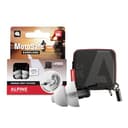
The things that make a helmet quiet are an aerodynamic shell that manages airflow, a padded wind collar or neck roll that seals the gap at the bottom, tight shield seals, and—on the best touring lids—shapes tuned specifically for noise. Shoei engineers harder for quiet than almost anyone, which is why two of its helmets top this list. We’ve ranked on those features plus the usual certification, weight and live price. One truth no helmet escapes: a good pair of earplugs cuts more noise than any helmet upgrade, and we recommend them regardless of which lid you buy.

How this is funded:we earn a commission if you buy through our links, at no extra cost to you. It never changes which helmet we recommend, and we’ll tell you plainly when a cheaper or lighter one is the better buy. Full disclosure.

Quick picks

Ranked on our spec score — certification, weight, features and value. Select a row to jump to the full write-up. We have not tested these helmets; here is exactly how we compare them instead.

#HelmetBest forOur scorePrice
1
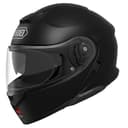
Shoei Neotec 3

Shoei Neotec 3

The touring modular the class is measured against. DOT and ECE 22.06, an AIM composite shell, a bigger QSV-2 sun visor and a Defogger-equipped shield — plus the cleanest integration for Shoei's own comms system. It is expensive and worth understanding why.

Best overall (touring)9.2
$949.99 · View on Amazon

Price as of July 20, 2026. #ad How we’re funded

2
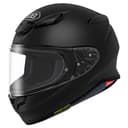
Shoei RF-1400

Shoei RF-1400

The full-face benchmark most riders are quietly measuring everything else against. Snell M2025 plus DOT, a hand-laid AIM+ composite shell, and Shoei's quietest, most refined shield system — it earns the price on the spec sheet, not the badge.

Best full-face9.3
$549.99 · View on Amazon

Price as of July 20, 2026. #ad How we’re funded

3
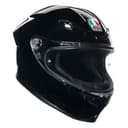
AGV K6 S

AGV K6 S

A carbon-aramid shell at roughly 1,255 g makes the K6 S one of the lightest DOT-and-ECE-22.06 full-faces you can buy, with a genuinely wide 190-degree eye port. If you notice helmet weight on a long day, this is the short list.

Best lightweight9.1
$529.99 · View on Amazon

$639.0017% off

Price as of July 20, 2026. #ad How we’re funded

4
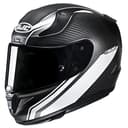
HJC RPHA 11 Pro

HJC RPHA 11 Pro

The value sport helmet that keeps showing up on best-of lists for a reason: a PIM+ carbon-blend shell at a published ~1,417 g in medium, an enlarged eye port, and tool-less shield changes — at roughly half a premium flagship's price.

Best value8.6
$629.99 · View on Amazon

Price as of July 20, 2026. #ad How we’re funded

The picks in full

#1Best overall (touring)Our score9.2

Shoei Neotec 3

The touring modular the class is measured against. DOT and ECE 22.06, an AIM composite shell, a bigger QSV-2 sun visor and a Defogger-equipped shield — plus the cleanest integration for Shoei's own comms system. It is expensive and worth understanding why.

Strengths

  • DOT and ECE 22.06 in a composite AIM shell — not the polycarbonate most modulars use
  • QSV-2 internal sun visor is larger than the old QSV-1, and the CNS-3C shield is Pinlock-ready with a defogger
  • Purpose-built channel for the SRL3/COMLINK comms unit — no bulky external clamp

Trade-offs

  • The most expensive modular here by a wide margin
  • Comms unit is a separate, Shoei-specific purchase
CertificationsDOT, ECE 22.06
Weight1700 g
ShellAIM composite
Head shapeIntermediate oval
SizesXS-2XL
Internal sun visorYes
Pinlock-readyYes

Notable. QSV-2 sun visor; CNS-3C Pinlock shield with defogger; SRL3/COMLINK-ready

Specs read from the manufacturer / retailer listing, on July 19, 2026. “Not published” means the maker does not state that figure.

#2Best full-faceOur score9.3

Shoei RF-1400

The full-face benchmark most riders are quietly measuring everything else against. Snell M2025 plus DOT, a hand-laid AIM+ composite shell, and Shoei's quietest, most refined shield system — it earns the price on the spec sheet, not the badge.

Strengths

  • Carries both DOT and Snell M2025 — the stricter Snell impact protocol on top of the US legal minimum
  • AIM+ multi-composite shell in multiple sizes keeps the fit true and the weight sensible for a fiberglass lid
  • CWR-F2 shield and vortex generators are aimed squarely at wind noise, the thing most riders complain about

Trade-offs

  • Premium money — you're paying for the shell and finish, not gadgets
  • No drop-down internal sun visor (Shoei's design choice; you swap to a tinted shield instead)
CertificationsDOT, Snell M2025
Weight1651 g
ShellAIM+ multi-composite (interwoven fiberglass and organic fibers)
Head shapeIntermediate oval
SizesXS-3XL
Internal sun visorNo
Pinlock-readyYes

Notable. CWR-F2 shield with vortex generators; 3D Max-Dry liner; emergency quick-release cheek pads

Specs read from the manufacturer / retailer listing, on July 19, 2026. “Not published” means the maker does not state that figure.

#3Best lightweightOur score9.1

AGV K6 S

A carbon-aramid shell at roughly 1,255 g makes the K6 S one of the lightest DOT-and-ECE-22.06 full-faces you can buy, with a genuinely wide 190-degree eye port. If you notice helmet weight on a long day, this is the short list.

Strengths

  • Carbon-aramid shell — AGV's published 1,255 g is class-leadingly light for the segment
  • Certified to ECE 22.06, the newest standard with rotational and multi-point impact testing
  • Ultravision visor gives a 190-degree horizontal field of view and ships Pinlock-ready

Trade-offs

  • No internal sun visor — a tinted shield is a separate purchase
  • Sport-leaning fit and shell shape suit an intermediate-oval head best
CertificationsDOT, ECE 22.06
Weight1255 g
ShellCarbon-aramid fiber
Head shapeIntermediate oval
SizesXS-2XL
Internal sun visorNo
Pinlock-readyYes

Notable. 190-degree Ultravision visor (Optical Class 1); 5-density EPS; ARK comms-ready

Specs read from the manufacturer / retailer listing, on July 19, 2026. “Not published” means the maker does not state that figure.

#4Best valueOur score8.6

HJC RPHA 11 Pro

The value sport helmet that keeps showing up on best-of lists for a reason: a PIM+ carbon-blend shell at a published ~1,417 g in medium, an enlarged eye port, and tool-less shield changes — at roughly half a premium flagship's price.

Strengths

  • PIM+ carbon-fiberglass-aramid shell is light — Rider Magazine cites 3 lb 2 oz (~1,417 g) in medium
  • Enlarged eye port and full front-to-back ACS ventilation aimed at track use
  • RapidFire II tool-less shield swaps make a tinted or clear change a 10-second job

Trade-offs

  • Certified to the older ECE 22.05 (plus DOT), not the newer 22.06 protocol
  • No internal sun visor
CertificationsDOT, ECE 22.05
Weight1417 g
ShellPIM+ (carbon, fiberglass and aramid hybrid)
Head shapeNot published
SizesXS-2XL
Internal sun visorNo
Pinlock-readyYes

Notable. ACS full airflow; enlarged eye port; RapidFire II tool-less shield

Specs read from the manufacturer / retailer listing, on July 19, 2026. “Not published” means the maker does not state that figure.

How to actually get a quiet ride

Fit comes before the helmet model.Most wind noise leaks in from below, around your neck. A helmet that’s the correct size with a snug neck roll seals that gap; one that’s too big roars no matter how aerodynamic the shell is. Get the fit right first.

Full-face beats modular for quiet, usually.A one-piece shell has fewer paths for air than a flip-up mechanism, so a full-face like the RF-1400 is typically quieter than a modular of similar quality. The exception is a premium touring modular like the Neotec 3, which is engineered hard enough around sealing and a padded collar to top even this list—but that’s flagship money doing flagship work.

Then wear earplugs—every ride.This is the uncomfortable truth of the quiet-helmet chase: foam earplugs reduce sustained wind noise more than the difference between any two helmets here, and they protect your hearing on top of it. A quiet helmet plus earplugs is the real answer; a “quiet” helmet alone is only half of it.

Frequently asked questions

What actually makes a motorcycle helmet quiet?

An aerodynamic shell that manages airflow cleanly, a padded wind collar or neck roll that seals the gap under your chin, tight face-shield seals, and a shape tuned to reduce turbulence around the helmet. Fit matters just as much — a helmet that's too big lets wind in from below no matter how good the aerodynamics are.

Can you trust a helmet's advertised noise level?

Be skeptical of precise decibel claims, especially self-measured ones — noise depends heavily on your bike, windscreen, riding position and fit, so a lab number rarely matches your experience. We rank on the design features that reduce noise rather than a single dB figure we didn't measure, which is the honest way to compare.

Are full-face helmets quieter than modular ones?

Usually. A one-piece full-face shell has fewer gaps for air than a modular's flip-up mechanism, so it tends to be quieter at equal quality. The exception is a premium touring modular engineered specifically for sealing and quiet, like the Shoei Neotec 3, which can match or beat many full-faces.

Do earplugs help more than a quiet helmet?

Honestly, yes — a good pair of foam or filtered earplugs cuts more sustained wind noise than the difference between any two helmets on this list, and they protect your hearing over the long term. The best setup is a well-sealed quiet helmet plus earplugs on every ride, not one or the other.

Sources

Keep reading