The Lid Test

The Best Motorcycle Helmets for Women

No manufacturer builds a separate women's shell. What separates a helmet that works for a smaller rider from one that doesn't is size availability at the bottom of the range, published weight, certification and internal shape — so that's what we ranked on.

By Stephen V.Last verified How we compare

Start with the uncomfortable part, because it saves you money: with the exception of a handful of graphics-only editions, no major manufacturer builds a separate helmet shell for women. The shell, the EPS liner, the retention system and the certification are identical to the version sold to everyone else. A “women’s helmet” badge tells you about the paint, not the protection — and paying extra for it buys you nothing.

What genuinely varies between helmets, and what actually decides whether a lid works for a smaller rider, is far more boring: whether the model is offered in XS or smaller at all, what it weighs, which certifications it carries, and what internal head shape it’s molded for. Plenty of well-reviewed helmets simply stop at Small — and a Small that’s too big is not a compromise, it’s a safety problem, because a loose helmet can rotate or come off in a crash and it roars at highway speed.

So every helmet ranked below is offered in XSby its maker, carries at least DOT (FMVSS 218), and has a weight and certification set we read off a published manufacturer or retailer page — dated, and linked on each write-up. We have not worn any of these helmets; we own no units and run no lab. What we can do is compare what the makers actually publish, and tell you where they publish nothing at all.

How this is funded:we earn a commission if you buy through our links, at no extra cost to you. It never changes which helmet we recommend, and we’ll tell you plainly when a cheaper or lighter one is the better buy. Full disclosure.

Quick picks

Ranked on our spec score — certification, weight, features and value. Select a row to jump to the full write-up. We have not tested these helmets; here is exactly how we compare them instead.

#HelmetBest forOur scorePrice
1
Shoei RF-1400

Shoei RF-1400

The full-face benchmark most riders are quietly measuring everything else against. Snell M2025 plus DOT, a hand-laid AIM+ composite shell, and Shoei's quietest, most refined shield system — it earns the price on the spec sheet, not the badge.

Best overall9.3
$549.99 · View on Amazon

Price as of July 20, 2026. #ad How we’re funded

2
AGV K6 S

AGV K6 S

A carbon-aramid shell at roughly 1,255 g makes the K6 S one of the lightest DOT-and-ECE-22.06 full-faces you can buy, with a genuinely wide 190-degree eye port. If you notice helmet weight on a long day, this is the short list.

Lightest9.1
$529.99 · View on Amazon

$639.0017% off

Price as of July 20, 2026. #ad How we’re funded

3
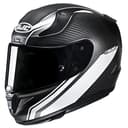
HJC RPHA 11 Pro

HJC RPHA 11 Pro

The value sport helmet that keeps showing up on best-of lists for a reason: a PIM+ carbon-blend shell at a published ~1,417 g in medium, an enlarged eye port, and tool-less shield changes — at roughly half a premium flagship's price.

Best for sport riders8.6
$629.99 · View on Amazon

Price as of July 20, 2026. #ad How we’re funded

4
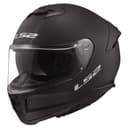
LS2 Stream II

LS2 Stream II

The value pick that punches above its ~$150 price: DOT and ECE 22.06 certification, a built-in drop-down sun visor, and LS2's AREM rotational-energy management — features usually reserved for helmets costing twice as much.

Best with a sun visor8.2
$149.98 · View on Amazon

Price as of July 20, 2026. #ad How we’re funded

5
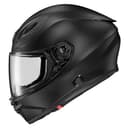
Scorpion EXO-R430

Scorpion EXO-R430

The budget standout, because it carries the current Snell M2025 on top of DOT — a genuine top-tier impact rating for well under $200. It's also comm-ready with an EXO-COM port, so a Bluetooth setup is a clean add later.

Best safety-per-dollar8.1
$184.95 · View on Amazon

Price as of July 20, 2026. #ad How we’re funded

6
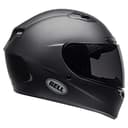
Bell Qualifier DLX MIPS

Bell Qualifier DLX MIPS

The budget helmet that adds MIPS — a rotational-impact system usually found on pricier lids — plus a photochromic shield that tints itself in sunlight. For a first full-face under $350, that combination is hard to argue with.

Best first helmet7.9
$230.99 · View on Amazon

$329.9530% off

Price as of July 20, 2026. #ad How we’re funded

7
Scorpion EXO-GT930 Transformer

Scorpion EXO-GT930 Transformer

The trick here is a genuinely removable chin bar — the GT930 runs as a full-face or, with the bar off, a proper open-face, which few modulars actually allow. Add a sun visor and a sub-$300 price and it's the value convertible.

Best modular7.9
$279.95 · View on Amazon

Price as of July 20, 2026. #ad How we’re funded

The picks in full

#1Best overallOur score9.3

Shoei RF-1400

The full-face benchmark most riders are quietly measuring everything else against. Snell M2025 plus DOT, a hand-laid AIM+ composite shell, and Shoei's quietest, most refined shield system — it earns the price on the spec sheet, not the badge.

Strengths

  • Carries both DOT and Snell M2025 — the stricter Snell impact protocol on top of the US legal minimum
  • AIM+ multi-composite shell in multiple sizes keeps the fit true and the weight sensible for a fiberglass lid
  • CWR-F2 shield and vortex generators are aimed squarely at wind noise, the thing most riders complain about

Trade-offs

  • Premium money — you're paying for the shell and finish, not gadgets
  • No drop-down internal sun visor (Shoei's design choice; you swap to a tinted shield instead)
CertificationsDOT, Snell M2025
Weight1651 g
ShellAIM+ multi-composite (interwoven fiberglass and organic fibers)
Head shapeIntermediate oval
SizesXS-3XL
Internal sun visorNo
Pinlock-readyYes

Notable. CWR-F2 shield with vortex generators; 3D Max-Dry liner; emergency quick-release cheek pads

Specs read from the manufacturer / retailer listing, on July 19, 2026. “Not published” means the maker does not state that figure.

#2LightestOur score9.1

AGV K6 S

A carbon-aramid shell at roughly 1,255 g makes the K6 S one of the lightest DOT-and-ECE-22.06 full-faces you can buy, with a genuinely wide 190-degree eye port. If you notice helmet weight on a long day, this is the short list.

Strengths

  • Carbon-aramid shell — AGV's published 1,255 g is class-leadingly light for the segment
  • Certified to ECE 22.06, the newest standard with rotational and multi-point impact testing
  • Ultravision visor gives a 190-degree horizontal field of view and ships Pinlock-ready

Trade-offs

  • No internal sun visor — a tinted shield is a separate purchase
  • Sport-leaning fit and shell shape suit an intermediate-oval head best
CertificationsDOT, ECE 22.06
Weight1255 g
ShellCarbon-aramid fiber
Head shapeIntermediate oval
SizesXS-2XL
Internal sun visorNo
Pinlock-readyYes

Notable. 190-degree Ultravision visor (Optical Class 1); 5-density EPS; ARK comms-ready

Specs read from the manufacturer / retailer listing, on July 19, 2026. “Not published” means the maker does not state that figure.

#3Best for sport ridersOur score8.6

HJC RPHA 11 Pro

The value sport helmet that keeps showing up on best-of lists for a reason: a PIM+ carbon-blend shell at a published ~1,417 g in medium, an enlarged eye port, and tool-less shield changes — at roughly half a premium flagship's price.

Strengths

  • PIM+ carbon-fiberglass-aramid shell is light — Rider Magazine cites 3 lb 2 oz (~1,417 g) in medium
  • Enlarged eye port and full front-to-back ACS ventilation aimed at track use
  • RapidFire II tool-less shield swaps make a tinted or clear change a 10-second job

Trade-offs

  • Certified to the older ECE 22.05 (plus DOT), not the newer 22.06 protocol
  • No internal sun visor
CertificationsDOT, ECE 22.05
Weight1417 g
ShellPIM+ (carbon, fiberglass and aramid hybrid)
Head shapeNot published
SizesXS-2XL
Internal sun visorNo
Pinlock-readyYes

Notable. ACS full airflow; enlarged eye port; RapidFire II tool-less shield

Specs read from the manufacturer / retailer listing, on July 19, 2026. “Not published” means the maker does not state that figure.

#4Best with a sun visorOur score8.2

LS2 Stream II

The value pick that punches above its ~$150 price: DOT and ECE 22.06 certification, a built-in drop-down sun visor, and LS2's AREM rotational-energy management — features usually reserved for helmets costing twice as much.

Strengths

  • ECE 22.06 certified at a budget price — the newest standard, rarely found this cheap
  • Built-in drop-down sun shield, which most premium full-faces here don't have
  • Pinlock-ready face shield and a rear spoiler with flow-through ventilation

Trade-offs

  • Kinetic Polymer Alloy shell is heavier and less premium than a composite lid
  • Fit and finish are good for the price, not flagship-grade
CertificationsDOT, ECE 22.06
Weight1550 g
ShellKinetic Polymer Alloy (KPA)
Head shapeIntermediate oval
SizesXS-3XL
Internal sun visorYes
Pinlock-readyYes

Notable. AREM rotational-energy management; drop-down sun visor; Pinlock-ready shield

Specs read from the manufacturer / retailer listing, on July 19, 2026. “Not published” means the maker does not state that figure.

#5Best safety-per-dollarOur score8.1

Scorpion EXO-R430

The budget standout, because it carries the current Snell M2025 on top of DOT — a genuine top-tier impact rating for well under $200. It's also comm-ready with an EXO-COM port, so a Bluetooth setup is a clean add later.

Strengths

  • Carries DOT plus the current Snell M2025 — a real, up-to-date Snell rating at a budget price
  • EXO-COM comm-ready port and Bluetooth speaker pockets for an easy comms add
  • Ellip-Tec latching face shield with EverClear anti-fog coating

Trade-offs

  • Polycarbonate shell is heavier (~1,642 g) than a composite helmet
  • Stock shield is EverClear anti-fog, not Pinlock (a Pinlock-prepared shield is sold separately); no internal sun visor
CertificationsDOT, Snell M2025
Weight1642 g
ShellAdvanced polycarbonate
Head shapeIntermediate oval
SizesXS-4XL
Internal sun visorNo
Pinlock-readyNo

Notable. Snell M2025; Ellip-Tec latching shield with EverClear anti-fog; EXO-COM comm-ready

Specs read from the manufacturer / retailer listing, on July 19, 2026. “Not published” means the maker does not state that figure.

#6Best first helmetOur score7.9

Bell Qualifier DLX MIPS

The budget helmet that adds MIPS — a rotational-impact system usually found on pricier lids — plus a photochromic shield that tints itself in sunlight. For a first full-face under $350, that combination is hard to argue with.

Strengths

  • Includes MIPS, which addresses rotational forces the DOT test alone doesn't
  • ProTint photochromic shield darkens in sun and clears at night — no swapping
  • Comfortable padded wind collar and adjustable ventilation for the money

Trade-offs

  • Only DOT certification was listed on the page we verified (no ECE/Snell stated)
  • Polycarbonate shell; the face shield is not Pinlock-ready
CertificationsDOT
Weight1619 g
ShellPolycarbonate
Head shapeIntermediate oval
SizesXS-3XL
Internal sun visorNo
Pinlock-readyNo

Notable. MIPS rotational system; ProTint photochromic self-tinting shield

Specs read from the manufacturer / retailer listing, on July 19, 2026. “Not published” means the maker does not state that figure.

#7Best modularOur score7.9

Scorpion EXO-GT930 Transformer

The trick here is a genuinely removable chin bar — the GT930 runs as a full-face or, with the bar off, a proper open-face, which few modulars actually allow. Add a sun visor and a sub-$300 price and it's the value convertible.

Strengths

  • Removable chin bar converts between full-face and open-face configurations
  • SpeedView drop-down internal sun visor and EXO-COM Bluetooth-ready pockets
  • DOT and ECE 22.05 certified at a budget price; includes a detachable peak

Trade-offs

  • Certified to the older ECE 22.05, not 22.06
  • Polycarbonate shell is heavy (~1,814 g) — one of the weightier lids here
CertificationsDOT, ECE 22.05
Weight1814 g
ShellAdvanced polycarbonate
Head shapeIntermediate oval
SizesXS-3XL
Internal sun visorYes
Pinlock-readyNo

Notable. Removable chin bar (full-face to open-face); SpeedView sun visor; EXO-COM-ready

Specs read from the manufacturer / retailer listing, on July 19, 2026. “Not published” means the maker does not state that figure.

What we ranked on

1. Does it come in XS — from the maker, not the reseller? This is the first filter and it eliminates a surprising number of popular helmets. Every pick here lists XS at the bottom of its published size range; the Scorpion EXO-R430 goes XS–4XL and the Shoei RF-1400, LS2 Stream II, Bell Qualifier DLX and Scorpion EXO-GT930 all run XS–3XL. Availability of a specific colorway in XS still varies by retailer and season, which is why every buy link here goes to the live listing rather than a size chart we typed out.

2. What does it weigh?Weight is the criterion that gets hand-waved in most “for women” lists, and it’s the one with the biggest real-world spread. Among our picks, AGV publishes 1,255 g for the K6 S and Scorpion’s EXO-GT930 is listed at roughly 1,814 g — a difference of over 550 g, or about 1.2 lb, sitting on your neck for the whole ride. If you are smaller-framed, or you already notice neck ache on a long day, that gap matters more than any feature on the box. Note the honest caveat: most makers don’t state which size they weighed, so treat these as comparable-ish rather than exact, and read the weight notes in each spec table.

3. What is it certified to?DOT is the US legal minimum and is self-certified by the manufacturer. ECE 22.06 is the newer European standard that adds rotational and multi-point impact testing, and Snell M2025 is a stricter independent protocol on top. A longer list of stamps does not automatically mean “safer for you” — fit still dominates — but it tells you how thoroughly a shell has been vetted by someone other than the company selling it. Our safety-ratings guide breaks down exactly what each one tests.

4. What internal shape is it molded for?Head shape is not a gendered trait — it’s an individual one. Most helmets here, including all but one of our picks, are built for an intermediate ovalhead, the most common Western shape. If yours is rounder or longer front-to-back, that matters far more than the size label. HJC does not publish an internal shape for the RPHA 11 Pro, so we mark it “Not published” rather than guess on your behalf.

5. What features earn their money?A drop-down internal sun visor saves carrying a second shield — the LS2 Stream II and Scorpion EXO-GT930 have one, most premium full-faces deliberately don’t. A Pinlock-ready shield kills fogging, which matters if you commute in cold or wet weather. Removable, washable cheek pads matter more than the brochure suggests, because they’re how you fine-tune a fit that’s snug everywhere except one spot.

Sizing: measure, don’t assume

The single most common way this purchase goes wrong is ordering a size from memory or from a generic chart. Head circumference varies enormously between individuals and barely tracks height or build at all — plenty of women wear a Medium, plenty of men wear a Small. Wrap a soft tape around the widest part of your head, about an inch above your eyebrows and ears, take the largest of three readings, and then match that number to that specific brand’s chart. A Shoei Small and an LS2 Small are not the same helmet.

When you’re between sizes, size down. Comfort padding compresses measurably in the first few rides, and a helmet that is merely snug on day one is usually correct at month three, while one that feels “just right” new will be loose by spring. Once it’s on and fastened, the helmet should move your scalp when you try to rotate it, not slide across your skin; pressure should be even, with no single hard spot; and it should not roll forward off your head when you pull on the back. Our helmet sizing guide walks through the whole measure-chart-shape-fit sequence in detail.

Long hair, glasses and the practical stuff

Two questions come up constantly and both have honest, unglamorous answers.

Hair.No full-face helmet on this list — or any other — is designed to accommodate a high ponytail or a bun. The neck roll sits exactly where the ponytail wants to be, and forcing it either lifts the helmet off the back of your head or creates a pressure point that becomes a headache in an hour. The workable answers are a low braid or a low ponytail below the neck roll, a thin skull cap or helmet liner to reduce tangling and keep the interior cleaner, and helmets whose cheek pads and crown liner are fully removable and washable so you can actually launder what your hair is in contact with. That last one is worth checking on the listing before you buy — it is standard at this level, but makers state it inconsistently.

Glasses.Look for a helmet with eyewear channels in the cheek pads, and be aware that a tighter, more sport-focused interior — the HJC RPHA 11 Pro, for instance — is generally harder to slide arms into than a touring-oriented lid. Practically, glasses go on after the helmet is on, not before. If you ride into low sun regularly, an internal drop-down sun visor beats swapping to a tinted shield you can’t wear at night.

How to choose between our picks

If you want one helmet you will keep for the full five-year replacement cycle and the budget is there, the Shoei RF-1400is the benchmark — DOT plus Snell M2025 on a hand-laid composite shell, with the shield sealing and noise work Shoei is known for. If you notice helmet weight, or you ride long days, the AGV K6 S is the one to beat at a published 1,255 g with ECE 22.06 certification. The HJC RPHA 11 Prois the sport-focused option: a light PIM+ composite shell at a published ~1,417 g in medium with an enlarged eye port, with the trade-off that it’s certified to the older ECE 22.05 and its tighter interior is the least glasses-friendly here.

On a tighter budget the choice is a genuine three-way. The LS2 Stream II is the one to pick if you want a drop-down sun visor and current ECE 22.06 certification cheaply. The Scorpion EXO-R430is the one to pick if certification is what you care about most — it carries the current Snell M2025 at a genuinely budget price — accepting a heavier polycarbonate shell and no Pinlock shield in the box. The Bell Qualifier DLX MIPS is the one to pick if you want MIPS and a self-tinting photochromic shield, accepting that DOT was the only certification listed on the page we verified. And if you want to flip the chin bar up at a gas stop or run the helmet open-face on slow days, the Scorpion EXO-GT930converts — it’s just the heaviest lid here by a clear margin.

One deliberate omission worth naming: the popular built-in-Bluetooth option, the Sena Outrush R, starts at Small rather than XS, so it did not clear the first filter for this list. If comms matter more to you than the smallest size, it’s ranked in our Bluetooth helmets roundup instead, and any helmet here can take a separate intercom.

Whichever you land on, buy the helmet last after you’ve measured, and budget for the rest of the kit — a helmet is one quarter of ATGATT, not the whole of it.
Frequently asked questions

Are there motorcycle helmets made specifically for women?

Not in any way that affects protection. With rare exceptions the shell, EPS liner, retention system and certification of a 'women's' helmet are identical to the standard version — the difference is the graphics. What actually matters is whether the model is offered in a small enough size, what it weighs, and whether its internal shape suits your head. Buy on those, not on the badge.

What helmet size do women usually wear?

There isn't a reliable answer, and that's the point — head circumference varies far more between individuals than it does between genders, and it doesn't track height or build. Measure the widest part of your head with a soft tape, take the largest of three readings, and match it to the specific brand's chart rather than a generic one. If you're between sizes, size down, because the comfort padding compresses with use.

Can you wear a motorcycle helmet with long hair or a ponytail?

Not a high ponytail or a bun — the neck roll sits exactly there, and forcing it either lifts the helmet off the back of your head or creates a pressure point. A low braid or low ponytail below the neck roll works, and a thin skull cap reduces tangling and keeps the liner cleaner. Prioritize a helmet with a fully removable, washable interior — check the listing, because makers state it inconsistently.

Does helmet weight matter more for a smaller rider?

It's the criterion most likely to change how a long ride feels. The spread across our picks is roughly 1,255 g published for the AGV K6 S up to about 1,814 g for the Scorpion EXO-GT930 — over a pound of difference carried by your neck. Most manufacturers don't state which size they weighed, so treat published figures as broadly comparable rather than exact.

Which certification should I look for?

DOT is the US legal minimum and is self-certified by the manufacturer. ECE 22.06 adds rotational and multi-point impact testing and is verified by an external body; Snell M2025 is a stricter independent protocol. Every helmet here clears DOT and most add ECE or Snell on top. More certification tells you a shell was vetted more thoroughly — but a correctly fitted DOT helmet still protects you better than a loose Snell one.

Is a smaller helmet automatically lighter?

Not necessarily. It depends on how many separate shell sizes the maker molds: if a brand uses one shell across several head sizes, an XS gets the same shell as a Medium and only thicker padding, so it's bulkier and no lighter than it needs to be. Shell material matters more — a carbon or composite lid like the AGV K6 S or HJC RPHA 11 Pro is meaningfully lighter than a polycarbonate one at any size.

Sources

Keep reading