The Lid Test

The Best Motorcycle Helmets for Glasses Wearers

If you wear glasses, the helmet that fits best is the one that doesn't bend the arms into your temples or fog the lenses. The single biggest help is a modular you can flip open to put them on — plus eyewear-friendly padding and a wide eye port.

By Stephen V.Last verified How we compare

Riding in glasses is a fit problem, not a certification problem. The frustration is real: shoving the arms of your glasses past tight cheek pads as you pull a full-face on, feeling them press into your temples after 20 minutes, and watching them fog at a stoplight. The good news is that a few specific helmet traits fix most of it, and one of them fixes almost all of it.

That one thing is a modular helmet. Flip the chin bar up, settle your glasses on your face the normal way, then close the chin bar — no forcing the arms through padding at all. It’s such a clear advantage that modulars take the top of this list. After that, the things that help are eyewear channels or softer padding along the temples, a wider eye port that gives your lenses room, and a Pinlock-ready shield or a drop-down sun visorso fogging and glare — the other half of the glasses problem — are handled too. We rank on those design traits. We haven’t worn every helmet here in your exact frames, so treat this as which helmets are built to be glasses-friendly, then confirm the fit with your own glasses on.

How this is funded:we earn a commission if you buy through our links, at no extra cost to you. It never changes which helmet we recommend, and we’ll tell you plainly when a cheaper or lighter one is the better buy. Full disclosure.

Quick picks

Ranked on our spec score — certification, weight, features and value. Select a row to jump to the full write-up. We have not tested these helmets; here is exactly how we compare them instead.

#HelmetBest forOur scorePrice
1
Shoei Neotec 3

Shoei Neotec 3

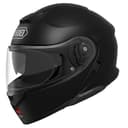
The touring modular the class is measured against. DOT and ECE 22.06, an AIM composite shell, a bigger QSV-2 sun visor and a Defogger-equipped shield — plus the cleanest integration for Shoei's own comms system. It is expensive and worth understanding why.

Best overall for glasses9.2
$942.85 · View on Amazon

Price as of August 8, 2026. #ad How we’re funded

2
Sena Outrush R

Sena Outrush R

The shortcut to a helmet-and-comms setup: the Outrush R builds Bluetooth speakers, a mic and a 4-way intercom into the shell, so there is no external unit to buy, clamp on or charge separately. DOT-certified, with a sun visor, at a single sensible price.

Best value modular8.1
$359.00 · View on Amazon

Price as of August 8, 2026. #ad How we’re funded

3
Scorpion EXO-GT930 Transformer

Scorpion EXO-GT930 Transformer

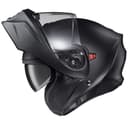
The trick here is a genuinely removable chin bar — the GT930 runs as a full-face or, with the bar off, a proper open-face, which few modulars actually allow. Add a sun visor and a sub-$300 price and it's the value convertible.

Best budget modular7.9
$279.95 · View on Amazon

Price as of August 8, 2026. #ad How we’re funded

4
Scorpion EXO-AT960

Scorpion EXO-AT960

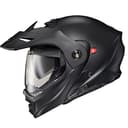
The Swiss-army ADV lid on a budget: it's modular AND adventure — flip-up chin bar, drop-down sun visor, removable peak — so it works as a touring modular or a dirt-road adventure helmet. DOT and ECE 22.06 for around $300.

Best adventure8.0
$329.95 · View on Amazon

Price as of August 8, 2026. #ad How we’re funded

5
LS2 Stream II

LS2 Stream II

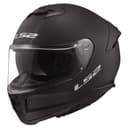
The value pick that punches above its ~$150 price: DOT and ECE 22.06 certification, a built-in drop-down sun visor, and LS2's AREM rotational-energy management — features usually reserved for helmets costing twice as much.

Best full-face8.2
$149.98 · View on Amazon

Price as of August 8, 2026. #ad How we’re funded

The picks in full

#1Best overall for glassesOur score9.2

Shoei Neotec 3

The touring modular the class is measured against. DOT and ECE 22.06, an AIM composite shell, a bigger QSV-2 sun visor and a Defogger-equipped shield — plus the cleanest integration for Shoei's own comms system. It is expensive and worth understanding why.

Strengths

  • DOT and ECE 22.06 in a composite AIM shell — not the polycarbonate most modulars use
  • QSV-2 internal sun visor is larger than the old QSV-1, and the CNS-3C shield is Pinlock-ready with a defogger
  • Purpose-built channel for the SRL3/COMLINK comms unit — no bulky external clamp

Trade-offs

  • The most expensive modular here by a wide margin
  • Comms unit is a separate, Shoei-specific purchase
CertificationsDOT, ECE 22.06
Weight1700 g
ShellAIM composite
Head shapeIntermediate oval
SizesXS-2XL
Internal sun visorYes
Pinlock-readyYes

Notable. QSV-2 sun visor; CNS-3C Pinlock shield with defogger; SRL3/COMLINK-ready

Specs read from the manufacturer / retailer listing, on July 19, 2026. “Not published” means the maker does not state that figure.

#2Best value modularOur score8.1

Sena Outrush R

The shortcut to a helmet-and-comms setup: the Outrush R builds Bluetooth speakers, a mic and a 4-way intercom into the shell, so there is no external unit to buy, clamp on or charge separately. DOT-certified, with a sun visor, at a single sensible price.

Strengths

  • Bluetooth 5.1 comms are built in — speakers, mic and a 4-way ~900 m intercom, up to 18 hours talk
  • One purchase covers helmet plus comms; nothing to clamp to the side
  • Includes a drop-down sun visor

Trade-offs

  • Polycarbonate shell; DOT listed but no ECE/Snell on the pages we verified
  • Built-in comms means you can't swap to a Cardo mesh system later
CertificationsDOT
Weight1730 g
ShellPolycarbonate ABS with multi-density EPS
Head shapeIntermediate oval
SizesS-2XL
Internal sun visorYes
Pinlock-readyNo

Notable. Integrated Bluetooth 5.1 comms (4-way intercom, ~900 m, 18 h talk); sun visor

Specs read from the manufacturer / retailer listing, on July 19, 2026. “Not published” means the maker does not state that figure.

#3Best budget modularOur score7.9

Scorpion EXO-GT930 Transformer

The trick here is a genuinely removable chin bar — the GT930 runs as a full-face or, with the bar off, a proper open-face, which few modulars actually allow. Add a sun visor and a sub-$300 price and it's the value convertible.

Strengths

  • Removable chin bar converts between full-face and open-face configurations
  • SpeedView drop-down internal sun visor and EXO-COM Bluetooth-ready pockets
  • DOT and ECE 22.05 certified at a budget price; includes a detachable peak

Trade-offs

  • Certified to the older ECE 22.05, not 22.06
  • Polycarbonate shell is heavy (~1,814 g) — one of the weightier lids here
CertificationsDOT, ECE 22.05
Weight1814 g
ShellAdvanced polycarbonate
Head shapeIntermediate oval
SizesXS-3XL
Internal sun visorYes
Pinlock-readyNo

Notable. Removable chin bar (full-face to open-face); SpeedView sun visor; EXO-COM-ready

Specs read from the manufacturer / retailer listing, on July 19, 2026. “Not published” means the maker does not state that figure.

#4Best adventureOur score8.0

Scorpion EXO-AT960

The Swiss-army ADV lid on a budget: it's modular AND adventure — flip-up chin bar, drop-down sun visor, removable peak — so it works as a touring modular or a dirt-road adventure helmet. DOT and ECE 22.06 for around $300.

Strengths

  • Modular flip-up chin bar plus a removable ADV peak — two helmets in one
  • Drop-down SpeedView sun visor and an EverClear fog-free shield
  • DOT and ECE 22.06 at a budget price

Trade-offs

  • Polycarbonate shell is heavy (~1,858 g in M) — the heaviest lid here
  • Jack-of-all-trades design isn't as focused as a dedicated street or dirt helmet
CertificationsDOT, ECE 22.06
Weight1858 g
ShellAdvanced LG polycarbonate
Head shapeIntermediate oval
SizesXS-3XL
Internal sun visorYes
Pinlock-readyNo

Notable. Modular flip-up chin bar; SpeedView sun visor; removable ADV peak

Specs read from the manufacturer / retailer listing, on July 19, 2026. “Not published” means the maker does not state that figure.

#5Best full-faceOur score8.2

LS2 Stream II

The value pick that punches above its ~$150 price: DOT and ECE 22.06 certification, a built-in drop-down sun visor, and LS2's AREM rotational-energy management — features usually reserved for helmets costing twice as much.

Strengths

  • ECE 22.06 certified at a budget price — the newest standard, rarely found this cheap
  • Built-in drop-down sun shield, which most premium full-faces here don't have
  • Pinlock-ready face shield and a rear spoiler with flow-through ventilation

Trade-offs

  • Kinetic Polymer Alloy shell is heavier and less premium than a composite lid
  • Fit and finish are good for the price, not flagship-grade
CertificationsDOT, ECE 22.06
Weight1550 g
ShellKinetic Polymer Alloy (KPA)
Head shapeIntermediate oval
SizesXS-3XL
Internal sun visorYes
Pinlock-readyYes

Notable. AREM rotational-energy management; drop-down sun visor; Pinlock-ready shield

Specs read from the manufacturer / retailer listing, on July 19, 2026. “Not published” means the maker does not state that figure.

Why modulars win for glasses

On a full-face, your glasses have to survive being dragged past the cheek pads every time you put the helmet on, and thicker or wider frames catch badly. On a modular, you flip the front up, put your glasses on exactly as you would off the bike, and lower the chin bar over them. Nothing scrapes, nothing bends. If you wear glasses every ride, that convenience alone is worth choosing a modular for, which is why four of our five picks are flip-ups. The one full-face we include earns its spot on a wide, easy eye port and a sun visor.

The second thing modulars do well is sun. Prescription glasses usually aren’t prescription sunglasses, so glare is a genuine problem for riders in glasses. A built-in drop-down sun visor tints your view without asking you to swap to prescription shades, and most of the picks here have one.

Fog: the other half of the problem

Glasses fog, and so does a shield, and the two compound. Two features help. A Pinlock-ready shieldtakes an anti-fog insert that keeps the visor clear, so at least the outer layer isn’t contributing. And good chin ventilationthat flows air up the inside of the shield keeps both your lenses and the visor from misting at low speed. When you shop, look for a helmet that’s Pinlock-ready and vents well — the spec tables below note both. Beyond the helmet, an anti-fog wipe on your glasses and cracking the shield a notch at stops do more than most riders expect.

The picks

The Shoei Neotec 3is the best helmet here for glasses, because it’s the best modularhere full stop: quiet, a big drop-down sun visor, a Pinlock-ready shield and a roomy, well-finished interior that takes eyewear arms kindly. Flip it up, put your glasses on, close it — done. It’s premium money, and worth it if you ride in glasses daily. The Sena Outrush Ris the value modular: the same flip-up advantage for glasses, plus a sun visor and built-in Bluetooth, at a mid price — a strong pick if you also want comms without a separate unit.

The Scorpion EXO-GT930 is the budget modular, and it has a trick that suits glasses well: the chin bar fully removes, so around town you can run it open-face and skip the shield-and-glasses interaction entirely, then reattach the bar for the highway. It adds a SpeedView sun visor. The Scorpion EXO-AT960is the adventure pick for glasses-wearing dual-sport riders: it’s modular andadventure, with a flip-up chin bar, a sun visor and a peak, carrying DOT and ECE 22.06. Both Scorpions are heavy polycarbonate lids — that’s the honest cost of the low price.

The one full-face we include is the LS2 Stream II, and it earns it: a genuinely budget helmet with ECE 22.06, a Pinlock-ready shield and a drop-down sun visor, so a glasses wearer on a tight budget still gets the anti-fog and anti-glare features that matter. You do have to slide your glasses past the cheek pads as with any full-face, so try it with your frames on before committing.

Before you buy: try it with your glasses on

This is the one roundup where you really should confirm fit yourself, because frames vary enormously. When you try a helmet, wear the glasses you actually ride in. Check that the arms don’t press hard on your temples after a couple of minutes, that the lenses have room and don’t touch the shield, and that you can put the helmet on and take it off without wrestling the frames. A modular makes all three easy; a full-face you should test carefully. Getting the base size and head shaperight comes first — a helmet that’s the wrong size for your head will never be comfortable in glasses no matter how eyewear-friendly it is. And a Pinlock insert, covered in our certifications guide’s sibling explainers, is the cheapest fog fix there is.
Frequently asked questions

What's the best type of motorcycle helmet for glasses?

A modular (flip-up) helmet. You raise the chin bar, put your glasses on your face normally, then lower the bar over them — so the arms never have to be forced past tight cheek pads the way they do on a full-face. That single advantage is why modulars take the top spots on this list. Add a Pinlock-ready shield and a drop-down sun visor and a modular handles fog and glare for glasses wearers too.

How do I stop my glasses fogging up in a helmet?

Attack it on both layers. A Pinlock-ready shield with an anti-fog insert keeps the visor clear, and strong chin ventilation flows air up the inside of the shield to keep both it and your lenses from misting at low speed. Beyond the helmet, an anti-fog wipe on your glasses and cracking the shield open a notch at stops help more than riders expect. Most of our picks are Pinlock-ready and vent well.

Can you wear glasses with a full-face helmet?

Yes, but it takes more care than a modular. On a full-face you slide the arms of your glasses past the cheek pads as you put the helmet on, so thinner or more flexible frames work best, and you should always try a specific full-face with your own glasses before buying. Helmets with eyewear channels in the cheek pads and a wider eye port — like the LS2 Stream II we include — make it much easier.

Do I need a sun visor if I wear prescription glasses?

It helps a lot, because prescription glasses usually aren't prescription sunglasses, so glare is a real problem. A built-in drop-down sun visor tints your view without making you swap to prescription shades you may not own. Four of our five picks include one — it's one of the reasons modulars suit glasses wearers so well.

Should I just buy a helmet a size bigger to fit my glasses?

No — that's the classic mistake. A helmet that's too big is louder, less protective and rotates in a crash, and it still won't fix the glasses-arm pressure, which comes from the cheek pads, not overall size. Get the correct size for your head first, then choose an eyewear-friendly design (ideally a modular) and confirm the fit with your actual glasses on.

Sources

Keep reading