The Lid Test

The Best All-Season Motorcycle Jackets

One jacket for spring, summer and fall is a real thing, but four seasons from a single shell mostly is not. Six waterproof three-season jackets ranked on the garment class, the armor in the box and where the waterproofing actually sits.

By Stephen V.Last verified How we compare

Most riders do not want three jackets. They want one that keeps them dry on a wet April commute, still breathes on a warm June afternoon, and does not leave them shivering on a cold October morning. That jacket exists, and it has a name in the trade: a three-seasonjacket, meaning a waterproof textile shell with vents for the warm days and an insulating layer for the cold ones. Search for it and you will also see it sold as “all-season” or “four-season,” which is where the honesty problem starts.

None of the six jackets on this page includes any form of heating, and none of their makers publishes a temperature rating. So the useful question is not “which one is warmest” but how each one is built to stretch the range it has. That comes down to four things, and we ranked on them in this order. First, the EN 17092 garment class, because it is the only certified statement about how the jacket holds up in a slide. Second, which CE armor is actually in the box, and whether the back protector is one of them. Third, where the waterproof membrane sits— built into the outer shell, or hung inside it as a liner — because that decides what happens in a long downpour and how much air the vents really move. Fourth, the thermal liner and the vents, which are the two tools that make a jacket three-season in the first place.

One finding shaped the whole list. On the Klim, the REV’IT! and both Alpinestars jackets, the maker prints an EN 17092 class and an armor level you can check. On the Joe Rocket, the class is printed but the armor level is not. On the FLY, the armor level is printed but the garment class is not. Those gaps are why the last two rank where they do, and each one is spelled out in its card below rather than smoothed over.

We have not crash-tested or worn any of these jackets and we own none of them — here is exactly how we compare gear instead. Every spec below was read from the maker’s own product page on the date recorded with each product, with a US retailer listing used only where the maker left a detail out. Prices in the text stay qualitative; the live number sits on each buy button.

How this is funded: we earn a commission if you buy through our links, at no extra cost to you. It never changes which helmet we recommend, and we’ll tell you plainly when a cheaper or lighter one is the better buy. Full disclosure.

Quick picks

Ranked on our spec score — certification, weight, features and value. Select a row to jump to the full write-up. We have not tested these helmets; here is exactly how we compare them instead.

#HelmetBest forOur scorePrice
1
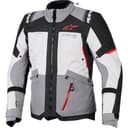
Klim Carlsbad

Klim Carlsbad

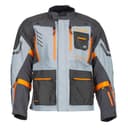
The most complete three-season jacket we could source: a CE AA garment certified to EN 17092-3, KLIM Rogue CE Level 2 armor at the shoulders, elbows AND back already in the box, and the GORE-TEX waterproofing built into the shell instead of hung behind it. What it leaves out is a thermal liner, so cold mornings are handled by what you wear underneath.

Best overall9.0
$799.99 · View on Amazon

Price as of September 19, 2026. #ad How we’re funded

2
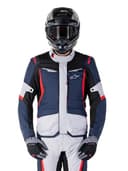
REV'IT! Sand 5 H2O

REV'IT! Sand 5 H2O

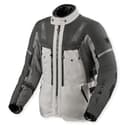
The widest temperature range here. A Class AA garment (EN 17092-3:2020) with SEEFLEX CE Level 2 shoulder and elbow armor, a detachable thermal liner, and a detachable hydratex 3L waterproof layer that REV'IT! designed to be worn either inside the jacket or over it. The catches: the back protector is an extra purchase, and the waterproofing is a layer you manage rather than one built in.

Widest temperature range8.8
$569.99 · View on Amazon

Price as of September 19, 2026. #ad How we’re funded

3
Alpinestars Andes V4 Drystar Jacket

Alpinestars Andes V4 Drystar Jacket

The best all-season jacket for the money: a fully CE-certified Class A garment with a Drystar waterproof membrane, a full-sleeve removable thermal liner, extended chest intakes with back exhaust ports, and Tech-Air airbag compatibility, at a mid-range price. The compromises are Level 1 armor and an empty back-protector compartment.

Best for the money8.5
$329.95 · View on Amazon

Price as of September 19, 2026. #ad How we’re funded

4
Alpinestars ST-1 Waterproof Jacket

Alpinestars ST-1 Waterproof Jacket

A simpler, slimmer road-touring take on the same formula: a Class A garment, CE Level 1 armor, a fixed waterproof membrane liner and a detachable thermal liner, for a little less than the Andes V4. It gives up airflow to get there, because the only vents Alpinestars lists are on the chest.

Best for road commuting8.1
$279.95 · View on Amazon

Price as of September 19, 2026. #ad How we’re funded

5
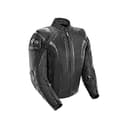
Joe Rocket Atomic 5.0

Joe Rocket Atomic 5.0

The do-it-all budget textile jacket: waterproof-treated shell, CE armor at the shoulders and elbows plus a removable spine pad, adjustable vents and a zip-out insulated liner. One jacket that stretches across three seasons for around $200.

Best budget7.9
$199.00 · View on Amazon

Price as of September 19, 2026. #ad How we’re funded

6
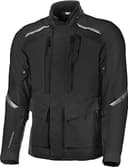
Fly Racing Terra Trek Jacket

Fly Racing Terra Trek Jacket

The three-season jacket for tall riders: CE Level 1 shoulder and elbow armor to EN 1621-1, a HydraGuard build FLY calls windproof, waterproof and breathable, a removable thermal liner, and Tall sizes most makers skip. It ranks last because FLY publishes no EN 17092 garment class, and the back pad in the box is foam, not CE armor.

Best for tall riders7.6
$299.95 · View on Amazon

Price as of September 19, 2026. #ad How we’re funded

The picks in full

#1Best overallOur score9.0

Klim Carlsbad

The most complete three-season jacket we could source: a CE AA garment certified to EN 17092-3, KLIM Rogue CE Level 2 armor at the shoulders, elbows AND back already in the box, and the GORE-TEX waterproofing built into the shell instead of hung behind it. What it leaves out is a thermal liner, so cold mornings are handled by what you wear underneath.

Strengths

  • CE AA rating certified to EN 17092-3, one class above the Class A jackets on this page
  • KLIM Rogue CE Level 2 armor included at the shoulders, elbows and back, so there is no protector left to buy
  • GORE-TEX Performance Shell that Klim guarantees to keep you dry, with the waterproofing in the outer jacket rather than a separate liner
  • Six vents: two double-headed forearm vents, two chest vents and two offset back exhaust vents

Trade-offs

  • No thermal liner in Klim's feature list, so its cold-weather range depends on the layers you already own
  • The most expensive jacket on this page
  • Klim prints CE Level 2 for the armor but not the EN 1621 clause, and publishes no weight
  • Sizes run SM to 3X only
MaterialGORE-TEX Performance Shell; FPL400 main chassis fabric with 630D CORDURA twisted-yarn overlays on the shoulders and elbows
ArmorKLIM Rogue CE Level 2 shoulder, elbow and back pads (all included); garment CE AA to EN 17092-3
WaterproofYes
Best forRiders in wet climates who want AA certification and full Level 2 armor without a liner system to manage

Notable. GORE-TEX shell, CE AA garment and Level 2 armor at shoulders, elbows and back from the box

Specs read from the manufacturer / retailer listing, on September 16, 2026. “Not published” means the maker does not state that figure.

#2Widest temperature rangeOur score8.8

REV'IT! Sand 5 H2O

The widest temperature range here. A Class AA garment (EN 17092-3:2020) with SEEFLEX CE Level 2 shoulder and elbow armor, a detachable thermal liner, and a detachable hydratex 3L waterproof layer that REV'IT! designed to be worn either inside the jacket or over it. The catches: the back protector is an extra purchase, and the waterproofing is a layer you manage rather than one built in.

Strengths

  • Class AA certified according to EN 17092-3:2020
  • SEEFLEX CE Level 2 shoulder and elbow protectors, certified to EN 1621-1:2012
  • Detachable thermal liner that doubles as a separately wearable jacket off the bike
  • Detachable hydratex 3L waterproof layer wearable over or under the jacket, plus fold-down chest and back ventilation panels
  • Ready for the Avertum Tech-Air airbag system (REV'IT! says to go one size up)

Trade-offs

  • No back protector in the box: the jacket is only prepared for a SEESOFT CE Level 2 back insert and a divided Level 1 chest protector
  • Worn under the shell, the waterproof layer keeps you dry but leaves the outer fabric free to soak up rain
  • Three layers to manage (shell, thermal liner, waterproof layer), and REV'IT! publishes no weight
  • Amazon stock was thin on our check, with most size and color listings showing only a few units left
MaterialHigh-density 600D polyester outer shell; detachable hydratex 3L waterproof layer; detachable thermal liner
ArmorSEEFLEX CE Level 2 shoulder + elbow (EN 1621-1:2012); prepared for SEESOFT Level 2 back and Level 1 divided chest protectors (sold separately); garment Class AA to EN 17092-3:2020
WaterproofYes
Best forAdventure and touring riders who start cold, finish hot and want one jacket for the whole day

Notable. Over-or-under hydratex 3L waterproof layer plus a separately wearable thermal liner

Specs read from the manufacturer / retailer listing, on September 16, 2026. “Not published” means the maker does not state that figure.

#3Best for the moneyOur score8.5

Alpinestars Andes V4 Drystar Jacket

The best all-season jacket for the money: a fully CE-certified Class A garment with a Drystar waterproof membrane, a full-sleeve removable thermal liner, extended chest intakes with back exhaust ports, and Tech-Air airbag compatibility, at a mid-range price. The compromises are Level 1 armor and an empty back-protector compartment.

Strengths

  • Fully CE-certified garment to EN 17092-4:2020, Class A
  • Drystar membrane for 100% waterproofing plus a removable long-sleeve thermal liner (100 g body, 80 g sleeves)
  • Extended direct ventilation openings with chest air intakes and back exhaust ports
  • Tech-Air Ready, so an Alpinestars airbag can be added later without a new jacket
  • Sizes run to 6XL at the US retailer we checked

Trade-offs

  • Nucleon Flex Plus shoulder and elbow armor is CE Level 1 (EN 1621-1:2012), not Level 2
  • Back and chest protectors are accessory upgrades, not included
  • Alpinestars does not say whether the Drystar membrane is bonded to the shell or hung behind it, and publishes no weight
MaterialReinforced 450D polyfabric and ripstop with stretch softshell panels; Drystar waterproof membrane; removable thermal liner
ArmorNucleon Flex Plus CE Level 1 shoulder + elbow (EN 1621-1:2012); chest and back compartments for optional protectors; garment EN 17092-4 Class A
WaterproofYes
Best forCommuters and adventure-touring riders who want one waterproof, liner-equipped jacket without a premium price

Notable. Drystar membrane, full-sleeve thermal liner and Tech-Air compatibility at a mid-range price

Specs read from the manufacturer / retailer listing, on September 16, 2026. “Not published” means the maker does not state that figure.

#4Best for road commutingOur score8.1

Alpinestars ST-1 Waterproof Jacket

A simpler, slimmer road-touring take on the same formula: a Class A garment, CE Level 1 armor, a fixed waterproof membrane liner and a detachable thermal liner, for a little less than the Andes V4. It gives up airflow to get there, because the only vents Alpinestars lists are on the chest.

Strengths

  • Fully CE-certified garment to EN 17092-4:2020, Class A, with the armor also rated as an EN 17092-6:2020 Class C impact ensemble
  • Fixed waterproof membrane liner plus a detachable thermal liner that stows in the rear cargo pocket
  • Tech-Air Ready, with a pant connection zipper for the matching ST-1 WP pants
  • Pre-curved arms, sleeve volume adjusters and an extended back cut for the riding position

Trade-offs

  • Front chest vents are the only ventilation Alpinestars lists, the least airflow on this page
  • The waterproof membrane is a fixed inner liner, so the outer shell can soak through in sustained rain
  • CE Level 1 shoulder and elbow armor; back and divided chest protectors are optional upgrades
  • The lightest thermal liner here (80 g torso, 80 g sleeves), and no published weight
MaterialTextile shell with a fixed waterproof membrane liner and a detachable thermal liner (80 g torso, 80 g sleeves)
ArmorNucleon Flex Plus CE Level 1 shoulder + elbow; pockets for optional back and divided chest protectors; garment EN 17092-4 Class A
WaterproofYes
Best forRoad commuters who need a waterproof jacket for cold, wet mornings more than for hot afternoons

Notable. Clean road-touring cut with a fixed waterproof liner, detachable thermal liner and Tech-Air compatibility

Specs read from the manufacturer / retailer listing, on September 16, 2026. “Not published” means the maker does not state that figure.

#5Best budgetOur score7.9

Joe Rocket Atomic 5.0

The do-it-all budget textile jacket: waterproof-treated shell, CE armor at the shoulders and elbows plus a removable spine pad, adjustable vents and a zip-out insulated liner. One jacket that stretches across three seasons for around $200.

Strengths

  • Waterproof-treated Rock Tex shell with a removable insulated liner for cooler rides
  • CE armor at shoulders and elbows plus a removable spine pad; EN 17092-A certified garment
  • Cross Linked Ventilation and a 6-point adjustment system for fit

Trade-offs

  • Exact CE armor levels aren't stated on the maker's page (only 'CE approved')
  • Value construction — not the abrasion budget of a premium jacket
MaterialTextile (waterproof-treated Rock Tex / Hitena)
ArmorCE armor shoulders + elbows + removable spine; EN 17092-A garment
WaterproofYes
Best forNew and budget riders who want one three-season jacket that handles rain

Notable. Waterproof shell; removable insulated liner; Cross Linked Ventilation

Specs read from the manufacturer / retailer listing, on July 19, 2026. “Not published” means the maker does not state that figure.

#6Best for tall ridersOur score7.6

Fly Racing Terra Trek Jacket

The three-season jacket for tall riders: CE Level 1 shoulder and elbow armor to EN 1621-1, a HydraGuard build FLY calls windproof, waterproof and breathable, a removable thermal liner, and Tall sizes most makers skip. It ranks last because FLY publishes no EN 17092 garment class, and the back pad in the box is foam, not CE armor.

Strengths

  • CE Level 1 removable shoulder and elbow armor that FLY states conforms to EN 1621-1
  • HydraGuard construction described as windproof, waterproof and breathable, plus a removable thermal liner
  • Small to 4X-Large, with Tall versions from Medium to 3X-Large
  • Zippered shoulder intake vents, chest vents and two rear exhaust vents, per the US retailer listing

Trade-offs

  • No EN 17092 garment class published, so there is no certified abrasion claim for the jacket itself
  • The included back pad is PE foam, not CE armor; FLY's Barricade CE back protector is a separate purchase
  • FLY does not say whether HydraGuard is a laminate or a liner, and publishes no weight
  • FLY's own page states it cannot be purchased or sold in California or New York
MaterialPoly textile shell with high-abrasion fabric in critical wear areas; HydraGuard waterproof, breathable construction; removable thermal liner
ArmorCE Level 1 shoulder + elbow (EN 1621-1); removable PE back pad (not CE-rated); no EN 17092 garment class published
WaterproofYes
Best forTall riders who want waterproof three-season coverage at a mid-range price

Notable. Tall sizes from Medium to 3X-Large with a removable thermal liner

Specs read from the manufacturer / retailer listing, on September 16, 2026. “Not published” means the maker does not state that figure.

How we ranked these

The garment class comes first because nothing else on the label measures abrasion.EN 17092 rates a whole motorcycle garment, and its classes run from AAA down through AA, A and B to C. The test house SATRA describes the key difference in terms of armor: “Elbow, shoulder, knee and hip impact protectors are to be present in Class AAA and AA garments as a mandatory requirement, with the hip protectors being optional in Class A garments.” On a jacket that means shoulder and elbow protectors are required either way, and the class letter mostly tells you how demanding the abrasion tests were. The clause number is the quickest way to check a claim: EN 17092-2 is Class AAA, -3 is AA and -4 is A, and the Klim, REV’IT! and Alpinestars pages print the clause alongside the class. Two of the six jackets are AA, three are A, and one publishes no class at all. Our CE armor and garment ratings guide explains the whole scale in plain English.

Then the armor that is really included.Notice what the SATRA quote above does not mention: a back protector. The garment class does not require one, and plenty of jackets leave the back pocket empty. Three of the six here ship with something in it, and only one of those is rated CE armor. The Klim Carlsbad includes KLIM’s Rogue CE Level 2 pads at the shoulders, elbows and back. The Joe Rocket Atomic 5.0 includes a removable spine pad with no rating stated. The FLY Terra Trek includes a PE foam back pad that FLY itself describes as upgradable to its CE-rated Barricade protector. The REV’IT! and both Alpinestars jackets ship with an empty compartment, sized for a protector you buy separately. Armor level matters too: Level 2 transmits less force than Level 1 in the EN 1621 test, and only the Klim and the REV’IT! publish Level 2 at the shoulders and elbows.

Then where the waterproofing sits. This is the spec most listings bury and the one that most changes how a jacket behaves on a long wet day, so it gets its own section below. The short version: a membrane built into the outer shell stops water at the surface, while a membrane worn as a liner keeps you dry but lets the outer fabric get soaked first.

Then the liner and the vents, which are what make a jacket three-season.Five of the six include a removable thermal liner; the Klim does not list one. Only Alpinestars publishes how much insulation is in its liners — 100 g in the body and 80 g in the sleeves on the Andes V4, 80 g in both on the ST-1 — so a warmth comparison across brands is not something anyone can honestly print. Vent counts are easier to compare, and they range from six listed vents on the Klim down to front chest vents only on the ST-1. After those four criteria we looked at fit and size range, and at whether an airbag can be added later.

The picks side by side

Here is what each maker publishes on the four things this ranking turns on. “Not published” means we could not find the figure on the maker’s page or the US retailer listing, not that we assume the worst.

JacketGarment classArmor in the boxWaterproofingThermal liner
Klim CarlsbadAA (EN 17092-3)Level 2 shoulder, elbow and backGORE-TEX Performance ShellNone listed
REV’IT! Sand 5 H2OAA (EN 17092-3:2020)Level 2 shoulder and elbow; back sold separatelyDetachable hydratex 3L layer, worn over or underDetachable, fill weight not published
Alpinestars Andes V4 DrystarA (EN 17092-4:2020)Level 1 shoulder and elbow; back sold separatelyDrystar membrane, construction not publishedRemovable, 100 g body / 80 g sleeves
Alpinestars ST-1 WaterproofA (EN 17092-4:2020)Level 1 shoulder and elbow; back sold separatelyFixed membrane linerDetachable, 80 g torso / 80 g sleeves
Joe Rocket Atomic 5.0A (EN 17092-A)CE shoulder and elbow, level not published; unrated spine padWaterproof-treated shell, no membrane namedRemovable insulated, fill weight not published
FLY Racing Terra TrekNot publishedLevel 1 shoulder and elbow; PE foam back pad (not CE)HydraGuard, construction not publishedRemovable, fill weight not published

Shell, liner or layer: where the waterproofing sits

There are three ways to make a textile jacket waterproof, and the six picks here cover all of them. The motorcycle-gear retailer Motolegends gives the clearest short definitions. In a laminatedgarment, “the membrane is bonded, or heat sealed, to the inner surface of the outer, protective fabric.” In a drop-linergarment, “the membrane is suspended from the shoulders of a jacket,” hanging behind the outer fabric instead of attached to it. And some jackets skip the separate membrane question entirely and rely on a treated outer fabric with sealed zippers.

The difference shows up in the rain and at the vents. A drop-liner jacket keeps your body dry while its outer shell takes on water, and in Motolegends’ words, “in heavy rain, a drop-liner garment will hold that water” — after hours at speed the shell can end up waterlogged, and wind chill on a soaked jacket makes you feel much colder. A laminated jacket gets damp on the surface but, per the same source, never wets out, and it dries far faster once you stop. Venting favors the laminate too: with the membrane bonded to the fabric, air through an open zipper “passes straight through to the body,” instead of meeting a windproof membrane hanging behind it. A fully removable waterproof liner vents best of all when it is out, but Motolegends notes that because water can get in through the zipper, a removable liner “cannot be totally relied upon in really heavy rain.”

The drop liner is not simply worse, though. The same retailer says drop-liner gear has historically been cheaper, tends to be warmer because the loose membrane leaves an insulating air gap, and is “more comfortable to wear,” while bonding a membrane to the outer fabric tends to make it stiffer. For a rider who sees a few hours of rain a month, a well-made liner jacket is a perfectly good answer.

Mapped onto this list: the Klim Carlsbadbuilds its GORE-TEX into the shell, which Klim calls a “GORE-TEX PERFORMANCE SHELL” and backs with its “guaranteed to keep you dry” line. The Alpinestars ST-1uses what Alpinestars calls a “fixed waterproof liner,” which is the drop-liner approach. The REV’IT! Sand 5 H2Odoes something neither of those does: its hydratex 3L waterproof layer detaches, and REV’IT! designed it to be worn either inside the jacket or over it. Worn over the shell in a real downpour, it keeps the protective jacket underneath from soaking through, which sidesteps the weakness of a removable liner; taken out on a dry hot day, it leaves the vents with nothing in the way. The Joe Rocket Atomic 5.0 relies on a waterproof-treated shell with waterproof vent zippers and names no membrane, so expect to re-treat it as the finish wears. Alpinestars says the Andes V4has a “Drystar membrane” and FLY says the Terra Trekis waterproof and breathable, but neither says where the membrane sits, so we have not guessed.

Which one should you buy?

Buy the Klim Carlsbad if rain is the main event and you already own warm layers. It is our top pick because it is the only jacket here that is complete from the box: an AA garment, Level 2 armor at the shoulders, elbows and back, waterproofing in the shell itself, and six vents to dump heat when the rain stops. Its honest limit is the cold. Klim lists no thermal liner, so on a near-freezing morning you are relying on a fleece or a heated vest you already own. It is also the most expensive jacket on this page, and Klim prints CE Level 2 for the armor without naming the EN 1621 clause behind it.

Buy the REV’IT! Sand 5 H2O if your day starts cold and ends hot.This is the jacket with the most separate tools: an AA shell, SEEFLEX Level 2 shoulder and elbow armor certified to EN 1621-1:2012, a detachable thermal liner that also works as a jacket off the bike, the over-or-under waterproof layer, and fold-down vent panels on the chest and back. The costs are real. The back protector is an extra purchase on a premium jacket, three layers means more to pack and more to manage, and on the day we checked most size and color listings at the retailer we link showed only a few units left. If you plan to add REV’IT!’s Avertum Tech-Air airbag, the maker says to go one size up.

Buy the Alpinestars Andes V4 Drystar if you want most of that for a mid-range price. It is a fully certified Class A garment with a Drystar membrane, the heaviest thermal liner Alpinestars publishes on this page, extended chest air intakes with back exhaust ports, and Tech-Air compatibility. Alpinestars gives it CE Level 1 Nucleon Flex Plus armor to EN 1621-1:2012 and an empty chest and back compartment, so budget for a back protector. Sizes run to 6XL at the US retailer we checked, which is well beyond most jackets here. For most riders shopping this category, this is the sensible default.

Buy the Alpinestars ST-1 Waterproof if your riding is cold, wet commuting.It shares the Andes V4’s Class A certification, Level 1 armor and Tech-Air compatibility in a cleaner, road-oriented cut with a pant connection zipper, and Alpinestars lists it for a little less. The trade is airflow: front chest vents are the only ventilation Alpinestars lists, and the waterproofing is a fixed inner liner, so it runs warmer on a hot day than anything above it. Alpinestars also rates its armor setup as an EN 17092-6 Class C impact ensemble, a detail it does not print for the Andes V4.

Buy the Joe Rocket Atomic 5.0 if the budget is firm.It is the cheapest way on this page to get an EN 17092 Class A garment with CE shoulder and elbow armor, a spine pad and a removable insulated liner. It is the pick that asks you to trust the most: Joe Rocket says the armor is “C.E. approved” without stating a level, rates nothing on the spine pad, and waterproofs with a treated shell instead of a named membrane. On the day we checked, Joe Rocket’s own online store was listing it on sale below the Amazon price our button shows, so check both before you buy. Our full Atomic 5.0 review goes deeper on the trade-offs.

Buy the FLY Racing Terra Trek if standard sizes do not fit you.FLY sells it from Small to 4X-Large plus Tall versions from Medium to 3X-Large, which is the one thing on this page nothing else offers. It pairs CE Level 1 armor that FLY says conforms to EN 1621-1 with a removable thermal liner and HydraGuard waterproofing. It ranks last for two published reasons: FLY states no EN 17092 garment class, and the back pad in the box is PE foam rather than CE armor. There is also a practical one worth knowing before you order: FLY’s own product page says the jacket “cannot be purchased or sold in California or New York.”

What “four-season” really takes

A jacket can be honest about three seasons. The fourth is a different problem. The insulating liners in these jackets are thin by design so they can come out and pack small, and none of the six carries any heating. Riders who genuinely ride through winter usually solve it with layers under the jacket rather than a heavier jacket: a wind-blocking mid layer, and for real cold a heated vest or jacket liner powered by the bike. A waterproof shell with room for those layers is the right starting point, which is one reason the Klim’s lack of a liner matters less to year-round riders than it first appears.

The other half of an all-weather setup is the lower half. A waterproof jacket over jeans still delivers a wet, cold rider, and several jackets here have a zipper to connect a matching pant. Our riding pants roundup ranks a waterproof touring pant with its own Drystar membrane and thermal liner. If you need more protection underneath without more bulk, our armored base layer roundupcovers the back and chest protectors most of these jackets leave out, and a dry head matters as much as a dry chest — our helmets for rain page ranks lids on Pinlock readiness, closable vents and sealing.

What we left out, and why

The Klim Badlands Pro A3.It is the obvious step up from the Carlsbad: CE AAA certified to EN 17092-2, a GORE-TEX 3-layer Pro Shell, and KLIM’s Rogue EXP Level 2 armor. On certification it outranks everything on this page, and it costs roughly twice what the Carlsbad does. We left it out because at that price it is a different purchase, not a better answer to the three-season question. If AAA is what you want, buy it.

The Scorpion EXO Optima. It is the waterproof touring pick in our main jackets roundup and would belong here on its specs. On our check, the Amazon listing we track for it showed as currently unavailable, and the remaining listings were down to a handful of units in scattered sizes. We do not rank a jacket most readers cannot buy in their size.

Lower-priced jackets sold as “all season.” Search the phrase at the retailer we link and the results include lower-priced textile jackets with “CE armor” and “all season” in the product title. A title is not a certification. Unless the maker names an EN 17092 class for the garment and a level for the armor, there is nothing to check the claim against, and we applied the same rule we use on every gear page: we do not rank a protection claim we cannot check against a standard. The Terra Trek is the closest this page comes to an exception, and it earns its place with a published EN 1621-1 armor standard and a size range nothing else matches, not with its missing garment class.

Mesh summer jackets. A good mesh jacket can be worn with a rain shell over it, but that is a summer jacket with an accessory, not a three-season design. If most of your riding is hot, the mesh pick in our jackets roundup is the better buy.
Frequently asked questions

What is a three-season motorcycle jacket?

It is a textile jacket built to cover spring, summer and fall from one shell: waterproof, with zippered vents for warm days and a removable thermal liner for cold ones. The phrase is a description, not a certification, and none of the makers on this page publishes a temperature rating, so the useful way to compare them is on the garment class, the armor in the box, where the waterproof membrane sits, and what the liner and vents actually are.

Is there such a thing as a four-season motorcycle jacket?

Not in the sense most riders mean. None of the jackets here includes any heating, and their liners are deliberately thin so they can be removed and packed. Riders who ride through real winter usually wear a waterproof three-season shell and add layers underneath, often a heated vest or jacket liner powered by the bike. Buy the shell for the weather you ride in most, and handle deep cold with layers.

Is a laminated jacket better than one with a waterproof liner?

It is better in heavy rain and for venting, and a liner is often warmer and cheaper. In a laminated jacket the membrane is bonded to the outer fabric, so water stops at the surface and air from an open vent reaches you directly. In a drop-liner jacket the membrane hangs inside, so you stay dry while the outer shell takes on water, and after hours of heavy rain at speed a soaked shell makes you feel much colder. A fully removable liner vents best when it is out but is the least reliable in a real downpour. The REV'IT! Sand 5 H2O splits the difference with a detachable waterproof layer designed to be worn over or under the jacket.

Is EN 17092 Class A good enough, or do I need AA?

Class A is a real, fully tested garment certification and is a sensible baseline for road riding. AA is the more demanding class, and per the test house SATRA both AAA and AA garments must include their impact protectors, with hip protectors optional only in Class A. On a jacket the practical difference is a tougher abrasion requirement. If you ride fast on open roads or tour long distances, AA is worth paying for; for commuting and mixed riding, a Class A jacket with good armor is a reasonable choice.

Do all-season motorcycle jackets come with a back protector?

Usually not, and the EN 17092 class does not require one. Of the six jackets here, only the Klim Carlsbad ships with a CE-rated back protector (KLIM Rogue Level 2). The Joe Rocket includes an unrated spine pad, the FLY includes a PE foam pad, and the REV'IT! and both Alpinestars jackets ship with an empty compartment for a protector you buy separately. A back protector is one of the most worthwhile add-ons, so budget for one whenever it is missing.

Can I add an airbag to an all-season jacket?

On some of them. Both Alpinestars jackets here are Tech-Air Ready, meaning they are designed to work with Alpinestars' Tech-Air airbag systems, and REV'IT! says the Sand 5 H2O is ready for its Avertum Tech-Air system if you go one size up. Klim, Joe Rocket and FLY do not list airbag compatibility for these models. Our airbag vest roundup covers the systems that can be worn under or over a jacket instead.

Will a waterproof three-season jacket be too hot in summer?

It will run warmer than a mesh jacket, because a waterproof layer always restricts airflow somewhat. How much depends on the vents and where the membrane sits. A jacket with a lot of zippered venting and the membrane in the shell, like the Klim, or one whose waterproof layer comes out entirely, like the REV'IT!, copes best. A jacket with chest vents only and a fixed liner, like the Alpinestars ST-1, is the one to avoid if your summers are hot.

Sources

  • SATRA — EN 17092:2020 Parts 1-6, protective clothing for motorcycle ridersThe test house's breakdown of the garment standard: "Class C garments are designed to provide impact protection for areas covered by the impact protector(s) only, and they do not offer minimum abrasion protection" (accessed September 10, 2026)
  • Klim — Carlsbad Jacket (current, fourth generation)Our top pick: "GORE-TEX PERFORMANCE SHELL", "CE AA rating certified to EN 17092-3", KLIM Rogue CE Level 2 shoulder, elbow and back pads, six listed vents — and no thermal liner in the feature list (accessed September 16, 2026)
  • REV'IT! — Sand 5 H2O Jacket (US)"Class AA certified according to standard EN 17092-3:2020", SEEFLEX CE-level 2 shoulder and elbow protectors, detachable thermal liner, detachable hydratex 3L layer wearable over or under the jacket, back protector prepared for but not included (accessed September 16, 2026)
  • Alpinestars — Andes V4 Drystar Jacket"Fully CE-certified motorcycling garment to CE-Category II EN17092-4: 2020 standard – A Class", CE Level 1 EN1621-1:2012 Nucleon Flex Plus shoulder and elbow protectors, removable thermal liner (100g body, 80g sleeves), Tech-Air Ready (accessed September 16, 2026)
  • RevZilla — Alpinestars Andes V4 Drystar Jacket (US)The US retailer listing: chest air intakes and back exhaust ports, a "Waterproof Drystar breathable membrane", and sizes running to 6XL (accessed September 16, 2026)
  • Alpinestars — ST-1 Waterproof Jacket"Fully CE certified motorcycling garment to CE - Category II EN 17092-4:2020 – A Class", a fixed waterproof membrane liner, a detachable 80g/80g thermal liner and front chest vents (accessed September 16, 2026)
  • Joe Rocket — Atomic 5.0 Jacket"EN 17092-A CERTIFIED", a "Waterproof treated Rock Tex and Hitena outer shell", "C.E. approved armor in shoulders & elbows" with no level stated, removable spine armor and a removable insulated full-sleeve liner (accessed September 16, 2026)
  • FLY Racing — Terra Trek Jacket"CE Level 1 removable shoulder/elbow armor - conforms to EN 1621-1 standard", "Removable PE back pad", HydraGuard "Windproof, waterproof, breathable", removable thermal liner, Tall sizes — and no EN 17092 garment class (accessed September 16, 2026)
  • RevZilla — Fly Racing Street Terra Trek Jacket (US)The US retailer listing: large zippered shoulder intake vents, chest vents and two rear exhaust vents, and a "Pocket for optional Barricade Level 1 CE back protector (sold separately)" (accessed September 16, 2026)
  • Motolegends — Laminated vs Drop-Liner Motorcycle GarmentsA gear retailer's explainer on where the membrane sits: bonded to the outer fabric (laminated) or hung from the shoulders behind it (drop liner) — and why that changes wet-out, venting and warmth (accessed September 16, 2026)
  • Klim — Badlands Pro A3 JacketThe step above our top pick, named but not ranked: "CE AAA rating certified to EN 17092-2", a GORE-TEX 3-layer Pro Shell and KLIM Rogue EXP CE Level 2 shoulder and elbow armor, at roughly twice the Carlsbad's price (accessed September 16, 2026)

Keep reading