The comms decision, which is really the whole page
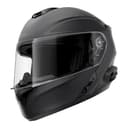
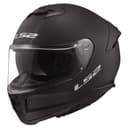
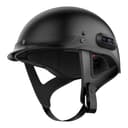
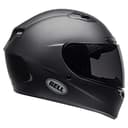
Two of our six picks have the intercom inside the shell: the Sena Outrush R (Bluetooth 5.1, four-way, around 900 m, up to 18 hours of talk time) and the Sena Cavalry 2 (Mesh Intercom 3.0, quoted at up to 0.8 miles bike-to-bike in open terrain, with Group Mesh for up to 24 participants, also 18 hours). Two more are explicitly prepared for a unit you add: the Scorpion EXO-GT930 has EXO-COM pockets, and the LS2 Stream II and Bell Qualifier DLX take a universal clamp-on like anything else.
The case for built-in on a passenger helmet is not sound quality — a good standalone unit beats both of these. It is that an occasional passenger will not maintain a device. A clamp-on intercom that lives in a drawer between rides is flat when you need it, and the person who has to pair it is never the person wearing it. If you and your pillion ride together most weekends and you already run a Cardo or Sena system, buy a second unit of whatever you already own instead and ignore this argument; mixing brands in mesh is the one thing that reliably goes wrong, which we cover in can Cardo and Sena connect.
One trade-off to say out loud about built-in comms: when the electronics date, they date inside a helmet you cannot upgrade. The Outrush R is already the outgoing generation — Sena sells the Outrush 2 above it with Mesh Intercom 3.0 on top of Bluetooth 5.2 — and the Cavalry 2’s hardware is not removable either. For a passenger helmet that will do a few thousand miles a year, we think that is an acceptable trade. For your own daily helmet, it is a harder one, and our smart helmet roundup argues it properly.
Coverage: the one place we will not make the comfortable argument
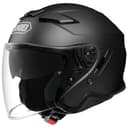
The Sena Cavalry 2 is the lightest helmet on this page by 600 g, and that is a genuinely large advantage on a passenger’s neck. It is also a half helmet. It has no chin bar, no face shield and, per Sena’s own specification, no internal sun visor, so glare is handled by sunglasses. The Shoei J-Cruise II is an open-face: full-face shield quality, full-face sun shield, no chin bar.
We are not going to tell you those are equivalent to a full-face, because they are not, and we have written at length about exactly what the chin bar does in open-face vs full-face. Both are on this page because reach matters on a passenger helmet in a way it does not on yours — a helmet your pillion refuses to wear protects nothing — and because for a cruiser doing town speeds with a rider who already runs a half helmet, matching the pair is a real decision people make. If coverage is your priority, the top two picks are the answer and the ranking already reflects that.
What we left out, and why
Premium full-face flagships. The Shoei RF-1400 and the Arai Contour-X are better helmets than anything on this page, and if your passenger is a rider in their own right, buy one of those and stop reading. They are not here because they have no sun visor, no built-in comms and no flip-up chin bar — three of our four criteria — and because spending flagship money on a seat someone occupies six times a year is a hard recommendation to defend.
Any Snell-rated pillion option. There is not one on this page, and that is not an oversight: no modular, open-face or half helmet in our registry states a Snell rating. If a current Snell rating is non-negotiable for your passenger, you are buying a full-face and the list is on our Snell-approved helmets page.
“Passenger” or “universal fit” helmets. Search this topic and the results fill with cheap lids sold specifically as spare passenger helmets, often in one size. We could not source a published certification, weight or shell material for any of them that we would print, and a one-size helmet cannot be fitted to a head. A helmet that is loose is the one failure mode that undoes every other spec on this page.