The Lid Test

Track Day Gear: What You Actually Need

Six pieces, assembled the way an inspector walks it — helmet down to boots — with a published certification behind every one. Plus the two things no two organizations agree on, which is exactly why you read your own sheet and not ours.

By Stephen V.Last verified How we compare

The verdict

The short version: a Snell-rated full-face, a one-piece or zip-together two-piece leather suit, full-gauntlet leather gloves, CE boots over the ankle, and a back protector. That is the shape of almost every track-day gear requirement in the US, and if you assemble those five things with a published certification behind each one you will not be the person turned away at inspection.

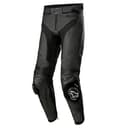
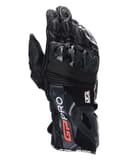
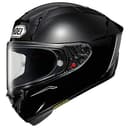
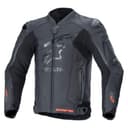
Our picks: the Shoei X-Fifteen for the helmet, because it is the only helmet we list carrying DOT, ECE 22.06 and Snell M2025R together, and because it is designed for a tucked riding position rather than an upright one. The Alpinestars GP Plus R V4 Rideknit jacket and Missile V3 Airflow pant for the leathers, because they are both CE AA to EN 17092-3 in 1.3 mm leather and they zip together at the waist — which is the two-piece route most organizations accept. The Alpinestars GP Pro R4 for gloves: a printed EN 13594:2015 Level 1 KP clause, a palm slider, a finger bridge and a kangaroo palm.

And the thing we are not going to do: tell you any of this passes tech inspection at your track. There is no national standard. Organizations publish their own sheets, they differ on the two most expensive questions — one-piece versus two-piece, and whether a back protector must be in the jacket or can be worn under it — and they revise them between seasons. Read yours. What this page gives you is what each piece is certified to, so the sheet is easy to check against.

A first track day costs more in gear than it does in track time, and almost all of that money goes on things a street rider already owns a worse version of. This page is the kit list, in the order an inspector walks it, with the published certification for each piece sitting next to it so you can hold it up against whatever your organization’s sheet actually asks for.

Three things make track gear different from good street gear, and it is worth being precise about them because the marketing is not.

One: leather, and specifically the abrasion class. Track gear is leather almost everywhere, not because textile is bad — our leather vs textile comparison makes the case that the material is the wrong thing to argue about — but because the EN 17092 class that textile reaches at reasonable weight is usually Class A, and both leather pieces on this page are Class AA. Sustained sliding at track speed is the one scenario where the gap between those classes is the whole argument.

Two: it has to be one closed system. This is the detail that trips up riders assembling a kit from parts. A jacket and a pant that do not fasten to each other will separate in a slide, and the exposed skin is at the lower back. That is why the sheets ask for a one-piece suit or a two-piece that zips together all the way round, and why both our clothing picks carry the matching waist connection zip.

Three: sliders, and where they are. A palm slider on the heel of the hand, knee sliders on the pant, a toe slider on the boot and shoulder sliders on the jacket are all doing the same job: giving a hard surface that skids instead of a soft one that grabs and twists the joint behind it. Every piece on this page has the slider its category is supposed to have, which is less common than you would expect.

We own none of this gear, have ridden none of it and have never stood in a tech inspection line on your behalf. Here is exactly what we do instead. Every spec below comes from the page named on each product card, read on the date recorded there. Prices are live on the buy buttons with their own date stamp.

How this is funded: we earn a commission if you buy through our links, at no extra cost to you. It never changes which helmet we recommend, and we’ll tell you plainly when a cheaper or lighter one is the better buy. Full disclosure.

Quick picks

Ranked on our spec score — certification, weight, features and value. Select a row to jump to the full write-up. We have not tested these pieces of gear; here is exactly how we compare them instead.

#ItemBest forCE armorMaterialWaterproofOur scorePrice
1
Shoei X-Fifteen

Shoei X-Fifteen

Shoei's race flagship — the Marquez lid — with DOT, ECE 22.06 and Snell M2025R, wind-tunnel aero and seven closable intakes. It is built for a tucked track position, which is exactly why it is not the one to buy for upright commuting.

The helmetNot publishedNot publishedNot published9.0
$979.99 · View on Amazon

Price as of October 16, 2026. #ad How we’re funded

2
Alpinestars GP Plus R V4 Rideknit Leather

Alpinestars GP Plus R V4 Rideknit Leather

The most complete sport jacket we could source on published specs: a CE AA garment certified to EN 17092-3 in 1.3 mm race-grade leather, dual-density DFS shoulder sliders, and Tech-Air 5 and Tech-Air 3 readiness so an airbag goes under it without a size change. It is a race-fit jacket with a race jacket's compromises - a short back, a pre-curved sleeve and nothing in the back-protector pocket.

The jacketNucleon Flex Plus shoulders and GP Lite elbows included (CE Level 1 per RevZilla's US listing; Alpinestars publishes no level); dual-density DFS external shoulder sliders; empty back and split-chest protector pockets; garment CE AA to EN 17092-31.3 mm race-grade cowhide leather with A-CS Plus composite stretch panels and Rideknit inner-arm panelsNo9.1
$690.00 · View on Amazon

Price as of October 16, 2026. #ad How we’re funded

3
Alpinestars Missile V3 Airflow

Alpinestars Missile V3 Airflow

When the riding gets fast enough that abrasion is the whole argument, leather is still the answer. 1.3 mm bovine leather certified to EN 17092 AA class, perforated thigh panels so it is wearable in heat, accordion stretch above the knee for a tuck, and a waist zip that joins it to an Alpinestars jacket — including the Tech-Air 10 airbag system.

The pantGP-R Lite internal knee protection + replaceable knee sliders; Bioflex hip protectors sold separately; garment CE EN 17092 AA class1.3 mm bovine leather with perforated thigh panels and accordion stretch zonesNo8.7
$579.95 · View on Amazon

Price as of October 16, 2026. #ad How we’re funded

4
Alpinestars GP Pro R4

Alpinestars GP Pro R4

The most complete race glove most riders will ever need, and the one that prints every part of its specification. Kangaroo palm, a dual-density Dynamic Friction Shield knuckle, palm and finger sliders, and a finger bridge linking the third and fourth fingers — all of it stated on Alpinestars' own page, with the EN 13594:2015 clause and the year.

The glovesCategory II EN 13594:2015, Level 1 KP; dual-density DFS Race knuckle, palm and finger sliders, TPU finger protection, aramid reinforcementBovine and goat leather backhand with kangaroo leather palm and fingers, inner-seam palm constructionNo9.2
$325.00 · View on Amazon

Price as of October 16, 2026. #ad How we’re funded

5
Alpinestars SMX-6 V3

Alpinestars SMX-6 V3

The sweet-spot sport-touring boot: a CE-certified (EN 13634) microfiber boot with a TPU ankle brace, race-derived shin plate and dual-density ankle protectors, but with front-flex and back-flexion zones that keep it walkable off the bike. Real protection without race-boot stiffness.

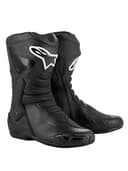
The bootsTPU ankle brace + dual-density ankle + shin plate + toe sliders; CE EN 13634:2017Microfiber upper with 3D-mesh flex zonesNo8.5
$349.95 · View on Amazon

Price as of October 16, 2026. #ad How we’re funded

6
Alpinestars Tech-Air 5 Plasma

Alpinestars Tech-Air 5 Plasma

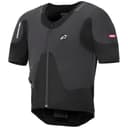
The airbag that answers the reason most riders never buy one: bulk. At a published 1,530 g it is more than 25% lighter than the Tech-Air 5 it replaces, it wears under a normal jacket, it arms itself when you zip it, and it covers chest, ribs, back and shoulders — the widest zone list of any electronic vest here. You also reset it yourself instead of booking a dealer visit.

The airbagNot publishedNot publishedNot published9.2
$869.95 · View on Amazon

Price as of October 16, 2026. #ad How we’re funded

Specs read from each manufacturer or retailer listing on the date shown in that pieces of gear’s write-up below; “Not published” means the maker does not state that figure. Prices are pulled live from Amazon and were last checked October 16, 2026.

The picks in full

#1The helmetOur score9.0

Shoei X-Fifteen

Shoei's race flagship — the Marquez lid — with DOT, ECE 22.06 and Snell M2025R, wind-tunnel aero and seven closable intakes. It is built for a tucked track position, which is exactly why it is not the one to buy for upright commuting.

Strengths

  • Triple-certified: DOT, ECE 22.06 and the race-specific Snell M2025R
  • Wind-tunnel aero — Shoei cites a 6.1% drag reduction over the X-14 — with 7 intakes and 6 exhausts
  • Adjustable, replaceable interior and E.Q.R.S. emergency cheek-pad release

Trade-offs

  • Aero and airflow are tuned for a tucked posture; less ideal fully upright
  • One of the most expensive helmets here — you're paying for the race pedigree
CertificationsDOT, ECE 22.06, Snell M2025R
Weight1624 g
ShellAIM+ six-ply matrix (fiberglass with organic and high-performance fibers)
Head shapeIntermediate oval
SizesXS-2XL
Internal sun visorNo
Pinlock-readyYes

Notable. Wind-tunnel aerodynamics; 7 intakes / 6 exhausts; race-position interior

Specs read from the manufacturer / retailer listing, on July 19, 2026. “Not published” means the maker does not state that figure.

#2The jacketOur score9.1

Alpinestars GP Plus R V4 Rideknit Leather

The most complete sport jacket we could source on published specs: a CE AA garment certified to EN 17092-3 in 1.3 mm race-grade leather, dual-density DFS shoulder sliders, and Tech-Air 5 and Tech-Air 3 readiness so an airbag goes under it without a size change. It is a race-fit jacket with a race jacket's compromises - a short back, a pre-curved sleeve and nothing in the back-protector pocket.

Strengths

  • CE AA garment certified to EN 17092-3:2020, the higher of the two street classes on this page
  • 1.3 mm race-grade cowhide in the impact areas, with A-CS Plus composite stretch panels and Rideknit inner arms for movement
  • Dual-density DFS shoulder sliders - external TPU, not a logo patch
  • Tech-Air 5 and Tech-Air 3 Ready, so an Alpinestars airbag fits inside the jacket as sold
  • Localized chest and side perforation, so it is wearable well into summer

Trade-offs

  • Alpinestars does not publish the EN 1621 level of the included armor; RevZilla's US listing puts the shoulder and elbow pads at Level 1
  • No back protector and no chest protector included - both are pockets you fill yourself
  • Race fit and European sizing only (48-60), so it is cut short at the back and tight through the chest off the bike
  • No published weight on any source we could reach
Material1.3 mm race-grade cowhide leather with A-CS Plus composite stretch panels and Rideknit inner-arm panels
ArmorNucleon Flex Plus shoulders and GP Lite elbows included (CE Level 1 per RevZilla's US listing; Alpinestars publishes no level); dual-density DFS external shoulder sliders; empty back and split-chest protector pockets; garment CE AA to EN 17092-3
WaterproofNo
Best forSportbike riders who want an AA leather jacket that doubles as a track jacket and will add an airbag later

Notable. CE AA leather to EN 17092-3, DFS shoulder sliders and Tech-Air 5 / Tech-Air 3 readiness

Specs read from the manufacturer / retailer listing, on October 1, 2026. “Not published” means the maker does not state that figure.

#3The pantOur score8.7

Alpinestars Missile V3 Airflow

When the riding gets fast enough that abrasion is the whole argument, leather is still the answer. 1.3 mm bovine leather certified to EN 17092 AA class, perforated thigh panels so it is wearable in heat, accordion stretch above the knee for a tuck, and a waist zip that joins it to an Alpinestars jacket — including the Tech-Air 10 airbag system.

Strengths

  • Fully CE certified to EN 17092 AA class in 1.3 mm bovine leather — the abrasion spec sport riders actually want
  • Perforated leather thigh panels and accordion stretch zones above the knee keep leather usable in heat and in a riding tuck
  • GP-R Lite internal knee protection plus replaceable sport knee sliders
  • Waist connection zipper to Alpinestars jackets, and rated to accommodate the Tech-Air 10 airbag system

Trade-offs

  • By a wide margin the most expensive pant here
  • Bioflex hip protectors are a separate purchase — only the knee protection is in the box
  • Alpinestars names the GP-R Lite knee protector but does not publish its EN 1621-1 level on this page
  • A leather sport cut: not something you wear off the bike the way you wear a riding jean
Material1.3 mm bovine leather with perforated thigh panels and accordion stretch zones
ArmorGP-R Lite internal knee protection + replaceable knee sliders; Bioflex hip protectors sold separately; garment CE EN 17092 AA class
WaterproofNo
Best forTrack-day and fast road riders who want leather abrasion protection and airbag compatibility

Notable. AA-rated 1.3 mm leather; perforated airflow panels; jacket waist connection zip; Tech-Air 10 compatible

Specs read from the manufacturer / retailer listing, on August 24, 2026. “Not published” means the maker does not state that figure.

#4The glovesOur score9.2

Alpinestars GP Pro R4

The most complete race glove most riders will ever need, and the one that prints every part of its specification. Kangaroo palm, a dual-density Dynamic Friction Shield knuckle, palm and finger sliders, and a finger bridge linking the third and fourth fingers — all of it stated on Alpinestars' own page, with the EN 13594:2015 clause and the year.

Strengths

  • Alpinestars prints the full clause itself — “Category II EN 13594:2015, Level 1 KP” — rather than leaving it to a retailer
  • Kangaroo leather palm and fingers with inner-seam construction, so the grip side has no seam ridge under your hand
  • Dual-density DFS Race knuckle plus palm and finger sliders and aramid reinforcement on the landing zones
  • Finger bridge links the third and fourth fingers to prevent finger roll and separation during a slide

Trade-offs

  • Level 1 KP, not Level 2 — the same certified level as gloves costing a quarter as much
  • Premium money for a glove with no membrane, no insulation and no all-weather pretensions
  • Sizes stop at 3XL, and a race fit runs tighter than a street glove in the same nominal size
MaterialBovine and goat leather backhand with kangaroo leather palm and fingers, inner-seam palm construction
ArmorCategory II EN 13594:2015, Level 1 KP; dual-density DFS Race knuckle, palm and finger sliders, TPU finger protection, aramid reinforcement
WaterproofNo
Best forTrack-day riders who want full race hardware without going to the top of the catalog

Notable. Finger bridge between the third and fourth fingers; dual closure with wrist adjuster and gauntlet strap; ventilated knuckle gusset; sizes S-3XL

Specs read from the manufacturer / retailer listing, on October 14, 2026. “Not published” means the maker does not state that figure.

#5The bootsOur score8.5

Alpinestars SMX-6 V3

The sweet-spot sport-touring boot: a CE-certified (EN 13634) microfiber boot with a TPU ankle brace, race-derived shin plate and dual-density ankle protectors, but with front-flex and back-flexion zones that keep it walkable off the bike. Real protection without race-boot stiffness.

Strengths

  • TPU lateral ankle brace, dual-density ankle protectors and a race-derived shin plate
  • Front-flex and back-flexion zones give natural articulation and walkability
  • Replaceable dual-density TPU toe sliders; CE certified to EN 13634:2017

Trade-offs

  • Standard/vented version is not waterproof (separate Drystar and Gore-Tex variants are)
  • Microfiber upper, not full leather
MaterialMicrofiber upper with 3D-mesh flex zones
ArmorTPU ankle brace + dual-density ankle + shin plate + toe sliders; CE EN 13634:2017
WaterproofNo
Best forSport and sport-touring riders who want protection they can still walk in

Notable. TPU ankle brace; front-flex/back-flexion zones; replaceable toe sliders

Specs read from the manufacturer / retailer listing, on July 19, 2026. “Not published” means the maker does not state that figure.

#6The airbagOur score9.2

Alpinestars Tech-Air 5 Plasma

The airbag that answers the reason most riders never buy one: bulk. At a published 1,530 g it is more than 25% lighter than the Tech-Air 5 it replaces, it wears under a normal jacket, it arms itself when you zip it, and it covers chest, ribs, back and shoulders — the widest zone list of any electronic vest here. You also reset it yourself instead of booking a dealer visit.

Strengths

  • Widest published coverage of the electronic vests here — chest, ribs, back and shoulders, not chest and back alone
  • 1,530 g published system weight, roughly half what the over-jacket Tech-Air 3 systems weigh
  • User-replaceable single gas inflator through a quick-release service cover (where legally permitted), so a deployment does not mean a dealer visit
  • Arms automatically when zipped via an internal magnetic sensor, with haptic confirmation — nothing to remember before pulling away
  • Eight sizes, XS-4XL, and no subscription: Alpinestars publishes no ongoing fee to keep the system working

Trade-offs

  • Alpinestars certifies the bag to EN 1621-4:2013 Level 1 — the Tech-Air 3 V2, which costs less, publishes Level 2 for chest and back
  • The airbag is certified for up to six deployments before it has to be replaced, which is a real long-term cost nobody quotes at the till
  • Under-jacket wear means the jacket has to have room for it — a close-fitting sport jacket may not
  • Alpinestars does not publish a charge time for the 30-hour battery on this page
DeploymentElectronic — self-contained sensors; arms automatically when the vest is zipped (internal magnetic sensor)
CoverageChest, ribs, back and shoulders
Airbag certificationEN 1621-4:2013 Level 1 (full back); passive back protector EN 1621-2:2014 Level 1; garment EN 17092-6:2020 Class C undergarment
Weight1530 g
PowerRechargeable — up to 30 hours of ride time per charge (charge time not published)
After a deploymentUser-replaceable gas inflator via a quick-release service cover, where legally permitted; certified for up to six deployments before replacement
WornUnder a jacket

Notable. 1,530 g under-jacket airbag; chest, rib, back and shoulder coverage; user-replaceable inflator; no subscription

Specs read from the manufacturer / retailer listing, on September 7, 2026. “Not published” means the maker does not state that figure.

The two questions the sheets disagree on

One-piece or two-piece? Novice groups frequently allow a zip-together two-piece and sometimes allow textile; intermediate and advanced groups more often want a one-piece leather suit. We do not list a one-piece suit, and that is an honest gap in this page rather than a judgement — we have not sourced spec pages for any, and we will not rank a product we have not read. The two-piece route on this page is the GP Plus R V4 jacket and the Missile V3 Airflow pant, which share the waist connection zip. If your organization’s sheet says one-piece for the group you are entering, buy or rent a suit and treat this page as the list for everything else.

Back protector in the jacket, or worn under it? This is the one that catches people out, because it is easy to assume a premium leather jacket includes one. The GP Plus R V4 does not: Alpinestars ships it with shoulder and elbow armor and leaves the back and split-chest protector pocketsempty. Some sheets accept a back protector worn as a separate garment, some want it in the jacket, and a few want a specific EN 1621-2 level. Either fill the pocket or buy a protector you wear, which is what our armored base layer ranking covers, and check the clause on the sheet before you choose which.

Where the airbag sits in all of this

An airbag vest is the newest piece of this list and the one changing fastest. It is not on this page because any sheet we read requires it — we are not claiming that, and most US club sheets do not. It is here because the published coverage is the largest single protection upgrade available to a track rider who already has leathers: the Tech-Air 5 Plasma covers chest, ribs, back and shoulders, weighs 1,530 g, arms itself when you zip the vest, and goes under a jacket rather than over it.

Two honest notes. Alpinestars certifies this bag to EN 1621-4:2013 Level 1, and the cheaper over-jacket Tech-Air 3 V2 publishes Level 2 for chest and back — so the premium here buys coverage, weight and wearability, not the higher attenuation figure. And it is certified for up to six deployments before replacement, which is a long-term cost nobody quotes at the till. Our airbag vest ranking works through the whole category, and airbag vest vs back protector is the right page if you are deciding between the two rather than buying both.

One compatibility detail that matters on a track kit specifically: an under-jacket airbag needs the jacket to have room for it. The GP Plus R V4 is Tech-Air 5 and Tech-Air 3 Ready, which means Alpinestars has cut it to take the vest without a size change. A close-fitting race jacket that is not airbag-ready will not, and finding that out after buying both is an expensive afternoon.

What the helmet pick is really about

Tech sheets usually ask for a full-face helmet with a current certification, and some ask for Snell by name. The X-Fifteen is our pick because it is the only helmet in our registry that publishes DOT, ECE 22.06 and Snell M2025R at once — and M2025R is the Snell program written for helmets that also have to meet ECE R 22-06, which is why it can hold both. The full list of Snell-rated helmets we track is short, and best helmets for track days ranks the whole field including the cheaper Snell route.

The less obvious reason it is the pick: the X-Fifteen’s aerodynamics and airflow are tuned for a tucked position, with seven intakes and six exhausts, and Shoei cites a 6.1% drag reduction over the helmet it replaced. That is a real advantage on a track and an active disadvantage sitting upright in traffic, which is why we do not recommend it as a one-helmet solution anywhere else on this site. If a track day is a once-a-season thing and this will be your only helmet, buy the best full-face for your riding instead and check its certification against the sheet.

What we left out, and why

A one-piece leather suit. The single most commonly required item for intermediate and advanced groups, and we have none in the registry. Named as a gap above rather than filled with a guess.

Rental gear. Most track-day organizations and many schools rent suits, and for a first day that is frequently the correct financial answer — a rented suit that fits beats an owned suit bought in a hurry. We have no product to rank there, but we would rather say it than sell you leathers for a day you might not repeat.

A chest protector, specifically. The GP Plus R V4 has a split-chest protector pocket and the airbag on this page covers the chest, so there are two routes. We do not list a standalone chest protector, and the armored vests on our base-layer page cover chest and back together rather than chest alone.

Leathers from the European race houses. Riders ask about Dainese, RST, Spidi and Held constantly. Our searches on the check dates for this and our racing gloves page did not return US listings a reader could buy in their size, which is the same reason those names are absent there.

Anything claiming “track ready” without a clause. “Track ready” is not a certification and no test house issues it. Every piece on this page publishes an actual standard — EN 17092-3 Class AA for the leathers, EN 13594:2015 Level 1 KP for the gloves, EN 13634:2017 for the boots, EN 1621-4:2013 Level 1 for the airbag — and those are the lines worth reading off a sheet.
Frequently asked questions

What gear do I need for a track day?

In the shape almost every US organization's sheet takes: a full-face helmet with a current certification and often Snell by name; a one-piece leather suit or a two-piece that zips together all the way round; full-gauntlet leather gloves overlapping the sleeve with no exposed skin at the wrist; boots that cover the ankle and are CE certified; and a back protector. Many sheets add a tear-off or clear visor requirement and a few now mention airbags. The sheets differ in the details and get revised between seasons, so read your own rather than any list online — including this one.

Can I use textile gear for a track day?

Sometimes, in a novice group, and increasingly less often as you move up. The reason is the EN 17092 abrasion class rather than a prejudice about materials: the textile garments that reach Class AA are rare and heavy, while both leather pieces on this page are Class AA in 1.3 mm hide. Sustained sliding at track speed is the specific scenario where the gap between Class A and Class AA is the whole argument. If your sheet allows textile for the group you are entering, it allows it; we would still buy leather if you intend to do this more than once.

Do I need a one-piece suit or will a two-piece work?

It depends on your organization and your group, and it is the most expensive question on the sheet. Novice groups frequently accept a two-piece that zips together all the way round; intermediate and advanced groups more often specify a one-piece. What no sheet accepts is a jacket and pant that do not fasten to each other, because they separate in a slide and the exposed skin is at the lower back. The two-piece route we rank here shares a waist connection zip. We do not list a one-piece suit, which is an honest gap rather than a recommendation against them.

Does my street helmet work for a track day?

Often yes, if it is a full-face with a current certification and your sheet does not demand Snell. Check three things against the sheet: the certification, the age of the helmet, and whether the organization requires a clear or tear-off visor for the session. The reason we pick a race helmet rather than a street one is airflow and aerodynamics tuned for a tucked position — a real advantage on track and an active disadvantage upright in traffic, which is why a race lid is a poor one-helmet solution.

Is a back protector included in a leather track jacket?

Usually not, and this is the single most common surprise. The Alpinestars GP Plus R V4 on this page ships with shoulder and elbow armor and leaves the back and split-chest protector pockets empty — which is normal at this level, not a cost-cut. You either fill the pocket with the maker's protector or wear a separate armored vest or shirt under the suit. Which of those your organization accepts varies, and some sheets specify an EN 1621-2 level, so check before you buy the wrong one.

Do I need an airbag vest for a track day?

No sheet we read requires one, and we are not going to imply otherwise. It is on this page because it is the largest published protection upgrade available to a rider who already has leathers: the vest we pick covers chest, ribs, back and shoulders, weighs 1,530 g and arms itself when zipped. Two honest caveats — Alpinestars certifies its bag to EN 1621-4:2013 Level 1 while the cheaper over-jacket version publishes Level 2 for chest and back, and it is certified for up to six deployments before replacement. Also check that your jacket is cut to take an under-jacket vest.

What boots do I need for a track day?

Over the ankle and CE certified to EN 13634 is the floor on most sheets, and a replaceable toe slider is the track-specific feature worth having. SATRA's breakdown of EN 13634:2017 is useful for understanding what that certification actually covers: whole-boot tests on upper height and seam construction, the bond strength between upper and outsole, and the transverse rigidity of the boot, with component tests for impact cut and abrasion resistance. Note that impact protection and slip resistance are among five OPTIONAL properties in the standard, so 'CE certified' alone does not guarantee an ankle protector — look for the TPU hardware in the spec list.

How much does a full track day kit cost?

Rather than quote a number that will be wrong next month, the live price on every buy button on this page is dated, and adding the six of them gives you today's figure. What we will say about the shape of the spend: the leathers are the largest single line and the hardest to buy second-hand sensibly, the gloves and boots are the two places where going cheap costs you a specific published feature (the palm slider and the toe slider), and renting a suit for a first day is frequently the right financial call. Our budget gear setup guide works through the cheaper ways to assemble protective kit generally.

Sources

  • Snell Memorial Foundation — Standards — The current Snell motorcycle helmet standards and what each revision changed (accessed July 19, 2026)
  • UNECE — Vehicle Regulations — The UN body behind ECE Regulation 22.06, the European helmet standard (accessed July 19, 2026)
  • Shoei Helmets (USA) — Shoei's official US site — model lineup and published specifications (accessed July 19, 2026)
  • SATRA — EN 17092:2020 Parts 1-6, protective clothing for motorcycle riders — The test house's breakdown of the garment standard: "Class C garments are designed to provide impact protection for areas covered by the impact protector(s) only, and they do not offer minimum abrasion protection" (accessed September 10, 2026)
  • SATRA — EN 13594:2015, protective gloves for motorcycle riders — The test house's summary of the glove standard: "Level 1 for gloves designed to give protection while having low ergonomic penalties, and level 2 for gloves providing greater protection than level 1"; knuckle impact protection "is an optional feature for level 1 gloves" and mandatory for level 2; minimum cuff length 5 mm (Level 1) or 50 mm (Level 2) from the wrist line (accessed September 21, 2026)
  • SATRA — EN 13634:2017, protective footwear for motorcycle riders — The test house's breakdown of the motorcycle boot standard: whole-boot tests cover "height of the upper and the type of seam constructions", "bond strength between upper and outsole" and "transverse rigidity of the boot", with component tests for "impact cut resistance and abrasion resistance" on the upper; impact protection and slip resistance are among five OPTIONAL properties (accessed October 17, 2026)
  • Alpinestars — The maker behind most of our gear picks — published materials, CE armor and garment certifications (accessed July 19, 2026)
  • Alpinestars — GP Plus R V4 Rideknit Leather Jacket — Our top pick: "Fully CE-certified riding garment to CE – Category II EN17092-3: 2020 standard – AA Class", "1.3mm 'Race' grade leather construction", "Dual density DFS shoulders", "Tech-Air 5 and Tech-Air 3 Ready" — and no EN 1621 level for the included armor (accessed October 1, 2026)
  • Alpinestars — GP Pro R4 Gloves — The maker's own page, and the only one on this page that prints the full clause with the year: "Category II EN 13594:2015, Level 1 KP". Also "bovine and goat leather" backhand with "kangaroo leather" palm and fingers, inner-seam palm construction, a dual-density "Dynamic Friction Shield (DFS) Race" knuckle, "palm and finger sliders with side reinforcements", aramid reinforcement on the backhand and landing zones, TPU finger protection, a ventilated knuckle gusset, a dual closure with wrist adjuster and gauntlet cuff strap, a finger bridge "linking the third and fourth fingers to prevent finger roll and separation during a slide", and sizes S-3XL (accessed October 14, 2026)
  • Alpinestars — Tech-Air 5 Plasma System — The maker's own spec page: EN 1621-4:2013 Level 1, chest/rib/back/shoulder coverage, 1,530 g, 30-hour battery and six certified deployments (accessed September 7, 2026)

Keep reading