The Lid Test

The Best Waterproof Motorcycle Gear

Everything sold for rain is “waterproof.” The spec that decides whether you are dry in hour three is where the membrane sits — laminated into the outer shell, or hung behind it as a liner the shell can soak through in front of. Six pieces ranked on that, then on what the maker certifies.

By Stephen V.Last verified How we compare

The verdict

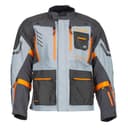
For one jacket that keeps you dry all day and needs nothing added to it, buy the Klim Carlsbad. The GORE-TEX is built into the outer shell as a Performance Shell laminate rather than hung behind it, so there is no sacrificial outer fabric to wet out in front of the membrane. Klim certifies the garment to CE AA under EN 17092-3 — a full abrasion class above the Class A most textile jackets settle for — and includes Rogue CE Level 2 armor at the shoulders, elbows and back, so there is no protector left to buy. It is for the rider in a genuinely wet climate who wants the rain question closed.

Below the waist the pick is the Alpinestars Andes V4 Drystar, and for gloves it is the Klim Vanguard GTX Short — the only glove here whose membrane is bonded to the shell with GORE GRIP, which is the difference between a glove that moves with your hand and one whose liner slides inside it on the bars. Klim prints the clause in full: “CE CERTIFIED TO EN13594:2015, KP LEVEL 1”.

The honest gap, and we would rather say it than quietly leave a hole in the kit: not one motorcycle boot in our registry is waterproof. Both boots we list state plainly that the standard version is not, with waterproof variants sold separately that we have not sourced and will not rank from memory. Your feet are the piece of this kit we cannot complete today.

Rain gear is the easiest category in motorcycling to buy badly, because every product in it is labelled with the same word. “Waterproof” is on a $90 rain suit and on a $800 GORE-TEX jacket, and the difference between them is not the quality of the membrane. It is where the membrane is.

There are three constructions and they fail in different places. A laminate bonds the membrane to the outer fabric, so the fabric and the membrane wet out together — which is to say they don’t, because there is no separate outer layer to soak. This is what Klim calls a GORE-TEX Performance Shell and it is why our top jacket pick is our top jacket pick. A drop-liner hangs the membrane behind the shell. It is cheaper, it is the most common construction at every price point, and in sustained rain the outer shell saturates in front of the membrane: you stay dry, but you are wearing a heavy wet jacket, and it chills you. Alpinestars is straightforwardly honest about this on our value pick — the ST-1’s own listing notes the outer shell can soak through in sustained rain. A Z-liner seals the membrane into a separate bag between layers; it is the middle option, and it feels less direct than a bonded construction.

For gloves the same distinction has a specific name. Gore’s own description of its Grip technology is the clearest statement of the problem: “The usual loose layers within gloves are tightly bonded together for a layered construction that eliminates friction and movement between layers.” A free-floating liner is what makes a wet glove feel like it is turning on your hand when you reach for the brake lever. Two of our three glove picks are bonded; one is not, and it is the cheap one.

Then the certification axis, because a waterproof garment that is not an abrasion garment is a raincoat. Every piece on this page carries a published certification clause: EN 17092 for the jacket and pant, EN 13594 for the gloves. The spread matters — EN 17092 runs from Class C (impact protection only, no abrasion requirement at all, per SATRA’s own summary) up through Class A and Class AA. One jacket here is AA; the other is A.

We own none of this gear and have ridden in none of it. Here is what we do instead. Every spec below is read from the page named on each product card, on the date recorded there. Prices are live on the buy buttons with their own date stamp.

How this is funded: we earn a commission if you buy through our links, at no extra cost to you. It never changes which helmet we recommend, and we’ll tell you plainly when a cheaper or lighter one is the better buy. Full disclosure.

Quick picks

Ranked on our spec score — certification, weight, features and value. Select a row to jump to the full write-up. We have not tested these pieces of gear; here is exactly how we compare them instead.

#ItemBest forCE armorMaterialWaterproofOur scorePrice
1
Klim Carlsbad

Klim Carlsbad

The most complete three-season jacket we could source: a CE AA garment certified to EN 17092-3, KLIM Rogue CE Level 2 armor at the shoulders, elbows AND back already in the box, and the GORE-TEX waterproofing built into the shell instead of hung behind it. What it leaves out is a thermal liner, so cold mornings are handled by what you wear underneath.

Best jacket overallKLIM Rogue CE Level 2 shoulder, elbow and back pads (all included); garment CE AA to EN 17092-3GORE-TEX Performance Shell; FPL400 main chassis fabric with 630D CORDURA twisted-yarn overlays on the shoulders and elbowsYes9.0
$799.99 · View on Amazon

Price as of October 16, 2026. #ad How we’re funded

2
Alpinestars Andes V4 Drystar

Alpinestars Andes V4 Drystar

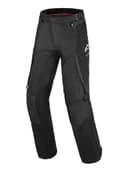
The all-weather workhorse. A fixed waterproof Drystar membrane means you are not carrying a rain shell, a removable full-length thermal liner takes it into cold mornings, and adjustable thigh vents open it back up when the sun comes out. Nucleon Flex Plus CE Level 1 knee armor is fitted; the abrasion class is the honest limitation.

Best waterproof pantNucleon Flex Plus CE Level 1 knee, EN 1621-1:2012 (included); hip armor not published; garment CE EN 17092 Class A450D polyfabric with ripstop reinforcement and stretch softshell panelsYes8.3
$299.95 · View on Amazon

Price as of October 16, 2026. #ad How we’re funded

3
Klim Vanguard GTX Short

Klim Vanguard GTX Short

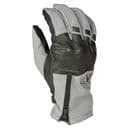
The only glove here that Klim describes as built for the touring rider specifically, and the spec sheet backs the claim: GORE-TEX bonded to the shell rather than hung inside it, a goat leather palm, and deliberately neither venting nor insulation so it works across a wide temperature band instead of a narrow one.

Best gloves overallCE certified to EN 13594:2015, KP Level 1; semi-pliable rubber and foam knuckle protector with 5 mm XRD impact foam in the palm and knuckle padsGoat leather palm and fingers over a bonded GORE-TEX + GORE GRIP constructionYes9.1
$169.99 · View on Amazon

Price as of October 16, 2026. #ad How we’re funded

4
Alpinestars ST-1 Waterproof Jacket

Alpinestars ST-1 Waterproof Jacket

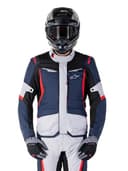
A simpler, slimmer road-touring take on the same formula: a Class A garment, CE Level 1 armor, a fixed waterproof membrane liner and a detachable thermal liner, for a little less than the Andes V4. It gives up airflow to get there, because the only vents Alpinestars lists are on the chest.

Best value jacketNucleon Flex Plus CE Level 1 shoulder + elbow; pockets for optional back and divided chest protectors; garment EN 17092-4 Class ATextile shell with a fixed waterproof membrane liner and a detachable thermal liner (80 g torso, 80 g sleeves)Yes8.1
$279.95 · View on Amazon

Price as of October 16, 2026. #ad How we’re funded

5
Klim Badlands GTX Long

Klim Badlands GTX Long

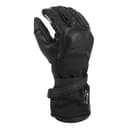
The most complete cold-weather build we could source: a CE Level 1 KP glove to EN 13594 with a GORE-TEX membrane bonded to the shell by GORE Grip, so the layers do not slip on the bars. Klim insulates only the back of the hand, with 60 g of 3M Thinsulate, and leaves the palm unlined for feel — which makes it the least insulated of the certified picks and a glove that relies on heated grips in real cold.

Best gauntlet for cold rainCE Level 1 KP (EN 13594); polycarbonate knuckle guard with XRD impact foamGoat leather with ceramic-print fabric; GORE-TEX + GORE Grip membraneYes9.0
$249.99 · View on Amazon

$269.747% off

Price as of October 16, 2026. #ad How we’re funded

6
Alpinestars Corozal V3 Drystar

Alpinestars Corozal V3 Drystar

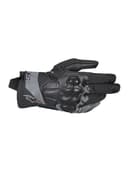
The leather-chassis waterproof glove, and the cheapest certified pick here. A leather top hand and leather palm over a Drystar membrane, with a leather-covered SP knuckle instead of an exposed hard shell — the understated option for a rider who does not want a glove that looks like race gear.

Best value glovesCE Level 1 KP certified (EN 13594 year not printed on the listing); leather-covered SP knuckleLeather and textile top hand with stretch panels, leather palm and side walls, over a Drystar membraneYes8.1
$149.95 · View on Amazon

Price as of October 16, 2026. #ad How we’re funded

Specs read from each manufacturer or retailer listing on the date shown in that pieces of gear’s write-up below; “Not published” means the maker does not state that figure. Prices are pulled live from Amazon and were last checked October 16, 2026.

The picks in full

#1Best jacket overallOur score9.0

Klim Carlsbad

The most complete three-season jacket we could source: a CE AA garment certified to EN 17092-3, KLIM Rogue CE Level 2 armor at the shoulders, elbows AND back already in the box, and the GORE-TEX waterproofing built into the shell instead of hung behind it. What it leaves out is a thermal liner, so cold mornings are handled by what you wear underneath.

Strengths

  • CE AA rating certified to EN 17092-3, one class above the Class A jackets on this page
  • KLIM Rogue CE Level 2 armor included at the shoulders, elbows and back, so there is no protector left to buy
  • GORE-TEX Performance Shell that Klim guarantees to keep you dry, with the waterproofing in the outer jacket rather than a separate liner
  • Six vents: two double-headed forearm vents, two chest vents and two offset back exhaust vents

Trade-offs

  • No thermal liner in Klim's feature list, so its cold-weather range depends on the layers you already own
  • The most expensive jacket on this page
  • Klim prints CE Level 2 for the armor but not the EN 1621 clause, and publishes no weight
  • Sizes run SM to 3X only
MaterialGORE-TEX Performance Shell; FPL400 main chassis fabric with 630D CORDURA twisted-yarn overlays on the shoulders and elbows
ArmorKLIM Rogue CE Level 2 shoulder, elbow and back pads (all included); garment CE AA to EN 17092-3
WaterproofYes
Best forRiders in wet climates who want AA certification and full Level 2 armor without a liner system to manage

Notable. GORE-TEX shell, CE AA garment and Level 2 armor at shoulders, elbows and back from the box

Specs read from the manufacturer / retailer listing, on September 16, 2026. “Not published” means the maker does not state that figure.

#2Best waterproof pantOur score8.3

Alpinestars Andes V4 Drystar

The all-weather workhorse. A fixed waterproof Drystar membrane means you are not carrying a rain shell, a removable full-length thermal liner takes it into cold mornings, and adjustable thigh vents open it back up when the sun comes out. Nucleon Flex Plus CE Level 1 knee armor is fitted; the abrasion class is the honest limitation.

Strengths

  • Genuinely waterproof — a fixed Drystar breathable membrane rather than a rain layer you pack and hope you remember
  • Removable full-length thermal liner (100 g thighs, 60 g lower legs) plus adjustable thigh vents: a three-to-four season pant
  • Nucleon Flex Plus knee armor, CE Level 1 to EN 1621-1:2012, in three-position adjustable pockets
  • 450D polyfabric with ripstop reinforcement in the high-wear areas, and a size run that goes to 6XL

Trade-offs

  • CE-certified to EN 17092 as a Class A garment — the lowest street abrasion class, and a step below both jeans here
  • No hip armor published or supplied; the knee pads are the only protection in the box
  • A laminate touring pant runs warmer than a mesh overpant in peak summer even with the liner removed
Material450D polyfabric with ripstop reinforcement and stretch softshell panels
ArmorNucleon Flex Plus CE Level 1 knee, EN 1621-1:2012 (included); hip armor not published; garment CE EN 17092 Class A
WaterproofYes
Best forCommuters and adventure-touring riders who need one pant for rain, cold and everything between

Notable. Waterproof Drystar membrane; removable full-length thermal liner; adjustable thigh vents; sizes to 6XL

Specs read from the manufacturer / retailer listing, on August 24, 2026. “Not published” means the maker does not state that figure.

#3Best gloves overallOur score9.1

Klim Vanguard GTX Short

The only glove here that Klim describes as built for the touring rider specifically, and the spec sheet backs the claim: GORE-TEX bonded to the shell rather than hung inside it, a goat leather palm, and deliberately neither venting nor insulation so it works across a wide temperature band instead of a narrow one.

Strengths

  • Klim prints the clause in full: "CE CERTIFIED TO EN13594:2015, KP LEVEL 1"
  • GORE-TEX + GORE GRIP bonds the membrane to the shell, so it cannot slide against the leather the way a loose liner can
  • Klim calls it "temperature neutral" with "neither venting nor insulation" — the design choice that makes it a three-season glove rather than a summer or winter one
  • Velcro-plus-YKK-zipper dual-entry short cuff, index-finger visor wiper and Mult-E-Touch pads

Trade-offs

  • Short under-cuff design, so it goes under the jacket sleeve and will not seal out rain running down the arm
  • No insulation at all — below roughly freezing this is the wrong glove and a winter glove is the right one
  • Klim publishes no weight for it
  • Premium money for a glove with no gadgets
MaterialGoat leather palm and fingers over a bonded GORE-TEX + GORE GRIP construction
ArmorCE certified to EN 13594:2015, KP Level 1; semi-pliable rubber and foam knuckle protector with 5 mm XRD impact foam in the palm and knuckle pads
WaterproofYes
Best forTourers who want one waterproof glove for most of the riding year and value feel on the bars

Notable. GORE-TEX + GORE GRIP bonded construction; "neither venting nor insulation" by design; Velcro + YKK dual-entry short cuff; index-finger visor wiper; XS-3XL

Specs read from the manufacturer / retailer listing, on October 7, 2026. “Not published” means the maker does not state that figure.

#4Best value jacketOur score8.1

Alpinestars ST-1 Waterproof Jacket

A simpler, slimmer road-touring take on the same formula: a Class A garment, CE Level 1 armor, a fixed waterproof membrane liner and a detachable thermal liner, for a little less than the Andes V4. It gives up airflow to get there, because the only vents Alpinestars lists are on the chest.

Strengths

  • Fully CE-certified garment to EN 17092-4:2020, Class A, with the armor also rated as an EN 17092-6:2020 Class C impact ensemble
  • Fixed waterproof membrane liner plus a detachable thermal liner that stows in the rear cargo pocket
  • Tech-Air Ready, with a pant connection zipper for the matching ST-1 WP pants
  • Pre-curved arms, sleeve volume adjusters and an extended back cut for the riding position

Trade-offs

  • Front chest vents are the only ventilation Alpinestars lists, the least airflow on this page
  • The waterproof membrane is a fixed inner liner, so the outer shell can soak through in sustained rain
  • CE Level 1 shoulder and elbow armor; back and divided chest protectors are optional upgrades
  • The lightest thermal liner here (80 g torso, 80 g sleeves), and no published weight
MaterialTextile shell with a fixed waterproof membrane liner and a detachable thermal liner (80 g torso, 80 g sleeves)
ArmorNucleon Flex Plus CE Level 1 shoulder + elbow; pockets for optional back and divided chest protectors; garment EN 17092-4 Class A
WaterproofYes
Best forRoad commuters who need a waterproof jacket for cold, wet mornings more than for hot afternoons

Notable. Clean road-touring cut with a fixed waterproof liner, detachable thermal liner and Tech-Air compatibility

Specs read from the manufacturer / retailer listing, on September 16, 2026. “Not published” means the maker does not state that figure.

#5Best gauntlet for cold rainOur score9.0

Klim Badlands GTX Long

The most complete cold-weather build we could source: a CE Level 1 KP glove to EN 13594 with a GORE-TEX membrane bonded to the shell by GORE Grip, so the layers do not slip on the bars. Klim insulates only the back of the hand, with 60 g of 3M Thinsulate, and leaves the palm unlined for feel — which makes it the least insulated of the certified picks and a glove that relies on heated grips in real cold.

Strengths

  • CE Level 1 KP rating certified to EN 13594, per Klim's product page
  • GORE-TEX with GORE Grip Technology, backed by Gore's "Guaranteed to keep you dry" promise; the membrane is bonded rather than free-floating
  • Polycarbonate knuckle guard over XRD impact foam, with ceramic-print fabric at the knuckles, palm pad and forearm
  • Dual visor wipers (left for water, right for ice), Mult-E-Touch touchscreen pads and a neoprene gasket inside the gauntlet
  • Sizes XS to 3XL

Trade-offs

  • Only 60 g of Thinsulate, on the backhand only — the least published insulation of the certified gloves on this page
  • The most expensive glove here
  • Klim prints the CE level but not the EN 13594 year, and publishes no weight
MaterialGoat leather with ceramic-print fabric; GORE-TEX + GORE Grip membrane
ArmorCE Level 1 KP (EN 13594); polycarbonate knuckle guard with XRD impact foam
WaterproofYes
Best forAdventure and touring riders who want a four-season waterproof gauntlet and run heated grips

Notable. GORE-TEX bonded to the shell (GORE Grip), 60 g Thinsulate backhand, dual visor wipers

Specs read from the manufacturer / retailer listing, on September 21, 2026. “Not published” means the maker does not state that figure.

#6Best value glovesOur score8.1

Alpinestars Corozal V3 Drystar

The leather-chassis waterproof glove, and the cheapest certified pick here. A leather top hand and leather palm over a Drystar membrane, with a leather-covered SP knuckle instead of an exposed hard shell — the understated option for a rider who does not want a glove that looks like race gear.

Strengths

  • RevZilla's listing states "CE Level 1 KP certified" — the cheapest certified glove on this page
  • Leather and textile top hand with stretch panels, plus a leather palm and side walls: more leather than the Andes V3
  • Drystar membrane for wet-weather riding, with a conductive thumb and index finger for touchscreens
  • Sizes S to 4XL

Trade-offs

  • The certification is printed without the EN 13594 year, so it is less specific than Klim's or REV'IT!'s wording
  • Leather-covered SP knuckle rather than an exposed hard shell — less impact hardware than the Sand 5 or Dominator 3
  • RevZilla publishes no Drystar rating for it, no cuff description, no visor wiper and no insulation figure
MaterialLeather and textile top hand with stretch panels, leather palm and side walls, over a Drystar membrane
ArmorCE Level 1 KP certified (EN 13594 year not printed on the listing); leather-covered SP knuckle
WaterproofYes
Best forTouring and cruiser riders who want a waterproof leather glove that stays low-key, for the least money on this page

Notable. Leather chassis over a Drystar membrane; leather-covered SP knuckle; conductive thumb and index finger; S-4XL

Specs read from the manufacturer / retailer listing, on October 7, 2026. “Not published” means the maker does not state that figure.

The boots problem, stated plainly

A head-to-toe wet-weather kit has four pieces, and this page has three. We list two motorcycle boots — the Alpinestars SMX-6 V3 and the SMX-1 R V2 — and both of them state in their own specifications that the standard version is not waterproof. Alpinestars sells Drystar and GORE-TEX variants of the same boots, and those are presumably the answer, but we have not sourced their spec pages and we are not going to rank a product from its name.

What we can tell you is what the gap costs and how riders close it. Wet feet are the single most common complaint about riding in rain, for a mechanical reason: water runs down your legs and into the top of the boot, so a waterproof boot with the pant tucked inside it is worse than a non-waterproof boot with the pant worn outside it. The Andes V4 Drystar pant on this page has the cut to go over a boot. If you are buying boots for rain specifically, look for the Drystar or GORE-TEX version of a boot you already like the fit of, check the gusset behind the entry zip, and read our boots ranking for the protection specs that do not change between the dry and wet variants.

The helmet is not part of this kit, and here is why

Riders search for a “waterproof helmet” and there is no such thing — every full-face helmet keeps rain off your face by existing. The two specs that actually decide whether riding in rain is miserable are whether the shield takes a Pinlock anti-fog insert, because a closed visor in cool rain fogs within a minute, and whether the helmet has a chin curtain to stop the updraught that carries water onto the inside of the shield. Neither is a waterproofing spec. We rank helmets for rain on exactly those features on our best helmets for rain page, and it is the right page to pair with this one.

How to spend the money, if you cannot buy all of it

In this order, and it is not the order people buy in.

Gloves first. This surprises riders every time, but hands are the first thing to get cold and wet, they are the most exposed part of you on a bike, and cold wet hands degrade your control inputs in a way a cold wet torso does not. A good certified waterproof glove is also the cheapest item on this page by a wide margin. Start here.

Jacket second. A wet torso is a core-temperature problem rather than a comfort one, and the jacket is also carrying your shoulder, elbow and back armor, so the spend does double duty.

Pant third, and this is the one most riders skip entirely — which is why we wrote what ATGATT actually means about exactly that gap. Wet legs are tolerable for a commute and genuinely dangerous on a long cold ride, because the big muscles in your thighs are where you lose heat fastest.

Boots last, by elimination rather than by preference, since we cannot recommend one yet.

What we left out, and why

Rain suits and over-trousers. A packable shell you pull on over your gear is a legitimate and cheap answer to rain, and plenty of touring riders carry one. None of them is an abrasion garment, almost none publishes an EN 17092 class, and we could not source a certification statement for one we would print. That is a sourcing limit on our side rather than a judgement on the products.

The REV’IT! Sand 5 H2O jacket and gloves. Both are waterproof, both are certified, and both are on our all-season jacket and touring glove rankings. They are not here because they are built around a Z-liner rather than a laminate or a bonded membrane, and this page is organized on membrane construction. They are excellent alternatives at a lower price, and the Sand 5 H2O glove runs to 4XL, which almost nothing else does.

Waterproof riding jeans. There is no such thing in our registry and we are suspicious of the ones that claim it. The AA-rated riding jeans we rank are Cordura denim with aramid lining panels and no membrane, and their own makers say so — see are Kevlar jeans protective for what denim actually does. If you commute in rain, buy the textile pant on this page and keep the jeans for dry days.

Anything whose membrane is unnamed.“Waterproof breathable membrane” with no brand, no water-column figure and no hydrostatic-head number is a claim we cannot check. Every piece here names its membrane — GORE-TEX, GORE-TEX with GORE GRIP, or Alpinestars Drystar — which at least gives you something to hold the maker to.
Frequently asked questions

What is the best waterproof motorcycle jacket?

The Klim Carlsbad, on published specs. The GORE-TEX is laminated into the outer shell as a Performance Shell rather than hung behind it as a liner, so there is no sacrificial outer fabric to saturate in front of the membrane in hour three of a wet ride. Klim certifies the garment to CE AA under EN 17092-3 and includes Rogue CE Level 2 armor at the shoulders, elbows and back. The honest limitations: Klim lists no thermal liner, so cold mornings depend on what you layer underneath, it is the most expensive jacket we rank, and Klim prints 'CE Level 2' for the armor without the EN 1621 clause.

What does it mean when a membrane is laminated instead of a drop-liner?

It means the waterproof membrane is bonded to the outer fabric rather than hanging behind it. With a drop-liner — by far the most common construction at every price — the outer shell soaks up water in front of the membrane. You stay dry, but you are wearing a heavy, cold, wet jacket, and it takes hours to dry out. With a laminate there is no separate outer layer to wet out. It is the single construction detail that most changes how a jacket feels in hour three of rain, and it is almost never the headline spec on a listing.

Are there any waterproof motorcycle boots you recommend?

Not yet, and we would rather say so than guess. Both boots in our registry — the Alpinestars SMX-6 V3 and the SMX-1 R V2 — state in their own specifications that the standard version is not waterproof. Alpinestars sells Drystar and GORE-TEX variants of both, and those are very likely the right answer, but we have not read their spec pages and we do not rank products from their names. In the meantime, the mechanical tip that matters more than the boot: wear the pant outside the boot, not tucked in, because water runs down your legs and into the top.

Do I need waterproof gear if I already have a rain suit?

If you only ride in rain occasionally and you are happy stopping to pull a suit on, a rain suit is a perfectly rational answer and a much cheaper one. Two caveats. A rain suit is not an abrasion garment — almost none publishes an EN 17092 class — so it is a layer over your protective gear rather than a substitute for it. And it does nothing for your hands, which is the part of you that gets wet and cold first and the part where being cold and wet actually degrades your riding.

What should I buy first if I can only afford one piece?

Gloves, and it is not close. Hands are the most exposed part of a rider, they get cold and wet before anything else, and cold wet hands blunt your inputs on the levers in a way a cold torso does not. A certified waterproof glove is also the cheapest item on this page by a wide margin. The order after that is jacket, then pant, then boots — the pant being the piece most riders skip and the one that matters most on a long cold ride, because your thighs shed heat faster than your torso.

Is GORE-TEX worth the premium over Drystar or Hydratex?

On the published specs, what the GORE-TEX premium reliably buys is the construction rather than the membrane chemistry — in particular the bonded glove construction Gore calls GORE GRIP, which it describes as eliminating 'friction and movement between layers'. That is a real, feelable difference on a wet handlebar. Gore also attaches its own 'guaranteed to keep you dry' promise, which is a warranty position rather than a test number. Alpinestars publishes actual figures for Drystar on some products — a 5,000 mm water column and 5,000 g/m² breathability on one glove we list — which GORE-TEX does not for individual items. Both are real membranes; the money is in how they are built in.

Can waterproof gear also be a summer kit?

No, and that is a structural fact rather than a quality one: a waterproof membrane is a layer air cannot pass through, so a genuinely waterproof garment cannot be a genuinely vented one. The jackets here manage it by adding vents that open in front of the membrane, which helps but does not make them mesh. Our summer gloves and summer riding gear pages cover the opposite build. Most riders in a wet climate end up with two sets, which is less extravagant than it sounds once you have ridden home soaked once.

Does waterproof gear need a different armor spec?

No — armor and waterproofing are separate standards and separate decisions. EN 1621 covers the impact protectors, EN 17092 covers the garment's abrasion class, and nothing about a membrane changes either. What does change in the rain is that you are more likely to be wearing the garment zipped up with the vents closed, so a jacket with its back protector included rather than as an empty pocket is worth more here. Our CE armor guide explains the levels, and two of the four garments on this page include a back protector while the others leave the pocket for you to fill.

Sources

  • KLIM — The Idaho adventure-gear maker behind the Krios Pro helmet, the GORE-TEX jackets and gloves and the K Fifty 2 riding jean — and the maker that prints the most complete certification clauses of anyone we track (accessed October 17, 2026)
  • Klim — Carlsbad Jacket (current, fourth generation) — Our top pick: "GORE-TEX PERFORMANCE SHELL", "CE AA rating certified to EN 17092-3", KLIM Rogue CE Level 2 shoulder, elbow and back pads, six listed vents — and no thermal liner in the feature list (accessed September 16, 2026)
  • GORE-TEX — Grip gloves technology — Gore's own description of a bonded glove membrane: "The usual loose layers within gloves are tightly bonded together for a layered construction that eliminates friction and movement between layers" (accessed September 21, 2026)
  • Klim — Vanguard GTX Short Glove — The top pick's own maker page: "CE CERTIFIED TO EN13594:2015, KP LEVEL 1", "GORE-TEX + GORE GRIP TECHNOLOGY", "GOAT LEATHER PALM AND FINGERS", "5MM XRD IMPACT PROTECTION FOAM IN PALM AND KNUCKLE PADS", "VELCRO + ZIPPER DUAL-ENTRY CUFF SYSTEM", "UNDER CUFF SHORT DESIGN", "INDEX FINGER VISOR WIPER" — and the line the whole ranking turns on: "Designed specifically for the touring rider, with neither venting nor insulation, these temperature neutral gloves maintain comfort across a wide range of conditions". No weight published (accessed October 7, 2026)
  • Klim — Badlands GTX Long Glove — Our top pick: "CE Level 1 KP rating certified to EN 13594", "GORE-TEX + GORE Grip Technology", "60 Grams 3M Thinsulate insulation on backhand", polycarbonate knuckle guard with XRD foam, dual visor wipers, sizes XS-3XL — no EN 13594 year and no weight published (accessed September 21, 2026)
  • Alpinestars — ST-1 Waterproof Jacket — "Fully CE certified motorcycling garment to CE - Category II EN 17092-4:2020 – A Class", a fixed waterproof membrane liner, a detachable 80g/80g thermal liner and front chest vents (accessed September 16, 2026)
  • RevZilla — Alpinestars Corozal V3 Drystar Gloves (US) — The cheapest certified pick: "CE Level 1 KP certified" (printed without the EN 13594 year), "Drystar performance membrane provides the gloves with optimal wet weather performance", "Leather and textile top hand construction with stretch panels", "Leather palm and side walls", a "Leather covered SP knuckle" and a "Conductive synthetic leather insert on thumb and index finger", sizes SM-4XL (accessed October 7, 2026)
  • SATRA — EN 17092:2020 Parts 1-6, protective clothing for motorcycle riders — The test house's breakdown of the garment standard: "Class C garments are designed to provide impact protection for areas covered by the impact protector(s) only, and they do not offer minimum abrasion protection" (accessed September 10, 2026)
  • SATRA — EN 13594:2015, protective gloves for motorcycle riders — The test house's summary of the glove standard: "Level 1 for gloves designed to give protection while having low ergonomic penalties, and level 2 for gloves providing greater protection than level 1"; knuckle impact protection "is an optional feature for level 1 gloves" and mandatory for level 2; minimum cuff length 5 mm (Level 1) or 50 mm (Level 2) from the wrist line (accessed September 21, 2026)
  • Alpinestars — The maker behind most of our gear picks — published materials, CE armor and garment certifications (accessed July 19, 2026)

Keep reading