Bell Qualifier DLX MIPS Review
The budget helmet that adds MIPS — rotational-impact protection usually reserved for pricier lids — plus a photochromic shield that tints itself in sunlight. A lot for a first full-face.
How this is funded: we earn a commission if you buy through our links, at no extra cost to you. It never changes which helmet we recommend, and we’ll tell you plainly when a cheaper or lighter one is the better buy. Full disclosure.
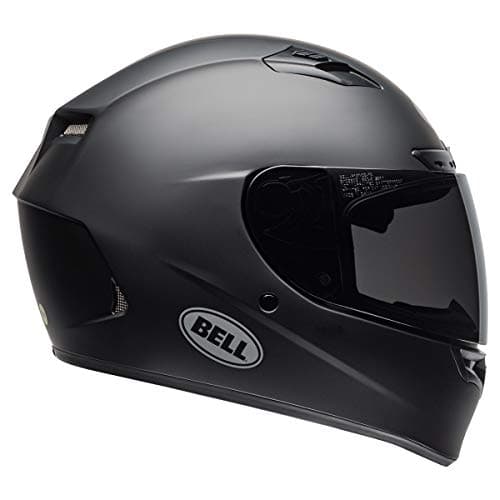
Product image supplied by Amazon
The budget helmet that adds MIPS — a rotational-impact system usually found on pricier lids — plus a photochromic shield that tints itself in sunlight. For a first full-face under $350, that combination is hard to argue with.
Best for: First-time buyers who want MIPS and a self-tinting shield on a budget
Price as of October 18, 2026. #ad How we’re funded
Strengths
- Includes MIPS, which addresses rotational forces the DOT test alone doesn't
- ProTint photochromic shield darkens in sun and clears at night — no swapping
- Comfortable padded wind collar and adjustable ventilation for the money
Trade-offs
- Only DOT certification was listed on the page we verified (no ECE/Snell stated)
- Polycarbonate shell; the face shield is not Pinlock-ready
The spec sheet
| Certifications | DOT |
|---|---|
| Weight | 1619 g |
| Shell | Polycarbonate |
| Head shape | Intermediate oval |
| Sizes | XS-3XL |
| Internal sun visor | No |
| Pinlock-ready | No |
Specs read from the manufacturer / retailer listing, on July 19, 2026. “Not published” means the maker does not state that figure.
A budget helmet that borrows from the flagships
Bell’s trick with the Qualifier DLX is to take two features usually found on pricier helmets—MIPS rotational protection and a self-tinting photochromic shield—and put them in a genuinely affordable full-face. For a first helmet under a few hundred dollars, that combination is unusual, and it’s why the Qualifier DLX earns a place in our beginner ranking.
MIPS: the standout feature
MIPS is a low-friction layer inside the helmet that allows a small amount of rotation between your head and the shell during an impact, addressing rotational forces that a straight-line drop test doesn’t measure. It shows up on plenty of premium helmets; finding it on a budget lid is the Qualifier DLX’s headline. Paired with the ProTint photochromic shield—which darkens in sun and clears at night with no swapping—you get two convenience-and-safety features that punch above the price.
The certification caveat
Be clear-eyed about the trade-off. On the listing we verified, only DOT was stated—no ECE or Snell. DOT is the US legal minimum, and the MIPS layer adds rotational protection on top, but this isn’t a multi-standard helmet. The shell is polycarbonate and the shield isn’t Pinlock-ready. Those are the corners cut to hit the price; the protection floor (DOT plus MIPS) is intact.
Who should buy it
The Qualifier DLX is for first-time buyers who want MIPS and a self-tinting shield without spending flagship money. If you’d rather prioritize a newer independent certification at a similar price, the ECE 22.06 LS2 Stream II or the Snell-rated Scorpion EXO-R430 in our budget ranking are the alternatives to weigh it against. For MIPS-on-a-budget specifically, this is the pick.
Frequently asked questions
What is MIPS and does the Bell Qualifier DLX have it?
MIPS (Multi-directional Impact Protection System) is a low-friction layer inside the helmet that lets the shell rotate slightly on impact, addressing the rotational forces a straight-line impact test doesn't cover. The Qualifier DLX MIPS includes it — which is notable, because MIPS is usually found on more expensive helmets. It's a real reason to consider this lid for a first helmet.
What is the ProTint shield on the Qualifier DLX?
ProTint is a photochromic face shield that darkens automatically in sunlight and clears again in low light, so you don't carry or swap a separate tinted shield. On a budget helmet, having a self-tinting shield is a genuine convenience usually reserved for pricier models.
What certification does the Bell Qualifier DLX have?
On the page we verified, only DOT was listed (no ECE or Snell stated). DOT is the US legal minimum and the helmet adds MIPS on top for rotational protection, but it doesn't carry the newer ECE 22.06 standard. If independent multi-standard certification matters to you, the LS2 Stream II (ECE 22.06) or Scorpion EXO-R430 (Snell) are budget alternatives.
Sources
- Bell Helmets — Bell's official motorcycle helmet lineup and technology pages (accessed July 19, 2026)
- NHTSA — Motorcycle Safety — The US regulator behind the DOT FMVSS 218 helmet standard (accessed July 19, 2026)
- RevZilla Common Tread — Snell, ECE and DOT certifications explained — Plain-English overview of how the three certifications differ and who verifies them (accessed July 19, 2026)
Compare it against
Qualifier DLX vs Scorpion EXO-R430
This helmet's closest rival, head to head: MIPS and a self-tinting shield against a current Snell M2025 rating.
Read the comparisonBest helmets for beginners
See how the Qualifier DLX ranks as a first helmet.
See the rankingBell helmets
The maker that puts MIPS and photochromic shields into budget lids.
Read the overviewBest budget helmets
How the Qualifier DLX compares to other sub-$350 options.
See the rankingWhat is MIPS?
The rotational-protection system the Qualifier DLX includes, explained.
Read the guide