What the EN 17092 class actually measures, and why it matters more on mesh
EN 17092:2020 is the European standard for protective motorcycle clothing. It certifies garments to five classes — AAA, AA, A, B and C — and the clause number in the certification line is the fastest way to read which one you are being sold: clause -2 is Class AAA, -3 is AA, -4 is A. The test house SATRA states the part that matters for a summer jacket plainly: “Elbow, shoulder, knee and hip impact protectors are to be present in Class AAA and AA garments as a mandatory requirement,” with the hip protectors “being optional in Class A garments.” It also notes that Class B offers the abrasion protection of Class A without impact protectors at all, and that Class C garments “do not offer minimum abrasion protection” — which is why a Class C armored shirt is worn with a jacket rather than instead of one.
The reason the class matters more here than on any other gear page is that the test is of the whole garment. A maker cannot pass a class by certifying its strongest panel; the mesh is in the test. So when REV’IT! prints Class AA on a jacket with 3D air mesh in it, that is a meaningfully different claim from the same brand printing Class A on a jacket with mesh at the front, the back and the inner arms. It is also why “mesh jacket” and “Class A” travel together so often: moving to AA means putting a stronger fabric somewhere, and that somewhere is air that no longer reaches you.
Our guide to CE armor and garment ratings works through both standards from the beginning, including the difference between the garment class and the armor level, which listings routinely blur into one “CE certified” sticker.
Where the mesh is, in four different answers
All five jackets here are described by their makers as mesh or air jackets, and all five arrange it differently. This is the part no spec table can carry, so it is worth laying out.
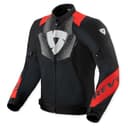
Mesh with a woven abrasion panel over the chest. The Hyperspeed 3 GT Air combines PWR|Shell mesh and 3D air mesh with a PWR|Weave chest panel and Softshell 3L sections. The chest is the panel that meets the air at speed, so putting the strongest fabric there and venting around it is how this jacket reaches Class AA while still being a summer garment.
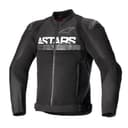
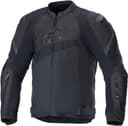
A mesh chassis with perforation on top of it. Alpinestars’ SMX Air is a tech mesh chassis with mechanical stretch combined with 450D poly-fabric that is itself perforated in key areas. That is the most air of anything here, and it is also why it sits at Class A.
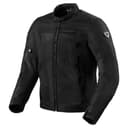
Mesh panels placed on a woven shell. The Eclipse 2 is a 600-denier polyester jacket with mesh panels let into the front, the back and the inner arms. The inner-arm placement is the detail worth noticing: air that enters at the front has somewhere to leave from, which is the difference between a jacket that ventilates and a jacket that has vents. The T-GP Plus R V4 Airflow works the same way on a 450D shell.
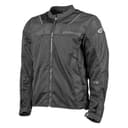
Mesh everywhere except the impact zones. Joe Rocket’s ION Mesh is a Free-Air and Free-Air Plus mesh outer shell with Rock Tex 600 panels specifically at the shoulders and elbows. That is the right instinct — solid material where the armor is, mesh everywhere else — and the reason it ranks fourth rather than higher is not the construction. It is that the page never prints a clause for the garment certification it claims.
The back protector problem
Four of the five jackets on this page have a back-protector pocket and nothing in it. REV’IT! names the part it expects you to buy (the SEESOFT CE-level 2 insert) and sells it as an add-on; Alpinestars lists its long back protector insert as an accessory on both of its jackets here. Only the cheapest pick on the page, the Joe Rocket ION Mesh, includes a spine protector — and Joe Rocket states it at Level 2, the higher of the two.
This is worth real money in the comparison. A level 2 back insert is a meaningful fraction of a budget jacket’s price, which means the gap between the cheapest jacket here and the next one up is smaller in practice than the two price tags suggest. It also means a reader who buys a premium mesh jacket and never adds the insert is riding with less back coverage than a reader who bought the cheap one and left it alone. We make the same point on armored base layers, where the trade is between filling a jacket’s pocket and wearing the armor as its own garment.
Airbags and mesh, which is a narrower overlap than it looks
Three of these five jackets state airbag compatibility and two do not, and the three that do are not interchangeable. The T-GP Plus R V4 Airflow is stated as ready for both the Tech-Air 5 and the cheaper Tech-Air 3, which is the broadest compatibility on the page and the reason it holds a place here despite publishing no EN 1621 level for its own armor. The SMX Air is stated as compatible with the Tech-Air 5 Plasma system specifically. The Hyperspeed 3 GT Air is ready for REV’IT!’s own Avertum Tech-Air system — one size up, which REV’IT! prints in capitals and which changes what you order, not just what you wear.
If an airbag is the plan, read our airbag vest ranking first and buy the jacket around the vest, because the reverse does not work. An under-jacket system needs room designed for it, and a summer jacket that fits you correctly in June will not take a 20 mm inflatable layer in August.
How this page relates to our other jacket rankings
Best motorcycle jackets is the climate split and the page to read if you are buying one jacket for everything. All-season jackets are built around a waterproof membrane, which is the exact opposite specification to this page — a membrane is a layer air cannot pass through. Sport jackets ranks on garment class in a sport cut, leather included, and two of the jackets here appear on it for that reason. Waterproof gear is the head-to-toe wet-weather kit. This page does the job none of them do, which is rank on airflow architecture and say what it cost.
For the lower half of the same problem, our riding pants ranking includes a true mesh overpant that pulls on over normal clothes, which is the cheapest way to stop riding in unarmored jeans in July. And what to wear on a motorcycle in summer covers the whole hot-weather kit, including the base layer under the mesh — which matters more than people expect, because once the air is hotter than your skin, airflow alone stops cooling you.
What we left out, and why
Mesh jackets with no published garment certification at all. Search this category and most of the cheapest results are mesh jackets with removable armor, a price under a hundred dollars and no standard named anywhere. Several may be adequate. We could not find a maker’s certification statement for any of them to check, which is the same rule we apply on every gear page, and it is the reason the cheapest jacket on this page is not the cheapest jacket in the category.
Perforated leather. A perforated leather jacket flows real air and the sport jacket ranking includes one. It is not on this page because perforation and mesh are different specifications with different failure modes, and ranking a leather jacket against a mesh one on airflow would flatter the leather on a page about ventilation while hiding the thing it is actually better at.
Women’s-cut versions. Alpinestars sells a Stella cut of the SMX Air in the same model, and several makers here do the same. We list the models we could read a specification for, and we did not find separate published certification lines for the women’s cuts, so we say the Stella exists rather than ranking it as though we had checked it.
Jackets whose only “CE” claim is in a listing title. A marketplace title is not a maker’s certification statement. Where a jacket’s own page prints the clause we quote it; where it prints a class without a clause, the card says so, as it does for our fourth pick.