How we built the kit
One pick per layer, in the order the cold actually gets to you. The jacket and the pants are the chassis, and both had to carry a waterproof membrane and a removable thermal liner rather than one or the other — a liner behind a porous shell is insulation that the wind blows straight through, and a membrane with nothing behind it is a rain jacket. Gloves came next, ranked on the published EN 13594 clause first and the published insulation weight second. The helmet slot went to fog control and low-sun visibility rather than to shell material. Then the two budget entries, because the whole kit at full price is a lot of money and the cheap route through it is a real question.
What we deliberately did not do is fill every slot. There is no base-layer pick and no boot pick on this page, for reasons stated in the FAQ above — the registry has nothing that honestly belongs in either slot, and an empty slot with an explanation is worth more to you than a pick we had to stretch for.
The chassis: membrane first, liner second
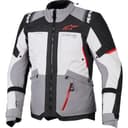
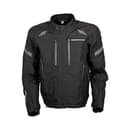
The Andes V4 Drystar jacket is the pick because it is the cheapest garment we rank that does both jobs properly. A Drystar membrane handles the water, a removable long-sleeve thermal liner handles the cold (Alpinestars publishes 100 g in the body and 80 g in the sleeves), and the garment itself is CE-certified to EN 17092-4:2020 as a Class A. It is Tech-Air Ready, so an airbag can be added later without buying a new jacket. The honest limitations: Nucleon Flex Plus armor is CE Level 1 rather than Level 2, the back and chest compartments ship empty, and Alpinestars does not say whether the Drystar membrane is bonded to the shell or hung behind it.
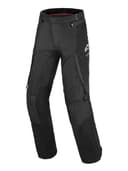
The matching Andes V4 Drystar pants are the pick for the same reasons, and the pairing is not laziness — legs are the layer riders skip, and then wonder why they are cold. A fixed Drystar membrane, a removable full-length thermal liner (100 g thighs, 60 g lower legs), adjustable thigh vents for when the sun comes back out, and Nucleon Flex Plus CE Level 1 knee armor in three-position pockets. The published limitation is the abrasion class: EN 17092 Class A, the lowest street class, and there is no hip armor in the box. Our riding pants ranking has the Class AA alternatives if abrasion matters more to you than the liner.
Hands: the layer that decides whether you keep riding
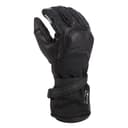
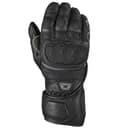
The Klim Badlands GTX Long is the certified pick: a CE Level 1 KP glove to EN 13594 with GORE-TEX bonded to the shell by GORE Grip, so the membrane does not slip around the bars inside the leather. It has a polycarbonate knuckle guard over XRD foam, dual visor wipers — left for water, right for ice — and a neoprene gasket inside the gauntlet. The limitation is published and it is the whole reason the heated pick exists below it: Klim fits only 60 g of Thinsulate, on the backhand, and leaves the palm unlined for feel. That is a glove designed around heated grips, not a glove designed to work without them.
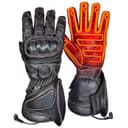
Which is why the Gerbing 12V Extreme Hard Knuckle sits next to it rather than below it. It is a heating system first and a riding glove second: Microwire elements to every fingertip off the bike’s 12 V supply, with Gerbing publishing 1.1 A, 13 W per glove and a 135°F maximum, inside a cowhide gauntlet with 150 g of insulation and a floating TPU hard knuckle. Three honest caveats, all from Gerbing’s own page: there is no EN 13594 certification published anywhere for it, the Aquatex membrane is described as water-resistant rather than waterproof, and the harness and controller needed to run it are sold separately. Our winter glove ranking puts all six cold-weather gloves we rank side by side on those clauses.
The helmet: fog and low sun, not shell material
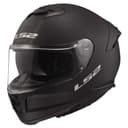
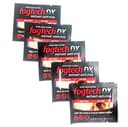
Winter does two specific things to a helmet. It fogs the shield, because the temperature gap across the visor is at its widest when it is cold outside and you are breathing inside; and it puts the sun at eye level on an afternoon commute. So the pick here is the LS2 Stream II, which is the cheapest helmet we rank that answers both: a drop-down sun visor built in, a Pinlock-ready shield, and ECE 22.06 plus DOT certification at a budget price. The cons are what you would expect at the price — a Kinetic Polymer Alloy shell at a stated 1,550 g is heavier than a composite, and the finish is good for the money rather than flagship-grade.
Whatever helmet you own, fit the Pinlock insert before the first cold morning rather than after it. Our guide to stopping a helmet fogging covers why a double-pane insert works where anti-fog sprays mostly do not, and the sun-visor ranking has the full list of helmets that build the shade in.
The cheap way through
The jacket: Scorpion EXO Optima. A genuinely seam-sealed waterproof laminate outer, which is rare at the price, plus a removable EverHeat thermal liner and two waterproof vents for when the weather turns. CE-rated Exo-Tec shoulder and elbow armor is included; the back protector is a separate purchase and the pocket is there for it. It is the cheapest route to the membrane-plus-liner formula that this whole page is built on.
The gloves: Cortech Scarab V3. The best-specified cheap winter gauntlet we could source, and the one with the most insulation on this page by a distance: a Hipora waterproof membrane in a goat leather chassis with PrimaLoft published on both sides of the hand — 120 g Silver on the backhand, 60 g Gold Eco in the palm — plus Superfabric at the knuckles, fingers, thumb and palm heel, and a shield wiper. It ranks below the Klim for one reason, and it is a real one: Cortech publishes no EN 13594 certification at all. The 60 g in the palm also blunts feel and fights heated grips, which is the trade you make for warmth without a certification.
Buying the whole kit at once is not the normal path. If you are starting from nothing, our first gear checklist sets the buying order, and how much to spend on gear puts honest numbers against each layer.
What this kit will not fix
Cold feet. Neither boot we rank is waterproof and neither is insulated, so this page has no pick for the slot. Wet feet in winter are the fastest route to ending a ride early; if you ride through real cold, a waterproof touring boot is money better spent than an upgrade to anything above.
Your neck and your wrists. Every cold-weather failure we have seen described comes down to a gap rather than a garment — the gap at the collar, the gap between glove cuff and sleeve, the gap at the waist when you lean forward. The gauntlet gloves here are chosen partly for that reason. A balaclava or neck tube closes the other one for about the price of a tank of fuel, and it is in the essentials above.
Riding technique. Cold tires, cold brakes, salt and wet leaves are a separate problem from staying warm, and warm gear can quietly encourage you to ride as if it is July. Our guide on how to stay warm on a motorcycle covers the layering technique and the habits in more detail than a product ranking can.