The Lid Test

Arai Alternatives: What to Buy Instead

Arai builds hand-laid shells to a continuous-curve rule, in four shell sizes, with Snell on its US street helmets — and charges accordingly. These are the six helmets we rank that give you one of those things for less, or something Arai does not build at all.

By Stephen V.Last verified How we compare

The verdict

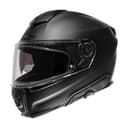
For most riders cross-shopping an Arai, the answer is the Shoei RF-1400: the same DOT-plus-Snell-M2025 certification stack, the same hand-laid composite construction in multiple shell sizes, the same emergency cheek-pad release — for meaningfully less than the Contour-X. If what you actually wanted from the Arai was low weight, the AGV K6 S is lighter on the published figures than anything Arai lists and adds the ECE 22.06 rating Arai’s US listings do not state. If you want Arai-grade shell construction with comms designed in, the Schuberth S3 is the one. And the budget answer is the Scorpion EXO-R430, which carries the same current Snell M2025 rating as a Contour-X for a fraction of the money. Every price here was pulled live from Amazon and last checked November 11, 2026.

Searching for an Arai alternative is almost never a complaint about Arai. It is a reaction to a number. So before the list, it is worth being precise about what that number buys, because “something like an Arai” means four separate things and no single helmet below replaces all of them.

Arai builds its shells by hand from laminated fiberglass and reinforcing fibers — PB e-cLc on the Contour-X, PB SCLC on the Regent-X, Super Fiber PB-cLc on the XD-5 — and it builds them in four shell sizes, so the outer shell grows with your head instead of the liner doing all the work. It shapes every shell to the R75 rule, a continuous curve with no radius tighter than 75 mm, on the argument that a smooth shell glances off an obstacle rather than catching on it. Its US street helmets carry Snell M2025 on top of DOT. And it fits none of them with a drop-down internal sun visor, because a sun visor means a second slot cut into the EPS liner.

Two things Arai does not publish are just as relevant here. Its US listings for the Contour-X, Regent-X and XD-5 state DOT and Snell but no ECE 22.06, which means no published rotational-impact or multi-point testing result. And it publishes no spec sheet of its own for several models, which is why our weight figures for Arai come from RevZilla and Cycle Gear rather than from Arai. Both facts matter when you are deciding what “as good as an Arai” has to mean.

How this is funded: we earn a commission if you buy through our links, at no extra cost to you. It never changes which helmet we recommend, and we’ll tell you plainly when a cheaper or lighter one is the better buy. Full disclosure.

Quick picks

Ranked on our spec score — certification, weight, features and value. Select a row to jump to the full write-up. We have not tested these helmets; here is exactly how we compare them instead.

#HelmetBest forCertificationsWeightShellOur scorePrice
1
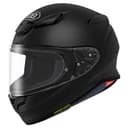
Shoei RF-1400

Shoei RF-1400

The full-face benchmark most riders are quietly measuring everything else against. Snell M2025 plus DOT, a hand-laid AIM+ composite shell, and Shoei's quietest, most refined shield system — it earns the price on the spec sheet, not the badge.

Closest like-for-likeDOT, Snell M20251651 gAIM+ multi-composite (interwoven fiberglass and organic fibers)9.3
$541.00 · View on Amazon

Price as of November 11, 2026. #ad How we’re funded

2
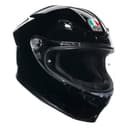
AGV K6 S

AGV K6 S

A carbon-aramid shell at roughly 1,255 g makes the K6 S one of the lightest DOT-and-ECE-22.06 full-faces you can buy, with a genuinely wide 190-degree eye port. If you notice helmet weight on a long day, this is the short list.

Lightest, and the only ECE 22.06 street pickDOT, ECE 22.061255 gCarbon-aramid fiber9.1
$639.00 · View on Amazon

Price as of November 11, 2026. #ad How we’re funded

3
Schuberth S3

Schuberth S3

Schuberth's sport-touring full-face, and the German quiet-and-integration argument in its purest form: a carbon-reinforced DFP fiberglass shell, a Pinlock 120 already fitted to the clear shield, and speakers plus antennas laid into the shell so a comms unit plugs in rather than clamps on. What the US listing does not give you is a certification above DOT, or a published weight to rank it by.

Best for comms and quietDOTNot publishedDFP (Direct Fiber Processing) glass fiber reinforced with carbon fiber8.6
$599.00 · View on Amazon

Price as of November 11, 2026. #ad How we’re funded

4
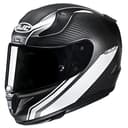
HJC RPHA 11 Pro

HJC RPHA 11 Pro

The value sport helmet that keeps showing up on best-of lists for a reason: a PIM+ carbon-blend shell at a published ~1,417 g in medium, an enlarged eye port, and tool-less shield changes — at roughly half a premium flagship's price.

Best value compositeDOT, ECE 22.051417 gPIM+ (carbon, fiberglass and aramid hybrid)8.6
5
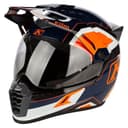
Klim Krios Pro

Klim Krios Pro

The benchmark ADV lid for a reason: a full carbon shell at a published 1,450 g in Large makes it one of the lightest adventure helmets made, and it reconfigures for street, adventure, dual-sport or dirt without buying a second helmet.

Best Arai XD-5 alternativeDOT, ECE 22.061450 gFull carbon fiber (hand-laid)9.1
$599.74 · View on Amazon

Price as of November 11, 2026. #ad How we’re funded

6
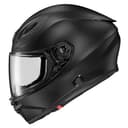
Scorpion EXO-R430

Scorpion EXO-R430

The budget standout, because it carries the current Snell M2025 on top of DOT — a genuine top-tier impact rating for well under $200. It's also comm-ready with an EXO-COM port, so a Bluetooth setup is a clean add later.

Cheapest route to Snell M2025DOT, Snell M20251642 gAdvanced polycarbonate8.1
$184.95 · View on Amazon

Price as of November 11, 2026. #ad How we’re funded

Specs read from each manufacturer or retailer listing on the date shown in that helmet’s write-up below; “Not published” means the maker does not state that figure. Prices are pulled live from Amazon and were last checked November 11, 2026.

The picks in full

#1Closest like-for-likeOur score9.3

Shoei RF-1400

The full-face benchmark most riders are quietly measuring everything else against. Snell M2025 plus DOT, a hand-laid AIM+ composite shell, and Shoei's quietest, most refined shield system — it earns the price on the spec sheet, not the badge.

Strengths

  • Carries both DOT and Snell M2025 — the stricter Snell impact protocol on top of the US legal minimum
  • AIM+ multi-composite shell in multiple sizes keeps the fit true and the weight sensible for a fiberglass lid
  • CWR-F2 shield and vortex generators are aimed squarely at wind noise, the thing most riders complain about

Trade-offs

  • Premium money — you're paying for the shell and finish, not gadgets
  • No drop-down internal sun visor (Shoei's design choice; you swap to a tinted shield instead)
CertificationsDOT, Snell M2025
Weight1651 g
ShellAIM+ multi-composite (interwoven fiberglass and organic fibers)
Head shapeIntermediate oval
SizesXS-3XL
Internal sun visorNo
Pinlock-readyYes

Notable. CWR-F2 shield with vortex generators; 3D Max-Dry liner; emergency quick-release cheek pads

Specs read from the manufacturer / retailer listing, on July 19, 2026. “Not published” means the maker does not state that figure.

#2Lightest, and the only ECE 22.06 street pickOur score9.1

AGV K6 S

A carbon-aramid shell at roughly 1,255 g makes the K6 S one of the lightest DOT-and-ECE-22.06 full-faces you can buy, with a genuinely wide 190-degree eye port. If you notice helmet weight on a long day, this is the short list.

Strengths

  • Carbon-aramid shell — AGV's published 1,255 g is class-leadingly light for the segment
  • Certified to ECE 22.06, the newest standard with rotational and multi-point impact testing
  • Ultravision visor gives a 190-degree horizontal field of view and ships Pinlock-ready

Trade-offs

  • No internal sun visor — a tinted shield is a separate purchase
  • Sport-leaning fit and shell shape suit an intermediate-oval head best
CertificationsDOT, ECE 22.06
Weight1255 g
ShellCarbon-aramid fiber
Head shapeIntermediate oval
SizesXS-2XL
Internal sun visorNo
Pinlock-readyYes

Notable. 190-degree Ultravision visor (Optical Class 1); 5-density EPS; ARK comms-ready

Specs read from the manufacturer / retailer listing, on July 19, 2026. “Not published” means the maker does not state that figure.

#3Best for comms and quietOur score8.6

Schuberth S3

Schuberth's sport-touring full-face, and the German quiet-and-integration argument in its purest form: a carbon-reinforced DFP fiberglass shell, a Pinlock 120 already fitted to the clear shield, and speakers plus antennas laid into the shell so a comms unit plugs in rather than clamps on. What the US listing does not give you is a certification above DOT, or a published weight to rank it by.

Strengths

  • DFP (Direct Fiber Processing) glass fiber reinforced with carbon fiber — a genuine composite shell, not the polycarbonate common even at this price
  • Ships with a Pinlock 120 anti-fog lens already installed in the clear shield, rather than merely being Pinlock-ready
  • Speakers and integrated antennas are built into the shell for a plug-and-play Bluetooth system, so nothing bolts to the outside
  • Two shell sizes cover seven head sizes from 52 to 65 cm, with a V-lock drop-down sun visor as standard

Trade-offs

  • Neither Schuberth's US listing nor RevZilla publishes a weight, so it cannot be ranked against the composites we do have figures for
  • The US listing states DOT only — no ECE 22.06 and no Snell for the helmet sold here, even though Schuberth's own S3 data sheet describes the model as its first ECE 22.06 full-face
  • Premium money for a certification stack that budget Snell helmets match on paper
CertificationsDOT
WeightNot published
ShellDFP (Direct Fiber Processing) glass fiber reinforced with carbon fiber
Head shapeIntermediate oval
SizesXS-3XL (52-65 cm)
Internal sun visorYes
Pinlock-readyYes

Notable. Pinlock 120 preinstalled; V-lock drop-down sun visor; in-shell speakers and antennas; filtered double chin intake; back spoiler air extractor

Specs read from the manufacturer / retailer listing, on August 30, 2026. “Not published” means the maker does not state that figure.

#4Best value compositeOur score8.6

HJC RPHA 11 Pro

The value sport helmet that keeps showing up on best-of lists for a reason: a PIM+ carbon-blend shell at a published ~1,417 g in medium, an enlarged eye port, and tool-less shield changes — at roughly half a premium flagship's price.

Strengths

  • PIM+ carbon-fiberglass-aramid shell is light — Rider Magazine cites 3 lb 2 oz (~1,417 g) in medium
  • Enlarged eye port and full front-to-back ACS ventilation aimed at track use
  • RapidFire II tool-less shield swaps make a tinted or clear change a 10-second job

Trade-offs

  • Certified to the older ECE 22.05 (plus DOT), not the newer 22.06 protocol
  • The outgoing generation — HJC has since launched the RPHA 12 as its replacement, on an ECE 22.06 certification and a revised PIM EVO shell. The 11 Pro is still widely sold, and the value case is exactly that gap
  • No internal sun visor
CertificationsDOT, ECE 22.05
Weight1417 g
ShellPIM+ (carbon, fiberglass and aramid hybrid)
Head shapeNot published
SizesXS-2XL
Internal sun visorNo
Pinlock-readyYes

Notable. ACS full airflow; enlarged eye port; RapidFire II tool-less shield

Specs read from the manufacturer / retailer listing, on July 19, 2026. “Not published” means the maker does not state that figure.

#5Best Arai XD-5 alternativeOur score9.1

Klim Krios Pro

The benchmark ADV lid for a reason: a full carbon shell at a published 1,450 g in Large makes it one of the lightest adventure helmets made, and it reconfigures for street, adventure, dual-sport or dirt without buying a second helmet.

Strengths

  • Full carbon shell — 1,450 g in Large is remarkably light for an ADV helmet with a peak
  • DOT and ECE 22.06, plus Koroyd energy-absorbing structure
  • Four ride modes (street, ADV, dual-sport, dirt) and a photochromic shield included

Trade-offs

  • No longer Klim's top adventure helmet — the X1 Alpha sits above it, a hand-laid carbon shell over Koroyd and EPS with more shell sizes and a road-touring bias, for meaningfully more money
  • Premium price — you're paying for carbon and versatility
  • No internal sun visor (the photochromic shield does that job instead)
CertificationsDOT, ECE 22.06
Weight1450 g
ShellFull carbon fiber (hand-laid)
Head shapeIntermediate oval
SizesXS-3XL
Internal sun visorNo
Pinlock-readyNo

Notable. Koroyd construction; four ride modes; photochromic shield; goggle-compatible

Specs read from the manufacturer / retailer listing, on July 19, 2026. “Not published” means the maker does not state that figure.

#6Cheapest route to Snell M2025Our score8.1

Scorpion EXO-R430

The budget standout, because it carries the current Snell M2025 on top of DOT — a genuine top-tier impact rating for well under $200. It's also comm-ready with an EXO-COM port, so a Bluetooth setup is a clean add later.

Strengths

  • Carries DOT plus the current Snell M2025 — a real, up-to-date Snell rating at a budget price
  • EXO-COM comm-ready port and Bluetooth speaker pockets for an easy comms add
  • Ellip-Tec latching face shield with EverClear anti-fog coating

Trade-offs

  • Polycarbonate shell is heavier (~1,642 g) than a composite helmet
  • Stock shield is EverClear anti-fog, not Pinlock (a Pinlock-prepared shield is sold separately); no internal sun visor
CertificationsDOT, Snell M2025
Weight1642 g
ShellAdvanced polycarbonate
Head shapeIntermediate oval
SizesXS-4XL
Internal sun visorNo
Pinlock-readyNo

Notable. Snell M2025; Ellip-Tec latching shield with EverClear anti-fog; EXO-COM comm-ready

Specs read from the manufacturer / retailer listing, on July 19, 2026. “Not published” means the maker does not state that figure.

How we ranked the alternatives

Every helmet here had to replace a named Arai attribute, not a general impression of the brand. We ranked on how completely a helmet substitutes for the Arai a rider is most likely to be cross-shopping — the Contour-X and the Regent-X on the street, the XD-5 on adventure — starting with the certification stack, then shell construction and published weight, then what the helmet adds that Arai does not build. Every spec in the comparison table above is read from the maker’s or a US retailer’s listing on a dated visit, and anything a maker does not publish renders “Not published” rather than a guess.

One ranking note worth stating plainly: we did not rank these on price. Three of the six cost real money, and the cheapest is a different kind of helmet rather than a cheaper version of the same one. The order is about how much of the Arai argument each one actually reproduces.

What each pick replaces

The construction, like for like — Shoei RF-1400. This is the substitution that gives up the least. Snell M2025 and DOT, an AIM+ hand-laid multi-composite shell in multiple shell sizes, emergency quick-release cheek pads, and a shield system (CWR-F2 with vortex generators) that Shoei aims squarely at wind noise. The published trade is weight: 3.64 lb on Shoei USA’s figure against the Contour-X’s 3.34 lb, and the Arai includes a Pinlock insert where the Shoei is Pinlock-ready. We compare the two directly on our RF-1400 vs Contour-X page, and the brands head to head on Arai vs Shoei.

The weight — AGV K6 S. If the thing you admired about the Arai was that a composite shell does not wear on your neck after four hours, the K6 S goes further than any Arai does on the published numbers: a carbon-aramid shell at AGV’s stated 1,255 g, against 1,515 g for the Contour-X and 1,547 g for the Regent-X. It is also the only street helmet on this page certified to ECE 22.06, the standard that adds rotational and multi-point impact testing — something no Arai US listing we read states. The honest cons: no Snell, no internal sun visor, a sport-leaning fit, and a size run that stops at 2XL.

The quiet, and the comms — Schuberth S3. Arai’s helmets are built shell-first and leave electronics to you. Schuberth builds the opposite argument into the same class of shell: a DFP fiberglass chassis reinforced with carbon fiber, a Pinlock 120 lens already fitted to the clear shield rather than sold separately, and speakers and antennas laid into the shell so a comms unit plugs in instead of clamping on. What the US listing does not give you is a certification above DOT, or a published weight — two gaps we state rather than fill. If a helmet that is quiet and comms-ready matters more to you than a Snell sticker, this is the trade.

The composite shell for half the money — HJC RPHA 11 Pro. A PIM+ carbon-fiberglass-aramid shell that Rider Magazine weighed at 3 lb 2 oz (~1,417 g) in medium, an enlarged eye port, and RapidFire II tool-less shield changes. The caveats are specific and we would rather you had them up front: it is certified to the older ECE 22.05 rather than 22.06, it carries no Snell, and it is the outgoing generation — HJC has launched the RPHA 12 above it on an ECE 22.06 certification and a revised shell. The value case is that gap, and the 11 Pro is still widely sold.

The adventure helmet — Klim Krios Pro. The Arai XD-5 is a different cross-shop from the street helmets: Super Fiber PB-cLc shell, DOT plus Snell M2025, a convertible peak, and a published 3.71 lb (~1,683 g). The Krios Pro answers it with a full hand-laid carbon shell at a published 1,450 g in Large, DOT plus ECE 22.06, Koroyd energy-absorbing structure, four ride modes and a photochromic shield in the box. It gives up the Snell rating to do it, and Klim now ranges the X1 Alpha above it. We put the two side by side on our Krios Pro vs XD-5 page.

The certification, cheaply — Scorpion EXO-R430. The budget pick, and the only helmet here chosen for one reason: it carries the current Snell M2025 alongside DOT, the same Snell generation as the Contour-X and Regent-X, at well under $200 at our last live check. It is an advanced polycarbonate shell at roughly 1,642 g, its stock shield is EverClear anti-fog rather than Pinlock-prepared, and the 3XL/4XL shell is DOT-only per RevZilla’s listing. None of that changes the one fact that puts it on this page.

What none of these replaces

Four shell sizes. Only the RF-1400 among these six publishes multiple shell sizes in the way Arai does, and Arai is explicit about running four per model. Shell sizing is the quiet reason an Arai fits a small head better than a helmet that pads a single shell down: a one-shell helmet makes an XS by adding foam, which adds bulk and weight the rider carries all day. If you have a small or a very large head, read our guide to helmet shell sizes before you substitute.

The fit, which is the actual reason most people buy Arai. Arai’s US street helmets are listed as intermediate oval, and the Regent-X exists specifically because the brand’s bottom opening has historically been hard to pull on — Arai widened the chin and cheek area and thinned the neck roll to fix it. A helmet that matches an Arai on paper can still be the wrong shape for your head, and no spec table on this site can tell you that. Our head-shape guide explains how to work out which shape you are before you order anything.

A sun visor. Arai does not fit one, and neither does any helmet on this page. That is not a coincidence — it is what shell-first helmets have in common. If you want the drop-down visor, start at our sun-visor helmet ranking instead, where the picks are chosen for it rather than in spite of it.

If you still want the Arai

Then buy the Regent-X, and buy it for the reason Arai built it. It carries the same Snell M2025 and DOT stack as the flagship, the same peripherally belted laminate shell in four shell sizes, and a bottom opening widened at the chin and cheeks with a thinner neck roll — the donning problem solved in the shell rather than in the padding. It is the cheapest way into Arai’s construction, and it gives up the premium shield hardware and the bagged Pinlock to get there. Our Regent-X review has the full spec read, and the Contour-X review covers the flagship above it.

One more honest note on timing. Arai publishes no discount program we could find, and its helmets hold price; the realistic saving is a previous-season graphic rather than a current one. If a specific colorway is not the point, that is where the money is.
Frequently asked questions

What is Arai actually known for?

Three things, all of them construction rather than features. First, hand-laid composite shells — Arai laminates fiberglass with reinforcing belts rather than molding a polycarbonate shell, and it builds four separate shell sizes per model so a small head gets a small shell. Second, the R75 rule: every shell is shaped to a continuous curve with no radius tighter than 75 mm, the argument being that a smooth round shell glances off what it hits. Third, certification — Arai's US street helmets carry Snell M2025 as well as DOT, where most makers carry DOT and ECE. What Arai does not build is an internal sun visor, in any model.

Is there a cheaper helmet with the same Snell rating as an Arai?

Yes, and it is not close on price. The Scorpion EXO-R430 carries DOT plus the current Snell M2025 — the same Snell generation as the Contour-X and Regent-X — at well under $200 at our last live check. The trade is real: it is an advanced polycarbonate shell at roughly 1,642 g rather than a hand-laid composite at roughly 1,515 g, its stock shield is EverClear anti-fog rather than Pinlock-prepared, and RevZilla's listing notes the 3XL/4XL shell is DOT-only. But if the specific thing you wanted from the Arai was a current Snell certification, that is the cheapest route to it we rank.

Which helmet is closest to an Arai Contour-X?

The Shoei RF-1400, on the published specs. Both carry DOT plus Snell M2025. Both use a hand-laid multi-composite shell — Arai's PB e-cLc against Shoei's AIM+ — built in multiple shell sizes. Both ship with an emergency cheek-pad release system for first responders. Neither has an internal sun visor. The published differences are weight, where Arai's 3.34 lb beats Shoei's 3.64 lb, and the shield: Arai includes the Pinlock insert in the box, Shoei's CWR-F2 is Pinlock-ready with the insert sold separately. Then there is price, where the RF-1400 has consistently been the cheaper helmet at our live checks.

Do any of these alternatives have the sun visor Arai does not fit?

Not among the six picks here, which is an honest limitation of this page rather than an oversight. All six are shell-first helmets chosen to match what Arai does, and none of the six publishes a drop-down internal sun visor. If the sun visor is the feature you actually want, the list you want is our sun-visor ranking, not this one — and the pattern it documents is that almost no premium full-face carries one, because the second visor slot has to come out of the EPS.

Is Arai worth the money, or should I just buy the alternative?

Both can be true. On our own published spec rubric the Contour-X scores 9.1 and the Regent-X 9.0, which is higher than four of the six helmets on this page — so nobody should read this list as Arai being overpriced for what it is. The case for the alternative is narrower than that: you want one specific attribute from the Arai, and someone else sells that attribute for less. If you want all four Arai attributes at once — hand-laid shell, four shell sizes, R75 curve and Snell — the honest answer is that you buy the Arai, and the Regent-X is the cheapest way in.

Why do none of Arai's US listings show ECE 22.06?

We do not know, and we are not going to guess at a maker's certification strategy. What we can report is what the listings say: the US pages we read for the Contour-X, Regent-X and XD-5 state DOT and Snell M2025, and none of them states ECE 22.06. That matters because ECE 22.06 is the only one of the three that adds rotational (oblique) impact testing and multi-point impact testing to the protocol. If published rotational testing is what you are shopping for, the AGV K6 S and the Klim Krios Pro on this page both carry ECE 22.06.

Sources

  • Arai Helmet Americas — Arai's official US site — model lineup and the round-shell design philosophy (accessed July 19, 2026)
  • Shoei Helmets (USA) — Shoei's official US site — model lineup and published specifications (accessed July 19, 2026)
  • AGV — AGV's official US site — model lineup and published weights/certifications (accessed July 19, 2026)
  • HJC Helmets (USA) — HJC's official US site — RPHA and value model lineups (accessed July 19, 2026)
  • SCHUBERTH (US) — Schuberth's official US site — the C5, S3 and E2 lineup, homologation and published weights (accessed August 30, 2026)
  • Snell Memorial Foundation — The independent nonprofit that writes and certifies the Snell helmet standards (M2025, etc.) (accessed July 19, 2026)
  • Snell Memorial Foundation — Standards — The current Snell motorcycle helmet standards and what each revision changed (accessed July 19, 2026)
  • UNECE — Vehicle Regulations — The UN body behind ECE Regulation 22.06, the European helmet standard (accessed July 19, 2026)
  • RevZilla Common Tread — Snell, ECE and DOT certifications explained — Plain-English overview of how the three certifications differ and who verifies them (accessed July 19, 2026)

Keep reading