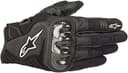
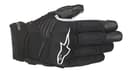
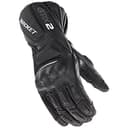
How we ranked three gloves
With a band this narrow the ranking criteria matter more than usual, because there is nowhere to hide. We ranked on what the maker publishes about protection first — the stated CE level and, critically, whether the right standard is cited for it — then on the chassis material, then on what the glove is actually for. Every figure in the comparison table above is read from the maker’s or a US retailer’s listing on a dated visit, and where a maker does not publish something, the table says “Not published” instead of guessing.
That produced a clear order. The SMX-1 Air V2 wins on hardware: a hard polymer knuckle rather than a soft pad, perforated leather over a mesh chassis, and touchscreen fingertips, for about $80. The Faster is the same stated CE Level 1 with a softer knuckle and a softshell backhand — less protective hardware, more wearable on a cool commute, and around $45. The GPX 2.0 ranks third despite being a full gauntlet in goatskin, because its knuckle armor is internal rather than an external shell, it has no palm slider and no finger bridge, and the standard on its page is the garment standard rather than the glove one.
What the sub-$100 band gives up
Waterproofing, entirely. Not one glove under $100 in our registry has a membrane. The cheapest certified waterproof glove we rank is the Alpinestars Tourer W-7 V2 Drystar at $129.95, and the jump from $80 to $130 buys you the ability to ride home in rain without losing feeling in your fingers. If you only upgrade one thing on this page, upgrade this one — our touring glove ranking is where that money goes.
The palm slider. This is the protective feature riders know least about and race gloves care most about. In a fall you instinctively put a hand down; a smooth slider on the heel of the palm lets the hand skid instead of catching, which is what prevents the twist that breaks a wrist. None of these three has one. Our race glove ranking explains the full hardware list and what each piece is for.
The finger bridge. A small panel linking the third and fourth fingers so they cannot splay apart and hyperextend. Like the slider, it is a race-derived feature and it does not appear at this price.
Published certification depth. Two of three state a CE level; one cites the wrong standard for a glove. Across our whole glove registry the pattern is consistent: the higher the price, the more likely the maker names EN 13594 and the level explicitly. That is not a coincidence — certification costs money, and makers who pay for it say so.
Match the pick to your riding
One pair for everything, in a warm climate: the SMX-1 Air V2. Perforated leather and mesh is the right chassis for heat, the hard knuckle is the protection you want, and the touchscreen fingertips mean you are not taking them off at every stop. It is a summer glove, not an all-season one — the mesh that makes it comfortable in August makes it unwearable in February.
Commuting year-round on a budget: the Faster, and then a second pair for winter rather than trying to make one glove do both. The softshell backhand cuts wind chill that mesh does not, the leather palm handles the abrasion job, and it is understated enough to not look like race gear in an office car park. Pair it with our winter glove ranking when the temperature drops.
You need a gauntlet and the budget is the constraint: the GPX 2.0. It is the only full gauntlet under $100 we can price, the goatskin chassis and full leather palm are a real spec rather than a marketing line, and for a spare pair or a first gauntlet it does the job. Go in knowing it is a race-styled street glove: if you are buying for track days, the gloves you want start at around $125 and are on our race glove page.
Buying your first pair ever? Read our beginner glove ranking alongside this one. It is not price-gated, which means it can recommend the $124.95 glove that most riders should actually buy first — and the honest answer to “what should my first gloves be” is sometimes above the ceiling of this page.
Who we left off, and why
The Cortech Scarab V3 missed by $1.89 at our last check ($101.89) and is a better cold-weather glove than anything on this page — a Hipora waterproof membrane, PrimaLoft on both sides of the hand and Superfabric overlays. It is excluded because the number in the title has to mean something, and because Cortech publishes no EN 13594 certification at all. If your real question is the cheapest waterproof winter glove rather than the cheapest glove, go straight to our winter glove ranking, where it is the budget pick.
We did not consider a $25 band. Our registry contains nothing at that price, and we are not going to add an uncertified no-name glove to fill a slot — which is the only way that page gets written.