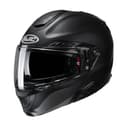
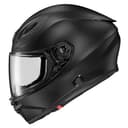
If you want the same thing from someone else
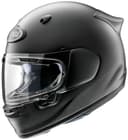
The Arai Contour-X is the like-for-like swap. Same certification stack as the RF-1400 — DOT plus Snell M2025 — in a hand-laid PB e-cLc shell, and it goes further than Shoei on two specifications: four shell sizes (XS, SM, MD–LG, XL–2XL), so the outer shell grows with your head rather than the liner absorbing the difference, and a VAS MAX Vision shield that ships with a clear Pinlock insert in the box. Thirteen ventilation ports, with the brow vents built into the shield instead of drilled through the shell.
What it costs you: it is consistently the most expensive way to buy this certification stack, and the RF-1400 undercuts it by a wide margin at our last check. There is no ECE 22.06 on the US listing, so no published rotational-impact testing, and like the Shoei there is no drop-down sun visor. Our RF-1400 vs Contour-X comparison is the spec-by-spec version of this decision.
If weight is why you were looking at Shoei
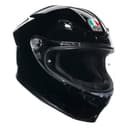
Buy the AGV K6 S. A carbon-aramid shell at a published 1,255 g makes it one of the lightest DOT-and-ECE-22.06 full-faces available, which is roughly 400 g less than the RF-1400 and the kind of difference you feel on hour six rather than in the showroom. The Ultravision visor gives a 190-degree horizontal field of view and ships Pinlock-ready, and it has five-density EPS.
The trades are stated: no Snell rating (it is DOT and ECE 22.06, which tests different things — see our safest-helmet ranking for how the stacks compare), no internal sun visor, and a sport-leaning shell shape that suits an intermediate-oval head best. AGV also publishes 1,255 g while RevZilla lists about 1,370 g, a discrepancy we record rather than resolve. It is the top pick on our lightest ranking.
If you have never been able to get a premium helmet on
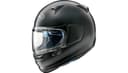
The Arai Regent-X is the helmet built for that complaint. Same Snell M2025 plus DOT stack and the same four-shell-size philosophy as the Contour-X, but with the bottom opening widened at the chin and cheeks and a thinner, shorter neck roll — the donning problem addressed in the shell rather than by thinning the padding, which would cost you fit. The VAS MAX Vision shield is in the box, and the liner is fully removable with a 5 mm peel-away layer for fine-tuning.
What you give up to get there: it is Pinlock-ready rather than Pinlock-included, there is no internal sun visor (Arai does not build them), and it is still premium money for a helmet with no electronics. Arai publishes no spec sheet of its own for the model, and the two US sources we read disagree on the shell’s name — PB SCLC on RevZilla, PB-CLC1 in Rider Magazine’s review of the same helmet. We print both.
If you wanted the Shoei for quiet and comms integration
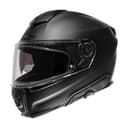
The Schuberth S3 is the German version of that argument. A DFP fiberglass shell reinforced with carbon fiber, a Pinlock 120 lens already installed in the clear shield rather than sold separately, a V-lock drop-down sun visor as standard — the thing Shoei full-faces do not have — and speakers plus antennas laid into the shell, so a Bluetooth system plugs in instead of clamping to the outside.
Two honest gaps, and they are significant. The US listing states DOT only — no ECE 22.06 and no Snell for the helmet sold here, even though Schuberth’s own S3 data sheet describes the model as its first ECE 22.06 full-face, which is exactly the region-split problem that catches helmet shoppers out. And no weight is published by Schuberth, RevZilla or Cycle Gear, so it cannot be ranked against the composites we do have figures for. Our Schuberth vs Shoei comparison takes that argument to its conclusion.
If the helmet you wanted was the Neotec 3
The HJC RPHA 91 is the substitute, and it is a composite modular rather than a cheaper polycarbonate one: a P.I.M. EVO shell blending carbon, carbon-glass and linen fibers, a drop-down sun visor, a Pinlock-ready shield included, and a purpose-made fit for HJC’s SMART 21B/50B Bluetooth units. At our last check it was several hundred dollars below the Neotec 3.
The Neotec 3 is the better helmet and we rank it first on our modular ranking: it adds ECE 22.06, the larger QSV-2 sun visor, a shield defogger and the cleanest comms channel in the class, and it is lighter. The RPHA 91’s own listing states DOT only, and it is heavier at a published 1,742 g. If you want to see the gap priced out, our Neotec 3 vs RPHA 91 comparison does exactly that, and Shoei vs HJC covers the two ranges.
If the price was the problem
The Scorpion EXO-R430 is the one that makes the point most bluntly: it carries DOT plus the current Snell M2025, the same certification as the RF-1400, and it was under $200 at our last price check. It is also comms-ready with an EXO-COM port and Bluetooth speaker pockets, and its Ellip-Tec latching shield has an EverClear anti-fog coating.
Everything you give up is in the write-up, and it is a lot: a polycarbonate shell at about 1,642 g, no internal sun visor, a stock shield that is EverClear-coated rather than Pinlock-prepared (that shield is a separate purchase), and a US listing note that the 3XL and 4XL shell is DOT-only. What it proves is that certification and refinement are different axes — the argument our cheap-helmet guide makes in full, and the reason it tops our under-$200 ranking on certification.
A note on what we did not do
We have not told you Shoei is overpriced, because on our own numbers it is not: the RF-1400 is the highest-scoring full-face in our registry and it undercuts the Arai that matches its certification. Every pick on this page beats a Shoei on one named axis — grams, shell sizes, donning, a sun visor, in-shell comms, or price — and loses on others, which is said in each section. That is what an alternatives page should be. If you want the head-to-heads instead, we have Arai vs Shoei, Schuberth vs Shoei and Shoei vs HJC, and the Shoei brand page covers the range itself.