How we ranked these
Certification is the entry requirement for this page, not the ranking — all seven helmets have it, so ranking on it would produce a tie. What orders them is our published spec score: the certification stack on top of 22.06, the published weight, the shell construction, how many shell sizes the fit is built from, and the features in the box. The rubric is on how we review, and we own no units and run no lab — every figure here is read from a manufacturer or US retailer listing on a dated visit.
The certification stack above 22.06. Two helmets add something: the Shoei X-Fifteen carries Snell M2025R on top of DOT and 22.06, which is the most complete stack in our registry, and the Bell MX-9 Adventure adds MIPS, a rotational-management system that sits inside the helmet rather than being part of any standard. Our MIPS explainer covers what that system does and does not do.
Published weight, and the spread is enormous. These seven helmets run from 1,255 g (AGV K6 S) to 1,858 g (Scorpion EXO-AT960 in a Medium). That is a 600 g difference inside one certification, which should settle the idea that a standard tells you anything about how a helmet feels. If weight is what you are optimizing, read it off the table.
Shell construction, because it is where the money went. Four of these are composite or carbon — AIM composite on the Neotec 3, AIM+ six-ply on the X-Fifteen, carbon-aramid on the K6 S, full carbon over Koroyd on the Krios Pro. Three are polycarbonate: the LS2, the Scorpion and the Bell. The polycarbonate helmets are the cheap ones and the heavy ones, in that order, and they carry the same certification.
What 22.06 does not tell you
A standard is a floor, not a score. Every helmet here cleared the same bar, and nothing about 22.06 distinguishes the $150 LS2 from the $935 Shoei — which is precisely why a certification list needs a ranking next to it. Here is what the badge is silent on.
Noise. Not tested, not implied, and the single most common complaint riders have. Quietness is aerodynamics, the neck-roll seal and shield gasket design. Our quietest-helmet ranking is built on those things instead.
Fit. Not tested in any comparative sense. A 22.06 helmet in the wrong head shape is a worse helmet for you than a DOT-only one in the right shape, because a helmet that moves on the head is not managing impact the way the test assumed it would.
How many shell sizes you are getting. A single-shell helmet across an XS–3XL run means the extreme sizes are mostly EPS. 22.06 certifies what was tested; it does not require a maker to build more shells. Our shell sizes guide explains why this is the most under-discussed spec in helmets.
Whether the US helmet is the one that was certified. The most important caveat on the page. Where a maker publishes different certifications for the European and US versions of the same model, we record the US one, which is why several otherwise-identical helmets elsewhere on this site show no ECE rating at all.
Match the pick to your riding
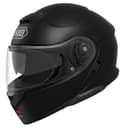
Touring, two-up, long days: the Shoei Neotec 3. A composite modular shell, the QSV-2 sun visor, a Pinlock-ready shield with a defogger, and a purpose-built channel for Shoei’s own comms unit instead of a clamp on the side of your head. It is the most expensive modular we cover and the write-up explains exactly where that money went.
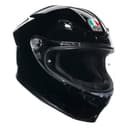
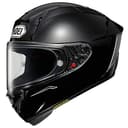
Sport and sport-touring: the AGV K6 S for weight and the 190-degree Ultravision eye port, or the Shoei X-Fifteen if you ride tucked on track and want the triple certification. The X-Fifteen’s aero is tuned for a committed position, which is a real reason not to buy it for upright commuting — see our track-day helmet ranking.
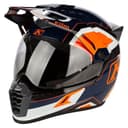
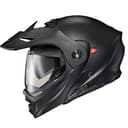
Adventure and dual-sport: the Klim Krios Pro is the benchmark — full carbon, 1,450 g in Large, four ride modes — and the Scorpion EXO-AT960 is the value answer, a flip-up ADV helmet with a sun visor and a removable peak for around a third less. The Bell MX-9 Adventure is the cheapest way to get 22.06 and MIPS together, and it takes goggles with the shield off. All three are on our adventure helmet ranking.
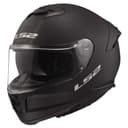
Commuting on a budget: the LS2 Stream II, without much argument. It is the cheapest 22.06 helmet we rank, it has the sun visor that makes low-sun commuting bearable, and it is Pinlock-ready for winter. It is heavier and less refined than the composite helmets above it, and at this price that is the correct trade. It is also the top pick on our under-$200 ranking.
The two helmets on 22.05, named
Two helmets we rank publish ECE 22.05 rather than 22.06, and we are naming them rather than lumping them in with “ECE certified”. The HJC RPHA 11 Pro is a well-regarded composite sport helmet and a good buy; the Scorpion EXO-GT930 Transformer is a convertible modular and the value pick on our budget page. Both were certified under the older protocol, without the oblique-impact and accessory testing 22.06 added. Neither is unsafe and neither has expired. If you are choosing between one of them and a 22.06 helmet at a similar price, the 22.06 helmet is the better-tested object — and our 22.06 vs 22.05 guide is the full version of that argument.