Bell MX-9 Adventure MIPS Review
The entry point to adventure riding done right — MIPS rotational protection plus DOT and ECE 22.06 in a polycarbonate ADV shell for around the lowest sensible price, and goggle-compatible for real dirt use.
How this is funded: we earn a commission if you buy through our links, at no extra cost to you. It never changes which helmet we recommend, and we’ll tell you plainly when a cheaper or lighter one is the better buy. Full disclosure.
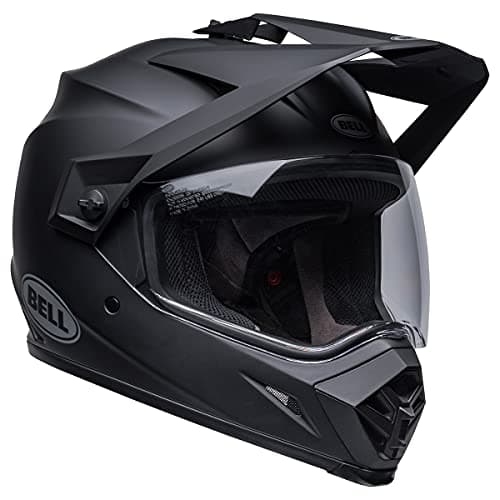
Product image supplied by Amazon
The entry point to adventure riding done right: DOT, ECE 22.06 and MIPS in a polycarbonate shell for around $250. It's goggle-compatible with the shield off, so it crosses over to real dirt use better than its price suggests.
Best for: New adventure riders who want MIPS and ECE 22.06 at the lowest sensible price
Price as of September 21, 2026. #ad How we’re funded
Strengths
- MIPS rotational protection plus DOT and ECE 22.06 at an entry price
- Velocity Flow ventilation and a NutraFog II anti-fog shield
- Goggle-compatible with the shield removed for genuine off-road use
Trade-offs
- Polycarbonate shell; no internal sun visor
- Peak buffeting at highway speed is noticeable, as with most ADV lids
The spec sheet
| Certifications | DOT, ECE 22.06 |
|---|---|
| Weight | 1696 g |
| Shell | Lightweight polycarbonate |
| Head shape | Intermediate oval |
| Sizes | XS-3XL |
| Internal sun visor | No |
| Pinlock-ready | No |
Specs read from the manufacturer / retailer listing, on July 19, 2026. “Not published” means the maker does not state that figure.
The value adventure helmet
The Bell MX-9 Adventure is the helmet we point new adventure riders to, because it gets the protection priorities right at an entry price. It carries DOT and the current ECE 22.06, and it adds MIPS— the low-friction layer that redirects rotational forces in an angled impact. Both of those are features you normally pay more for, and finding them together on a sub-$300 ADV lid is genuinely uncommon. If you’re getting into adventure ridingand don’t want to spend flagship money before you know how much dirt you’ll actually ride, this is the sensible starting helmet.
What MIPS adds here
A helmet’s foam liner is very good at absorbing a straight-on impact, but real crashes are usually angled, and your head rotates as well as stops. That rotational motion is a recognized cause of concussion, and MIPS is a thin low-friction layer that lets the shell move a few millimeters relative to your head to redirect some of that force. It doesn’t replace the foam; it works alongside it. On a budget helmet, MIPS is a real value-add rather than a luxury, and it’s a big reason the MX-9 Adventure earns its place on our beginner-friendly recommendations.
On the road and in the dirt
The MX-9 Adventure has Velocity Flow ventilation to move air on a slow, hot climb, and a NutraFog II anti-fog shield to keep the visor clear. Its most useful ADV trait is that it’s goggle-compatible with the shield removed, so when you leave the pavement you can pop the shield off and run goggles like a proper dirt helmet — something a street helmet can’t do. Left together, the shield and peak make it a competent street-and-gravel crossover for the miles between trailheads.
The honest trade-offs
The MX-9 Adventure gives its price away in two ways, neither of which touches safety. First, it’s a polycarbonate shell, so at around 1,696 g it’s heavier than a composite or carbon ADV helmet — the fundamental cost of the material, and a source of neck fatigue on a long day. Second, there’s no internal sun visor, so you’ll want a tinted goggle or shield for bright rides. And like every adventure helmet, the peak generates wind buffetingat highway speed; that’s the price of the ADV silhouette, not a flaw specific to the Bell.
How it compares
Its closest rival is the Scorpion EXO-AT960, which adds a flip-up modular chin bar and a drop-down sun visor the Bell lacks — but the Bell answers with MIPS and a slightly lighter shell, and it’s the more focused pure-ADV lid. If you want the outright best adventure helmet regardless of price, that’s the full-carbon Klim Krios Pro, which weighs nearly 250 g less and costs several times more. The Bell’s pitch is simple: the most protection-per-dollar in an entry adventure helmet.
Who it’s for
Buy the MX-9 Adventure if you’re new to adventure or dual-sport riding and want MIPS and a current ECE 22.06 certification without spending flagship money, and you value real off-road capability (goggle compatibility) over low weight and a sun visor. Accept the polycarbonate weight as the honest cost of the price. If you mostly ride pavement and want the flip-up convenience, the Scorpion EXO-AT960 is the alternative; if you’re ready to invest in the lightest carbon lid, the Klim is the aspiration. For a first ADV helmet, the Bell is hard to beat on value.
Frequently asked questions
Does the Bell MX-9 Adventure have MIPS?
Yes — the MIPS version includes the low-friction rotational-management layer, which addresses angled impacts that a straight-line test doesn't fully cover. On a helmet at this price, MIPS is a genuine value-add, and it's a big part of why the MX-9 Adventure is our entry-level ADV recommendation. Our MIPS guide explains what the layer does.
Is the MX-9 Adventure certified to ECE 22.06?
Yes — it carries DOT and the current ECE 22.06, the newest European standard with rotational and multi-point impact testing, on top of the MIPS layer. Getting both a current ECE certification and MIPS at an entry price is unusual and is the helmet's main argument.
Can you use the MX-9 Adventure off-road with goggles?
Yes. With the face shield removed, it's goggle-compatible, so it crosses over to genuine dirt use better than its price suggests. Left on, the shield and peak make it a competent street-and-gravel adventure lid. As with any ADV helmet, the peak adds some wind buffeting at highway speed.
What's the catch with the MX-9 Adventure?
Weight and materials. It's a polycarbonate shell rather than composite or carbon, so at around 1,696 g it's heavier than a premium ADV lid, and there's no internal sun visor. Neither touches the core protection — the money went into MIPS and the ECE 22.06 certification, which is the right place for an entry helmet to spend it.
Sources
- NHTSA — Motorcycle Safety — The US regulator behind the DOT FMVSS 218 helmet standard (accessed July 19, 2026)
- UNECE — Vehicle Regulations — The UN body behind ECE Regulation 22.06, the European helmet standard (accessed July 19, 2026)
- MIPS — Multi-directional Impact Protection System — The Swedish maker of the low-friction layer that redirects rotational forces in a helmet impact (accessed July 19, 2026)
- RevZilla Common Tread — Snell, ECE and DOT certifications explained — Plain-English overview of how the three certifications differ and who verifies them (accessed July 19, 2026)
Compare it against
Best adventure helmets
See how the MX-9 Adventure ranks as the value entry point.
See the rankingWhat is MIPS?
The rotational-protection layer the MX-9 includes, explained plainly.
Read the guideScorpion EXO-AT960 review
The other value ADV lid — adds a flip-up chin bar and a sun visor.
Read the reviewBell helmets
Where the MX-9 sits in Bell's range, and what the brand does well.
See the brand guide