The yardstick: what AGV publishes
A substitution page is only honest if it states the thing being substituted. For the K6 S, AGV publishes a carbon-aramid fiber shell — a hybrid layup rather than a full carbon one, and AGV is clear about that — over a five-density EPS liner, at a published 1,255 g. It publishes DOT and ECE 22.06, an intermediate-oval fit in XS to 2XL, a Pinlock-ready 190-degree Ultravision visor rated Optical Class 1, and an ARK channel so a comms unit sits in the shell rather than on it.
Three things AGV does not put on that sheet, and each one is a reason a rider ends up here. There is no Snell rating on the US listing. There is no drop-down sun visor, by design. And the size run stops at 2XL, which rules the helmet out for a meaningful share of riders before any other argument starts.
The claim nothing here matches
1,255 g. We will not pretend otherwise. Across thirty helmets carrying a live price at our last check, the lightest alternative is the Arai Contour-X at a published 1,515 g, and the only figure in the same conversation is the HJC RPHA 11 Pro’s 1,417 g — a helmet that carried no live price at that refresh, so we cannot rank it on a page with buy buttons. If head weight at the end of a long day is the problem you are solving, the K6 S solves it better than anything we list, and the correct answer to “what should I buy instead” is “nothing”. Our lightweight ranking shows the whole spread.
Everything below answers the more common version of the question: which helmet gets you most of the K6 S, and what does it cost you.
Match the substitute to the reason
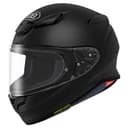
You want the same class of helmet for less: the Shoei RF-1400. A hand-laid AIM+ multi-composite shell of interwoven fiberglass and organic fibers, built in multiple shell sizes, with a CWR-F2 shield, emergency quick-release cheek pads and both DOT and Snell M2025. It is the highest-scoring full-face in our registry at 9.3. What you give up is 396 g and the ECE 22.06 rating; what you gain is Snell, a size run to 3XL and, at our last check, a lower price. See our full-face ranking.
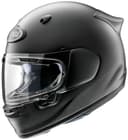
You want a lighter shell and will pay for it: the Arai Contour-X at a published 1,515 g. Arai hand-lays a PB e-cLc laminate to the R75 continuous-curve rule in four shell sizes, includes a Pinlock with the VAS MAX Vision shield, and carries DOT plus Snell M2025. It is the lightest alternative we can price, and it is also the one that most resembles AGV’s engineering-first pitch from a different direction.
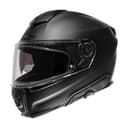
You want the sun visor and built-in comms: the Schuberth S3. A DFP glass-fiber shell reinforced with carbon, a V-lock drop-down sun visor, a Pinlock 120 preinstalled, speakers and antennas inside the shell, a filtered double chin intake and a rear spoiler extractor, in a 52–65 cm size run. Schuberth publishes DOT and builds for acoustics rather than for a certification badge, and it is the most complete answer to the two things the K6 S leaves on the table.
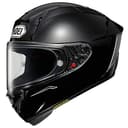
You are shopping the Pista, not the K6: the Shoei X-Fifteen. AIM+ six-ply matrix, wind-tunnel aerodynamics, a race-position interior, and the only helmet we rank publishing DOT, ECE 22.06 and Snell M2025R together. At a published 1,624 g it is heavier than the K6 S, and it is built for a tucked position rather than an upright one.
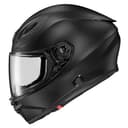
You want the strictest cheap certification: the Scorpion EXO-R430, which carries current Snell M2025 in advanced polycarbonate for well under $200, with an Ellip-Tec latching shield and EXO-COM comms channels. It is 387 g heavier than the AGV and it is not Pinlock-ready, which are exactly the compromises you would expect at the price.
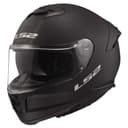
The budget pick: the LS2 Stream II — the cheapest helmet we rank that publishes the same ECE 22.06 rating as the K6 S, with AREM rotational-energy management, a Pinlock-ready shield and the drop-down sun visor AGV omits. Its KPA polymer shell is a different thing entirely from carbon-aramid and it weighs 1,550 g, but on the one certification AGV leads with, it matches.
Where AGV still wins, and we are not going to pretend otherwise
The K6 S scores 9.1 on our rubric, which puts it level with the Contour-X and above four of the six picks on this page. It is the lightest helmet we list by a wide margin. Its visor aperture is the widest we have a published figure for, and Optical Class 1 is a specific optical-distortion grade rather than marketing. If you are here because an AGV costs too much, several of these are genuinely good answers. If you are here because you want a lighter helmet, there is not one.
One more thing worth saying plainly: AGV’s US listing publishes ECE 22.06 and no Snell, and that is a choice rather than an omission — ECE 22.06 includes rotational and oblique testing that Snell does not, and Snell tests higher-energy impacts that ECE does not. Neither is “the safe one”. Our helmet ratings guide lays out what each protocol actually measures, and our AGV brand page covers the range the K6 S sits in.