The Lid Test

The Best Motorcycle Helmet Brands

Eight makers, ranked on what they actually publish rather than on reputation — and the single helmet from each that best represents it. The order is not the price order, and two of the cheapest brands beat two of the dearest on certification.

By Stephen V.Last verified How we compare

The verdict

Shoei is the best helmet brand for most riders, and the RF-1400 is the helmet that makes the case: a hand-laid AIM+ multi-composite shell built in multiple shell sizes, DOT plus Snell M2025, and the highest spec score in our registry at 9.3. Arai builds the shells more carefully still, in four shell sizes to the R75 curve rule, and asks more money for it. AGV wins outright on weight with the 1,255 g K6 S. If you are buying your first helmet, Bell puts MIPS and a self-tinting shield under $200, and the budget pick across the whole page is LS2, whose Stream II publishes ECE 22.06 and a sun visor for under $150 — a certification two of the premium brands here do not claim at all. All prices were pulled live from Amazon and last checked November 22, 2026.

Every other helmet page on this site answers “which helmet”. This one answers the question people actually type first, which is “which brand” — and the unit here is the maker, with one representative helmet attached so you can see what the brand looks like in practice and check a live price on it.

We rank makers on three published things. What the shell is and how it is built — hand-laid composite, machine-laid composite, or polycarbonate, and how many shell sizes cover the size run. Which certifications the maker claims on its US listings — DOT, ECE 22.06, Snell M2025, and whether the claim is current or superseded. And how much the maker publishes at all, because a brand that prints a weight, a shell count and a standard with its year is telling you something a brand that prints “advanced technology” is not.

The result is not the price order, and that is the useful part. Two of the cheapest brands on this page publish a current certification that two of the most expensive ones do not.

How this is funded: we earn a commission if you buy through our links, at no extra cost to you. It never changes which helmet we recommend, and we’ll tell you plainly when a cheaper or lighter one is the better buy. Full disclosure.

Quick picks

Ranked on our spec score — certification, weight, features and value. Select a row to jump to the full write-up. We have not tested these helmets; here is exactly how we compare them instead.

#HelmetBest forCertificationsWeightShellOur scorePrice
1
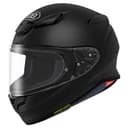
Shoei RF-1400

Shoei RF-1400

The full-face benchmark most riders are quietly measuring everything else against. Snell M2025 plus DOT, a hand-laid AIM+ composite shell, and Shoei's quietest, most refined shield system — it earns the price on the spec sheet, not the badge.

Best overall brand: ShoeiDOT, Snell M20251651 gAIM+ multi-composite (interwoven fiberglass and organic fibers)9.3
$499.99 · View on Amazon

$549.999% off

Price as of November 22, 2026. #ad How we’re funded

2
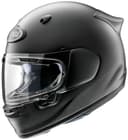
Arai Contour-X

Arai Contour-X

Arai's current street full-face, and the helmet most riders actually mean when they say “Arai.” DOT plus Snell M2025 in a hand-laid PB e-cLc shell built in four shell sizes, a Pinlock insert in the box, and Arai's R75 round-shell rule applied throughout. Lighter than Shoei's RF-1400 on the published figures, and noticeably more expensive.

Best construction: AraiDOT, Snell M20251515 gPB e-cLc (Peripherally Belted e-Complex Laminate Construction, hand-laid)9.1
$675.00 · View on Amazon

Price as of November 22, 2026. #ad How we’re funded

3
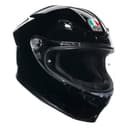
AGV K6 S

AGV K6 S

A carbon-aramid shell at roughly 1,255 g makes the K6 S one of the lightest DOT-and-ECE-22.06 full-faces you can buy, with a genuinely wide 190-degree eye port. If you notice helmet weight on a long day, this is the short list.

Lightest: AGVDOT, ECE 22.061255 gCarbon-aramid fiber9.1
$639.00 · View on Amazon

Price as of November 22, 2026. #ad How we’re funded

4
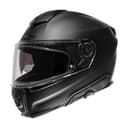
Schuberth S3

Schuberth S3

Schuberth's sport-touring full-face, and the German quiet-and-integration argument in its purest form: a carbon-reinforced DFP fiberglass shell, a Pinlock 120 already fitted to the clear shield, and speakers plus antennas laid into the shell so a comms unit plugs in rather than clamps on. What the US listing does not give you is a certification above DOT, or a published weight to rank it by.

Best for touring: SchuberthDOTNot publishedDFP (Direct Fiber Processing) glass fiber reinforced with carbon fiber8.6
$599.00 · View on Amazon

Price as of November 22, 2026. #ad How we’re funded

5
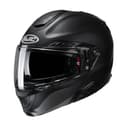
HJC RPHA 91

HJC RPHA 91

HJC's composite touring modular splits the difference: a P.I.M. EVO carbon-blend shell and a drop-down sun visor at a mid price, ready for HJC's own SMART Bluetooth. Not as quiet as a Schuberth, a lot cheaper than one.

Best composite value: HJCDOT1742 gP.I.M. EVO (carbon, carbon-glass and linen fiber)8.5
$545.00 · View on Amazon

Price as of November 22, 2026. #ad How we’re funded

6
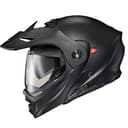
Scorpion EXO-AT960

Scorpion EXO-AT960

The Swiss-army ADV lid on a budget: it's modular AND adventure — flip-up chin bar, drop-down sun visor, removable peak — so it works as a touring modular or a dirt-road adventure helmet. DOT and ECE 22.06 for around $300.

Best features per dollar: ScorpionDOT, ECE 22.061858 gAdvanced LG polycarbonate8.0
$314.95 · View on Amazon

Price as of November 22, 2026. #ad How we’re funded

7
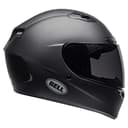
Bell Qualifier DLX MIPS

Bell Qualifier DLX MIPS

The budget helmet that adds MIPS — a rotational-impact system usually found on pricier lids — plus a photochromic shield that tints itself in sunlight. For a first full-face under $350, that combination is hard to argue with.

Best first helmet: BellDOT1619 gPolycarbonate7.9
$189.00 · View on Amazon

$329.9543% off

Price as of November 22, 2026. #ad How we’re funded

8
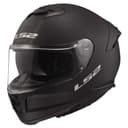
LS2 Stream II

LS2 Stream II

The value pick that punches above its ~$150 price: DOT and ECE 22.06 certification, a built-in drop-down sun visor, and LS2's AREM rotational-energy management — features usually reserved for helmets costing twice as much.

Budget pick: LS2DOT, ECE 22.061550 gKinetic Polymer Alloy (KPA)8.2
$149.98 · View on Amazon

Price as of November 22, 2026. #ad How we’re funded

Specs read from each manufacturer or retailer listing on the date shown in that helmet’s write-up below; “Not published” means the maker does not state that figure. Prices are pulled live from Amazon and were last checked November 22, 2026.

The picks in full

#1Best overall brand: ShoeiOur score9.3

Shoei RF-1400

The full-face benchmark most riders are quietly measuring everything else against. Snell M2025 plus DOT, a hand-laid AIM+ composite shell, and Shoei's quietest, most refined shield system — it earns the price on the spec sheet, not the badge.

Strengths

  • Carries both DOT and Snell M2025 — the stricter Snell impact protocol on top of the US legal minimum
  • AIM+ multi-composite shell in multiple sizes keeps the fit true and the weight sensible for a fiberglass lid
  • CWR-F2 shield and vortex generators are aimed squarely at wind noise, the thing most riders complain about

Trade-offs

  • Premium money — you're paying for the shell and finish, not gadgets
  • No drop-down internal sun visor (Shoei's design choice; you swap to a tinted shield instead)
CertificationsDOT, Snell M2025
Weight1651 g
ShellAIM+ multi-composite (interwoven fiberglass and organic fibers)
Head shapeIntermediate oval
SizesXS-3XL
Internal sun visorNo
Pinlock-readyYes

Notable. CWR-F2 shield with vortex generators; 3D Max-Dry liner; emergency quick-release cheek pads

Specs read from the manufacturer / retailer listing, on July 19, 2026. “Not published” means the maker does not state that figure.

#2Best construction: AraiOur score9.1

Arai Contour-X

Arai's current street full-face, and the helmet most riders actually mean when they say “Arai.” DOT plus Snell M2025 in a hand-laid PB e-cLc shell built in four shell sizes, a Pinlock insert in the box, and Arai's R75 round-shell rule applied throughout. Lighter than Shoei's RF-1400 on the published figures, and noticeably more expensive.

Strengths

  • DOT plus Snell M2025 — the same certification stack as Shoei's RF-1400 benchmark
  • Four shell sizes (XS, SM, MD-LG, XL-2XL), so the shell scales with your head instead of the liner doing all the work
  • VAS MAX Vision shield ships with a clear Pinlock insert included, not merely Pinlock-ready
  • 13 ventilation ports (7 intake, 6 exhaust), with brow vents built into the shield rather than drilled through the shell

Trade-offs

  • Consistently the most expensive way to buy this certification stack — the RF-1400 undercuts it by a wide margin
  • No ECE 22.06 stated on the US listing, so no published rotational-impact testing
  • No drop-down internal sun visor; you swap to a tinted shield instead
CertificationsDOT, Snell M2025
Weight1515 g
ShellPB e-cLc (Peripherally Belted e-Complex Laminate Construction, hand-laid)
Head shapeIntermediate oval
SizesXS-2XL
Internal sun visorNo
Pinlock-readyYes

Notable. R75 continuous-curve shell; VAS MAX Vision shield with Pinlock included; four shell sizes; Emergency Release System cheek pads

Specs read from the manufacturer / retailer listing, on October 14, 2026. “Not published” means the maker does not state that figure.

#3Lightest: AGVOur score9.1

AGV K6 S

A carbon-aramid shell at roughly 1,255 g makes the K6 S one of the lightest DOT-and-ECE-22.06 full-faces you can buy, with a genuinely wide 190-degree eye port. If you notice helmet weight on a long day, this is the short list.

Strengths

  • Carbon-aramid shell — AGV's published 1,255 g is class-leadingly light for the segment
  • Certified to ECE 22.06, the newest standard with rotational and multi-point impact testing
  • Ultravision visor gives a 190-degree horizontal field of view and ships Pinlock-ready

Trade-offs

  • No internal sun visor — a tinted shield is a separate purchase
  • Sport-leaning fit and shell shape suit an intermediate-oval head best
CertificationsDOT, ECE 22.06
Weight1255 g
ShellCarbon-aramid fiber
Head shapeIntermediate oval
SizesXS-2XL
Internal sun visorNo
Pinlock-readyYes

Notable. 190-degree Ultravision visor (Optical Class 1); 5-density EPS; ARK comms-ready

Specs read from the manufacturer / retailer listing, on July 19, 2026. “Not published” means the maker does not state that figure.

#4Best for touring: SchuberthOur score8.6

Schuberth S3

Schuberth's sport-touring full-face, and the German quiet-and-integration argument in its purest form: a carbon-reinforced DFP fiberglass shell, a Pinlock 120 already fitted to the clear shield, and speakers plus antennas laid into the shell so a comms unit plugs in rather than clamps on. What the US listing does not give you is a certification above DOT, or a published weight to rank it by.

Strengths

  • DFP (Direct Fiber Processing) glass fiber reinforced with carbon fiber — a genuine composite shell, not the polycarbonate common even at this price
  • Ships with a Pinlock 120 anti-fog lens already installed in the clear shield, rather than merely being Pinlock-ready
  • Speakers and integrated antennas are built into the shell for a plug-and-play Bluetooth system, so nothing bolts to the outside
  • Two shell sizes cover seven head sizes from 52 to 65 cm, with a V-lock drop-down sun visor as standard

Trade-offs

  • Neither Schuberth's US listing nor RevZilla publishes a weight, so it cannot be ranked against the composites we do have figures for
  • The US listing states DOT only — no ECE 22.06 and no Snell for the helmet sold here, even though Schuberth's own S3 data sheet describes the model as its first ECE 22.06 full-face
  • Premium money for a certification stack that budget Snell helmets match on paper
CertificationsDOT
WeightNot published
ShellDFP (Direct Fiber Processing) glass fiber reinforced with carbon fiber
Head shapeIntermediate oval
SizesXS-3XL (52-65 cm)
Internal sun visorYes
Pinlock-readyYes

Notable. Pinlock 120 preinstalled; V-lock drop-down sun visor; in-shell speakers and antennas; filtered double chin intake; back spoiler air extractor

Specs read from the manufacturer / retailer listing, on August 30, 2026. “Not published” means the maker does not state that figure.

#5Best composite value: HJCOur score8.5

HJC RPHA 91

HJC's composite touring modular splits the difference: a P.I.M. EVO carbon-blend shell and a drop-down sun visor at a mid price, ready for HJC's own SMART Bluetooth. Not as quiet as a Schuberth, a lot cheaper than one.

Strengths

  • P.I.M. EVO shell blends carbon, glass and linen fibers — lighter than a polycarbonate modular
  • Drop-down sun visor and a Pinlock-ready face shield included
  • Purpose-made for the SMART HJC 21B/50B Bluetooth units

Trade-offs

  • The page we verified listed DOT only (no ECE/Snell stated)
  • Comms is HJC-specific; heavier than the flagship composites
CertificationsDOT
Weight1742 g
ShellP.I.M. EVO (carbon, carbon-glass and linen fiber)
Head shapeIntermediate oval
SizesXS-2XL
Internal sun visorYes
Pinlock-readyYes

Notable. Drop-down sun visor; Pinlock-ready shield; SMART HJC Bluetooth-ready

Specs read from the manufacturer / retailer listing, on July 19, 2026. “Not published” means the maker does not state that figure.

#6Best features per dollar: ScorpionOur score8.0

Scorpion EXO-AT960

The Swiss-army ADV lid on a budget: it's modular AND adventure — flip-up chin bar, drop-down sun visor, removable peak — so it works as a touring modular or a dirt-road adventure helmet. DOT and ECE 22.06 for around $300.

Strengths

  • Modular flip-up chin bar plus a removable ADV peak — two helmets in one
  • Drop-down SpeedView sun visor and an EverClear fog-free shield
  • DOT and ECE 22.06 at a budget price

Trade-offs

  • Polycarbonate shell is heavy (~1,858 g in M) — the heaviest lid here
  • Jack-of-all-trades design isn't as focused as a dedicated street or dirt helmet
CertificationsDOT, ECE 22.06
Weight1858 g
ShellAdvanced LG polycarbonate
Head shapeIntermediate oval
SizesXS-3XL
Internal sun visorYes
Pinlock-readyNo

Notable. Modular flip-up chin bar; SpeedView sun visor; removable ADV peak

Specs read from the manufacturer / retailer listing, on July 19, 2026. “Not published” means the maker does not state that figure.

#7Best first helmet: BellOur score7.9

Bell Qualifier DLX MIPS

The budget helmet that adds MIPS — a rotational-impact system usually found on pricier lids — plus a photochromic shield that tints itself in sunlight. For a first full-face under $350, that combination is hard to argue with.

Strengths

  • Includes MIPS, which addresses rotational forces the DOT test alone doesn't
  • ProTint photochromic shield darkens in sun and clears at night — no swapping
  • Comfortable padded wind collar and adjustable ventilation for the money

Trade-offs

  • Only DOT certification was listed on the page we verified (no ECE/Snell stated)
  • Polycarbonate shell; the face shield is not Pinlock-ready
CertificationsDOT
Weight1619 g
ShellPolycarbonate
Head shapeIntermediate oval
SizesXS-3XL
Internal sun visorNo
Pinlock-readyNo

Notable. MIPS rotational system; ProTint photochromic self-tinting shield

Specs read from the manufacturer / retailer listing, on July 19, 2026. “Not published” means the maker does not state that figure.

#8Budget pick: LS2Our score8.2

LS2 Stream II

The value pick that punches above its ~$150 price: DOT and ECE 22.06 certification, a built-in drop-down sun visor, and LS2's AREM rotational-energy management — features usually reserved for helmets costing twice as much.

Strengths

  • ECE 22.06 certified at a budget price — the newest standard, rarely found this cheap
  • Built-in drop-down sun shield, which most premium full-faces here don't have
  • Pinlock-ready face shield and a rear spoiler with flow-through ventilation

Trade-offs

  • Kinetic Polymer Alloy shell is heavier and less premium than a composite lid
  • Fit and finish are good for the price, not flagship-grade
CertificationsDOT, ECE 22.06
Weight1550 g
ShellKinetic Polymer Alloy (KPA)
Head shapeIntermediate oval
SizesXS-3XL
Internal sun visorYes
Pinlock-readyYes

Notable. AREM rotational-energy management; drop-down sun visor; Pinlock-ready shield

Specs read from the manufacturer / retailer listing, on July 19, 2026. “Not published” means the maker does not state that figure.

The finding: disclosure beats price

Rank these eight makers on what they publish and the list does not sort by money. LS2 publishes ECE 22.06 — the current European standard, with rotational and oblique impact testing — on a helmet under $150. Scorpion publishes Snell M2025 on a helmet under $200 and ECE 22.06 on one under $320. Meanwhile Arai and Schuberth, at four times the money, publish no ECE rating on the US listings we read, and Schuberth publishes no Snell either.

That is not a trick of the data and it is not a knock on the premium brands. It is what happens when certification is a homologation decision per market and shell construction is an engineering one. The practical reading: buy the premium brands for the shell, the shell count, the weight and the finish — not for a certification badge, which you can get cheaper.

The brands, ranked

1. Shoei — the best overall. Hand-laid AIM and AIM+ multi-composite shells of interwoven fiberglass and organic fibers, built in multiple shell sizes, with a published weight for every model and Snell M2025 across the US street range. The RF-1400 is the representative helmet at a published 1,651 g with a CWR-F2 shield and emergency quick-release cheek pads; above it the X-Fifteen adds ECE 22.06 and Snell M2025R together, which nothing else we rank does. Shoei does not fit a sun visor to its full-faces. See our Shoei brand page.

2. Arai — the best construction. Hand-laid laminates (PB e-cLc, PB SCLC, Super Fiber) in four shell sizes per model, built to the R75 continuous-curve rule so there is nothing on the shell for the road to catch, with Snell M2025 and DOT. The Contour-X at a published 1,515 g is the lightest hand-laid helmet we can price. Two Arai non-disclosures are on the record: no ECE 22.06 on any US listing, and no Arai-published spec sheet for several models, so some weights come from US retailers. No Arai has a sun visor. See our Arai brand page.

3. AGV — the lightest. The K6 S publishes 1,255 g in a carbon-aramid shell over a five-density EPS, with DOT plus ECE 22.06 and a 190-degree Ultravision visor rated Optical Class 1. Nothing else in our registry is within 260 g of it. The limits are the size run, which stops at 2XL, and the absence of both a sun visor and a Snell claim. See our AGV alternatives page for where it can and cannot be substituted.

4. Schuberth — the touring specialist. Direct Fiber Processing glass fiber reinforced with carbon, built around acoustics and integration rather than certification: the S3 ships a preinstalled Pinlock 120, a V-lock drop-down sun visor, speakers and antennas inside the shell, a filtered double chin intake and a rear spoiler extractor, in a 52–65 cm size run. It is the quietest brand we rank and it publishes DOT alone on these US listings.

5. HJC — the composite value play. Real multi-fiber layups (PIM+, P.I.M. EVO) at prices where competitors sell polycarbonate. The RPHA 91 is a composite modular with a drop-down sun visor at $545, and the next composite modular we rank costs $935. The consistent gap is certification disclosure: no Snell anywhere, ECE 22.05 on the RPHA 11 Pro, and no ECE at all on the RPHA 91’s US listing. See our HJC alternatives page.

6. Scorpion — the most features per dollar. Advanced polycarbonate rather than composite in most of the range, and then more features than anyone at the price: the EXO-AT960 carries DOT plus ECE 22.06, a flip-up chin bar, a SpeedView sun visor and a removable ADV peak for under $320, and the EXO-R430 carries Snell M2025 for under $200, which is the cheapest route to a current Snell rating we know of.

7. Bell — the best first helmet. Polycarbonate shells with one distinctive idea per model. The Qualifier DLX MIPS brings MIPS rotational protection and a ProTint photochromic self-tinting shield under $200 — two features normally found much higher up. Bell publishes DOT and the helmet is not Pinlock-ready, which is the trade.

8. LS2 — the budget pick. The Stream II publishes DOT and ECE 22.06, AREM rotational-energy management, a drop-down sun visor and a Pinlock-ready shield, at a published 1,550 g, for under $150. On published certification per dollar nothing we rank touches it; its KPA polymer shell is where the money was saved.

How to use this list

Pick the brand last, not first. Head shape decides more than badge: Arai and Shoei fit differently, and a helmet that presses on your forehead will not be worn. Start at our head shapes guide and our sizing guide, then come back here to choose between the two or three brands that fit you.

Then decide which property you are buying. If it is weight, that is AGV. If it is shell construction and shell count, Arai or Shoei. If it is quiet and comms, Schuberth. If it is a composite shell at a mid price, HJC. If it is features per dollar, Scorpion. If it is a current certification on the smallest budget, LS2 or Scorpion. Our how to choose a motorcycle helmet guide walks the whole decision, and the brands hub has the deeper page for each maker.
Frequently asked questions

What is the best motorcycle helmet brand?

Shoei, on the evidence we can check. It hand-lays an AIM or AIM+ multi-composite shell in multiple shell sizes across the range, publishes a weight for every model, carries Snell M2025 on its US street helmets and adds ECE 22.06 on the X-Fifteen, and its RF-1400 is the highest-scoring helmet in our registry at 9.3. Arai is its closest rival and arguably builds the shells more carefully — four shell sizes and the R75 continuous-curve rule — but publishes no ECE rating on its US listings and costs more. Neither is the right answer if your budget is $200.

Which helmet brand is the safest?

No brand is "the safest", and anyone ranking brands that way is guessing. Every helmet sold legally in the US meets DOT, and the extra certifications are different test protocols rather than grades: ECE 22.06 adds rotational and oblique testing, Snell M2025 tests higher-energy impacts at fixed sites. What a brand can be judged on is how completely it publishes its certifications, and there the order surprises people — LS2 publishes ECE 22.06 on a sub-$150 helmet while two premium brands here publish neither ECE nor Snell. Our helmet ratings guide explains what each protocol tests.

What is the best motorcycle helmet brand for beginners?

Bell or LS2, for different reasons. The Bell Qualifier DLX MIPS puts MIPS — a rotational-impact system usually found on far pricier helmets — and a ProTint photochromic self-tinting shield under $200, which is a lot of helmet for a first purchase. The LS2 Stream II publishes ECE 22.06, AREM rotational-energy management, a drop-down sun visor and a Pinlock-ready shield for less again. The thing that matters more than either brand is fit: an $800 helmet in the wrong shell shape is worse than a $150 helmet that fits. Our beginner helmet page covers the whole decision.

Are expensive helmet brands actually better?

They are better at specific, checkable things, and not at others. Money buys shell construction (hand-laid composite instead of polycarbonate), shell count (four shells rather than one, so a small head is not wearing an oversized shell with thicker EPS), weight, shield hardware and acoustics. Money does not reliably buy certification — the cheapest Snell M2025 helmet we rank is under $200 — and it does not buy a sun visor, which is a mid-market feature the premium full-faces deliberately leave out. Our guide to what a helmet costs maps every band.

Which brand makes the lightest helmets?

AGV, and it is not close in our registry. The K6 S publishes 1,255 g in a carbon-aramid shell with a five-density EPS. The next lightest full-face carrying a live price is the Arai Contour-X at 1,515 g, and the only figure in between is HJC's RPHA 11 Pro at 1,417 g. For a half helmet the answer is Sena, whose Cavalry 2 publishes 950 g. Weight matters more than most riders expect on a long day and almost not at all on a commute.

Which brands are missing from this page?

Several, deliberately. We only rank makers we have in the registry with a live, stocked listing and a dated spec source — so Sena appears on our smart helmet and brand pages rather than here, Klim's helmet range is covered on its own brand page, and makers we do not list at all (Icon, Nolan, Shark, Fly's street line and others) are absent rather than guessed at. Our brands hub lists every maker page we publish, and each one goes deeper than this page can.

Sources

Keep reading