The Lid Test

The Best Hot-Weather Motorcycle Gear

Summer gear fails in exactly one way: riders take it off. Seven picks, one per layer, ranked on the garment class and armor clause each maker publishes — because mesh that nobody certifies is just a shirt with pockets.

By Stephen V.Last verified How we compare

The verdict

The Alpinestars SMX Air is the jacket to build a summer kit around: a mostly-mesh chassis that still publishes a CE Class A garment certification to EN 17092-4 with Level 1 Nucleon Flex Plus shoulder and elbow armor in the box, and it takes a Tech-Air 5 Plasma airbag underneath. Pair it with the Tourmaster Draft Air 2.0 mesh overpant, the Klim Induction vented gloves and the Scorpion EXO-GT930 Transformer, whose chin bar comes off entirely so one helmet covers the highway and the traffic jam. The cheapest way in is the Alpinestars SMX-1 Air V2 glove at well under $100 — because if you buy nothing else on this page, buy gloves you will actually wear in August. All prices were pulled live from Amazon and last checked November 22, 2026.

Every other gear page on this site ranks on protection and treats comfort as a tiebreaker. Hot-weather gear is the one category where that order has to flip, and the reason is behavioural rather than technical: the most protective summer jacket in the world protects nobody if it is strapped to the pillion seat. A Class AA textile jacket you abandon at 95 °F is worse than a Class A mesh jacket you keep on.

So this page ranks airflow first and then asks the protection question properly: given that it has to flow air, what is the most the maker is willing to certify? That turns out to be a useful filter, because the summer market is full of “mesh motorcycle jackets” with armor pockets, no armor and no published standard at all.

One honest limit before the picks: no maker in our registry publishes an airflow figure — no CFM, no vent area, nothing comparable across brands. So we rank what is actually published (the garment class, the EN 1621 armor clause, the construction of the shell) and describe the ventilation from the maker’s own description rather than inventing a league table. Every price comes from a daily Amazon pull and carries its own date on the button.

How this is funded: we earn a commission if you buy through our links, at no extra cost to you. It never changes which helmet we recommend, and we’ll tell you plainly when a cheaper or lighter one is the better buy. Full disclosure.

Quick picks

Ranked on our spec score — certification, weight, features and value. Select a row to jump to the full write-up. We have not tested these items; here is exactly how we compare them instead.

#ItemBest forCertification / armorMaterial / shellWaterproofOur scorePrice
1
Alpinestars SMX Air

Alpinestars SMX Air

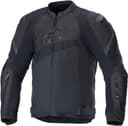
The hot-weather sport jacket to buy if an airbag is the plan: a tech-mesh chassis certified to EN 17092-4 Class A, a published EN 1621-1:2012 Level 1 armor clause, and compatibility with the Tech-Air 5 Plasma system. It gives up a class to the AA picks, and that is the trade for a jacket that is mostly mesh.

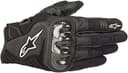
The jacketCE Level 1 EN 1621-1:2012 Nucleon Flex Plus shoulder and elbow armor included; ready for Alpinestars' long back protector insert; garment CE Category II EN 17092-4:2020 Class ATech mesh chassis with mechanical stretch, combined with 450D poly-fabric perforated in key areasNo8.3
$299.95 · View on Amazon

Price as of November 22, 2026. #ad How we’re funded

2
Tourmaster Draft Air 2.0

Tourmaster Draft Air 2.0

The summer overpant, and the cheapest way on this page to stop riding in unarmored jeans in July. Armor-Link mesh panels flow air, 1000 denier ripstop backs up the knees and seat, and the Armanox knee armor is CE certified to EN 1621-1 Level 1. It pulls on over what you are already wearing, which is why it actually gets worn.

The pantsArmanox knee armor, CE EN 1621-1 Level 1, three-position adjustable (included); hip armor not published; garment CE class A as published600D polyester shell with Armor-Link mesh panels; 1000D nylon ripstop at knees and seatNo7.6
$142.42 · View on Amazon

Price as of November 22, 2026. #ad How we’re funded

3
Klim Induction

Klim Induction

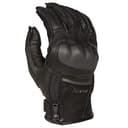
The hot-weather half of a touring glove drawer, and the only pick here with a carbon-fiber hard knuckle. A mesh backhand and mapped perforations move real air, the aramid-reinforced palm pad is the most specific abrasion claim on the page, and Klim still prints the EN 13594 clause. It is not waterproof, and does not pretend to be.

The glovesCE Level 1 KP certified to EN 13594; carbon-fiber hard knuckle protector, 5 mm XRD impact foam in palm and knuckle pads, aramid-reinforced Schoeller fabric palm pad overlayPremium goat leather with a mesh backhand and mapped perforationsNo8.5
$149.99 · View on Amazon

Price as of November 22, 2026. #ad How we’re funded

4
Scorpion EXO-GT930 Transformer

Scorpion EXO-GT930 Transformer

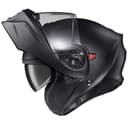
The trick here is a genuinely removable chin bar — the GT930 runs as a full-face or, with the bar off, a proper open-face, which few modulars actually allow. Add a sun visor and a sub-$300 price and it's the value convertible.

The helmetDOT, ECE 22.05Advanced polycarbonateNo7.9
$279.95 · View on Amazon

Price as of November 22, 2026. #ad How we’re funded

5
Alpinestars SMX-1 R V2

Alpinestars SMX-1 R V2

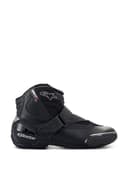
The short sport boot for riders who want race-derived protection without a tall touring boot. A microfiber upper, TPU ankle protection and a replaceable forefoot slider in a low-top that's easy to walk in — a lot of protection for around $220.

The bootsCE Cat 2; TPU medial/lateral + heel + replaceable forefoot slider; double-density ankleAdvanced microfiber upperNo8.2
$219.95 · View on Amazon

Price as of November 22, 2026. #ad How we’re funded

6
Alpinestars T-GP Plus R V4 Airflow

Alpinestars T-GP Plus R V4 Airflow

The sensible warm-weather sport jacket: extensive chest and back mesh for airflow, Nucleon Flex Plus shoulder and elbow armor already fitted, and a CE-certified (EN 17092 Class A) shell. It's Tech-Air airbag-ready too, which few jackets at this price are.

The airbag-ready upgradeNucleon Flex Plus shoulder + elbow; DFS Lite sliders; back/chest protector pockets; garment CE EN 17092-4 Class ATextile (450D poly-fabric with mesh and perforated panels)No8.4
$319.95 · View on Amazon

Price as of November 22, 2026. #ad How we’re funded

7
Alpinestars SMX-1 Air V2

Alpinestars SMX-1 Air V2

The hot-weather value glove. Perforated leather and air mesh keep your hands cool, a hard polymer knuckle handles the important protection, and touchscreen fingertips keep it practical — at around $80, the sensible summer short glove.

The cheapest way inCE Level 1; hard polymer knuckle (EN 13594 not stated on the maker page)Perforated leather with air meshNo8.0
$79.95 · View on Amazon

Price as of November 22, 2026. #ad How we’re funded

Specs read from each manufacturer or retailer listing on the date shown in that item’s write-up below; “Not published” means the maker does not state that figure. Prices are pulled live from Amazon and were last checked November 22, 2026.

The picks in full

#1The jacketOur score8.3

Alpinestars SMX Air

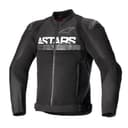
The hot-weather sport jacket to buy if an airbag is the plan: a tech-mesh chassis certified to EN 17092-4 Class A, a published EN 1621-1:2012 Level 1 armor clause, and compatibility with the Tech-Air 5 Plasma system. It gives up a class to the AA picks, and that is the trade for a jacket that is mostly mesh.

Strengths

  • Alpinestars publishes the armor clause outright: “CE Level 1 EN1621-1:2012” Nucleon Flex Plus shoulder and elbow protectors
  • Tech mesh chassis with mechanical stretch plus perforated 450D poly-fabric on the upper chest - among the most ventilated jackets on this page
  • Compatible with the Tech-Air 5 Plasma system
  • Ready to take Alpinestars' long back protector insert
  • S to 4XL, and a Stella women's cut exists in the same model

Trade-offs

  • EN 17092-4 Class A, a class below the AA leather picks and the REV'IT! textile here
  • No back protector or chest protector included
  • Mesh construction means no rain protection and no cold-weather range at all
  • No published weight
MaterialTech mesh chassis with mechanical stretch, combined with 450D poly-fabric perforated in key areas
ArmorCE Level 1 EN 1621-1:2012 Nucleon Flex Plus shoulder and elbow armor included; ready for Alpinestars' long back protector insert; garment CE Category II EN 17092-4:2020 Class A
WaterproofNo
Best forRiders in hot climates who want published Level 1 armor and a Tech-Air 5 Plasma airbag underneath

Notable. A mostly-mesh Class A sport jacket with a published EN 1621-1 Level 1 armor clause and Tech-Air 5 Plasma compatibility

Specs read from the manufacturer / retailer listing, on October 1, 2026. “Not published” means the maker does not state that figure.

#2The pantsOur score7.6

Tourmaster Draft Air 2.0

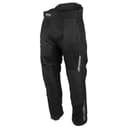
The summer overpant, and the cheapest way on this page to stop riding in unarmored jeans in July. Armor-Link mesh panels flow air, 1000 denier ripstop backs up the knees and seat, and the Armanox knee armor is CE certified to EN 1621-1 Level 1. It pulls on over what you are already wearing, which is why it actually gets worn.

Strengths

  • A true mesh overpant — the only pick here that will not cook you in stop-and-go summer traffic
  • Armanox knee armor CE certified to EN 1621-1 Level 1, adjustable to three heights
  • 600 denier polyester shell with 1000 denier nylon ripstop reinforcement at the knees and seat
  • Least expensive pant in this roundup, with a stated four-year workmanship and materials warranty

Trade-offs

  • Mesh means no rain protection and no cold-weather use — a summer-only pant
  • No hip armor published or supplied
  • Tourmaster's own certification line reads “CE certified A EN 17092-2”, which is internally inconsistent: in EN 17092, class A is clause -4 and clause -2 is class AAA. We treat it as the class A it names, not the AAA the clause implies
Material600D polyester shell with Armor-Link mesh panels; 1000D nylon ripstop at knees and seat
ArmorArmanox knee armor, CE EN 1621-1 Level 1, three-position adjustable (included); hip armor not published; garment CE class A as published
WaterproofNo
Best forHot-weather riders and commuters who want an armored layer they can pull on over normal clothes

Notable. Mesh overpant airflow; Fidlock magnetic front closure; 4-way stretch gussets; sizes 32-44

Specs read from the manufacturer / retailer listing, on August 24, 2026. “Not published” means the maker does not state that figure.

#3The glovesOur score8.5

Klim Induction

The hot-weather half of a touring glove drawer, and the only pick here with a carbon-fiber hard knuckle. A mesh backhand and mapped perforations move real air, the aramid-reinforced palm pad is the most specific abrasion claim on the page, and Klim still prints the EN 13594 clause. It is not waterproof, and does not pretend to be.

Strengths

  • "CE Level 1 KP rating certified to EN 13594" in a fully vented glove, which is unusual
  • Carbon-fiber hard knuckle protector plus 5 mm XRD impact foam in the palm and knuckle pads
  • Aramid-reinforced Schoeller fabric palm pad overlay — the most specific abrasion claim any maker makes on this page
  • Mesh backhand with mapped perforations, premium goat leather chassis and Mult-E-Touch pads

Trade-offs

  • No membrane at all: RevZilla's listing publishes no waterproofing, so this is a dry-weather glove
  • Mesh and perforations are not reversible — it is cold at highway speed once the temperature drops into the fifties
  • RevZilla publishes no cuff description and no visor wiper for it
  • Costs within a few dollars of the waterproof picks here while doing one job instead of two
MaterialPremium goat leather with a mesh backhand and mapped perforations
ArmorCE Level 1 KP certified to EN 13594; carbon-fiber hard knuckle protector, 5 mm XRD impact foam in palm and knuckle pads, aramid-reinforced Schoeller fabric palm pad overlay
WaterproofNo
Best forSummer touring and hot-climate riders who want a certified vented glove and will carry a waterproof pair for the rain

Notable. Mesh backhand with mapped perforations; carbon-fiber hard knuckle; aramid-reinforced Schoeller palm pad; Mult-E-Touch; XS-3XL

Specs read from the manufacturer / retailer listing, on October 7, 2026. “Not published” means the maker does not state that figure.

#4The helmetOur score7.9

Scorpion EXO-GT930 Transformer

The trick here is a genuinely removable chin bar — the GT930 runs as a full-face or, with the bar off, a proper open-face, which few modulars actually allow. Add a sun visor and a sub-$300 price and it's the value convertible.

Strengths

  • Removable chin bar converts between full-face and open-face configurations
  • SpeedView drop-down internal sun visor and EXO-COM Bluetooth-ready pockets
  • DOT and ECE 22.05 certified at a budget price; includes a detachable peak

Trade-offs

  • Certified to the older ECE 22.05, not 22.06
  • Polycarbonate shell is heavy (~1,814 g) — one of the weightier lids here
CertificationsDOT, ECE 22.05
Weight1814 g
ShellAdvanced polycarbonate
Head shapeIntermediate oval
SizesXS-3XL
Internal sun visorYes
Pinlock-readyNo

Notable. Removable chin bar (full-face to open-face); SpeedView sun visor; EXO-COM-ready

Specs read from the manufacturer / retailer listing, on July 19, 2026. “Not published” means the maker does not state that figure.

#5The bootsOur score8.2

Alpinestars SMX-1 R V2

The short sport boot for riders who want race-derived protection without a tall touring boot. A microfiber upper, TPU ankle protection and a replaceable forefoot slider in a low-top that's easy to walk in — a lot of protection for around $220.

Strengths

  • TPU medial/lateral protectors, heel counter and a replaceable screw-in forefoot slider
  • Double-density medial ankle protector; CE certified Category 2
  • Low-top design with accordion flex zones is easy to walk in off the bike

Trade-offs

  • Standard version isn't waterproof
  • Short cut gives less shin coverage than a tall sport-touring boot
MaterialAdvanced microfiber upper
ArmorCE Cat 2; TPU medial/lateral + heel + replaceable forefoot slider; double-density ankle
WaterproofNo
Best forSport riders who want a short, walkable boot with real ankle protection

Notable. Short sport cut; replaceable forefoot slider; accordion flex zones

Specs read from the manufacturer / retailer listing, on July 19, 2026. “Not published” means the maker does not state that figure.

#6The airbag-ready upgradeOur score8.4

Alpinestars T-GP Plus R V4 Airflow

The sensible warm-weather sport jacket: extensive chest and back mesh for airflow, Nucleon Flex Plus shoulder and elbow armor already fitted, and a CE-certified (EN 17092 Class A) shell. It's Tech-Air airbag-ready too, which few jackets at this price are.

Strengths

  • Nucleon Flex Plus shoulder and elbow armor included; CE-certified garment (EN 17092-4, Class A)
  • Extensive chest, back and lower-sleeve mesh for genuine hot-weather airflow
  • Compatible with Alpinestars Tech-Air 5 and Tech-Air 3 airbag systems

Trade-offs

  • Mesh construction is not waterproof or cold-weather rated
  • Back and chest protectors are sold separately
MaterialTextile (450D poly-fabric with mesh and perforated panels)
ArmorNucleon Flex Plus shoulder + elbow; DFS Lite sliders; back/chest protector pockets; garment CE EN 17092-4 Class A
WaterproofNo
Best forWarm-weather sport and commuter riders who want airflow with real CE protection

Notable. High-airflow mesh; included CE armor; Tech-Air airbag-ready

Specs read from the manufacturer / retailer listing, on July 19, 2026. “Not published” means the maker does not state that figure.

#7The cheapest way inOur score8.0

Alpinestars SMX-1 Air V2

The hot-weather value glove. Perforated leather and air mesh keep your hands cool, a hard polymer knuckle handles the important protection, and touchscreen fingertips keep it practical — at around $80, the sensible summer short glove.

Strengths

  • Perforated leather and air-mesh chassis for genuine hot-weather airflow
  • Hard polymer knuckle protector; CE-certified Level 1
  • Touchscreen-compatible fingertips at a budget price

Trade-offs

  • Short cuff and mesh construction — a summer glove, not a wet- or cold-weather one
  • The maker's page states CE Level 1 but doesn't cite the EN 13594 test on it directly
MaterialPerforated leather with air mesh
ArmorCE Level 1; hard polymer knuckle (EN 13594 not stated on the maker page)
WaterproofNo
Best forWarm-weather riders who want a ventilated short glove on a budget

Notable. Perforated leather/mesh airflow; hard knuckle; touchscreen

Specs read from the manufacturer / retailer listing, on July 19, 2026. “Not published” means the maker does not state that figure.

How we picked the kit

One pick per layer, the same shape as our cold-weather, commuter and touring kits. Three published facts drive the order: the EN 17092 garment class or EN 13594 glove certification the maker prints, then the EN 1621 armor clause and which zones are actually covered in the box, then how the ventilation is constructed — a mesh chassis, mapped perforations, or panels cut into a solid shell, which are three very different things wearing the same marketing word.

Where a maker publishes nothing, the comparison table says “Not published”. Two slots on this page are deliberately empty and we say so below rather than filling them with something that does not fit.

The summer trade-off, stated plainly

Airflow and abrasion class pull against each other, and Class A is where they meet. Our registry has Class AA garments and it has mesh garments, and it has nothing that is both. The two certified mesh jackets here publish EN 17092-4 Class A, which is a real certification with real abrasion, tear and seam requirements — just a lower bar than the AA leather and laminate jackets we rank for track and touring. That is the honest shape of the choice, and anyone selling you AA-rated mesh should be asked to publish the clause.

The armor does not change with the season. Every pick here ships CE armor to EN 1621-1 Level 1 at the shoulders and elbows or the knees, which is the same impact protection the winter kit carries. Heat changes the shell, not the protectors — so there is no reason to accept an uncertified summer jacket. Our CE armor guide explains what each clause tests.

Perforated leather is the other route, and it is a real one. Mesh is not the only way to move air: perforated cowhide flows less but abrades far better, which is why the track-focused riders on this site end up in it. The cheapest route we rank is the Cortech Chicane 2.0 at around $200, fully perforated across the chest and back with shoulder, elbow and back armor included — no published garment class, which is why it is not a pick here, but worth knowing about. Our leather versus textile page settles the argument on what the standards actually test.

The kit, layer by layer

The jacket: Alpinestars SMX Air. A tech-mesh chassis with mechanical stretch combined with 450D poly-fabric perforated in key areas, certified CE Category II EN 17092-4:2020 Class A, with CE Level 1 EN 1621-1:2012 Nucleon Flex Plus shoulder and elbow armor included and a long back protector insert available. It is sized S to 4XL and is built to take a Tech-Air 5 Plasma airbag underneath. This is the most jacket you can wear in genuine heat without giving up a published class.

The pants: Tourmaster Draft Air 2.0. A 600D polyester shell with Armor-Link mesh panels and 1000D nylon ripstop at the knees and seat, with three-position adjustable Armanox knee armor certified to CE EN 1621-1 Level 1 in the box, a Fidlock magnetic front closure and four-way stretch gussets, in sizes 32 to 44. It is an overpant, which is the point — it goes on over work trousers and comes off at the other end. Tourmaster publishes a Class A garment rating and does not publish hip armor, both of which the table states.

The gloves: Klim Induction. Premium goat leather with a mesh backhand and mapped perforations, a carbon-fiber hard knuckle, 5 mm XRD impact foam in the palm and knuckle pads and an aramid-reinforced Schoeller palm overlay, certified CE Level 1 KP to EN 13594, in XS to 3XL with touchscreen fingertips. Not waterproof, and not pretending to be.

The helmet: Scorpion EXO-GT930 Transformer. The chin bar comes off entirely rather than merely lifting, so one helmet is a sealed full-face on the highway and a genuine open-face in the stop-start riding where heat actually gets dangerous. DOT and ECE 22.05 in advanced polycarbonate at a published 1,814 g, with the SpeedView drop-down sun visor and EXO-COM comms channels. If you want a ventilated fixed full-face instead, our hot-weather helmet ranking ranks the registry on published vent architecture and weight.

The boots: Alpinestars SMX-1 R V2. A short sport cut in advanced microfiber — which is the summer-relevant part, because it is not a waterproof membrane boot — with CE Cat 2 certification, TPU medial, lateral and heel protection, a replaceable forefoot slider, a double-density ankle and accordion flex zones. It is walkable, which matters on a hot day when you are off the bike more.

The airbag-ready upgrade: Alpinestars T-GP Plus R V4 Airflow. A high-airflow mesh and perforated 450D textile jacket, CE Class A to EN 17092-4, with Nucleon Flex Plus shoulder and elbow armor, DFS Lite sliders, back and chest protector pockets, and Tech-Air compatibility. It is the top pick on our main jacket ranking and the right choice if you are building toward an airbag rather than buying one jacket.

The cheapest way in: Alpinestars SMX-1 Air V2. Perforated leather with air mesh, a hard polymer knuckle and touchscreen fingertips, for well under $100. If summer is the reason you stop wearing gear, start here: gloves are the piece riders abandon first in heat and the piece the ground finds first in a crash. Our sub-$100 glove page covers the rest of that shelf.

Two slots we left empty, and why

There is no base layer here. All five base layers in our registry are armored shirts — impact protection with no abrasion protection, which is a different product from a wicking summer layer. A plain synthetic base layer under a mesh jacket is the right answer and costs very little; we simply do not list one, and we would rather say that than point you at an armored shirt you did not ask for. Our armored base-layer page explains the distinction.

There is no vented boot above the ankle. Our registry holds two boots, both short sport boots. Neither is a ventilated touring boot and neither is waterproof, so the SMX-1 R V2 takes the slot on the strength of being the lighter, more walkable of the two rather than on being designed for heat. Our boot page is honest about how narrow that shelf is.

One last thing worth saying for a page published in November: summer gear is cheapest now and most expensive in May. If you are reading this out of season, that is the reason to buy it out of season. For the opposite problem, our cold-weather kit takes the same layer-by-layer approach, and what to wear on a motorcycle in summer covers the technique — hydration, timing, and why a soaked shirt under mesh works.
Frequently asked questions

Is a mesh jacket actually safe?

It depends entirely on whether the maker certifies it, and most do not. EN 17092 is the garment standard, and its classes run AAA, AA, A, B and C — a mesh jacket can genuinely earn Class A, which is the class written for riders in lighter conditions, and the Alpinestars SMX Air and T-GP Plus R V4 Airflow here both publish it to EN 17092-4. A mesh jacket with no published class is an unknown. The practical answer: Class A mesh you wear every hot ride beats Class AA textile you leave at home, and it is nothing like a fashion mesh top.

Mesh pants or riding jeans in summer?

Mesh, if you can live with the look, and it is not close on airflow. The Tourmaster Draft Air 2.0 here is an overpant — Armor-Link mesh panels, 1000D ripstop at the knees and seat, CE EN 1621-1 Level 1 knee armor included, a Fidlock magnetic closure — and it pulls on over normal clothes at the office. Riding jeans are more wearable and much hotter, because the denim and the aramid lining both trap heat; our riding pants ranking covers them. The one thing to avoid in summer is unlined denim with armor pockets and no armor in them.

Do vented gloves give up protection?

Not necessarily, and the Klim Induction is the proof: a mesh backhand with mapped perforations, a carbon-fiber hard knuckle protector, 5 mm XRD impact foam in the palm, an aramid-reinforced Schoeller palm overlay, and CE Level 1 KP certification to EN 13594. What a vented glove does give up is weather — none of the hot-weather picks here is waterproof, and the realistic plan is two pairs rather than one compromise pair. Our summer glove ranking has the rest of the vented shelf.

Which helmet is best in the heat?

The one that lets you change configuration, which is why the Scorpion EXO-GT930 Transformer is the pick here rather than a helmet with more vents. Its chin bar comes off entirely, so it is a sealed full-face at highway speed and a genuine open-face in stop-start traffic, which is where heat actually becomes dangerous. Beyond that, weight matters more in heat than people expect — a lighter helmet is less fatiguing when you are already dehydrated. Our hot-weather helmet ranking goes through vent architecture and published weights properly.

What about a cooling base layer?

We deliberately leave that slot empty, because we will not rank products we do not list. Every base layer in our registry is an armored shirt — impact protection with no abrasion protection — rather than a wicking or cooling layer, so there is nothing honest for us to recommend here. A plain synthetic wicking shirt under a mesh jacket is the standard answer and it costs very little; we just do not track one. Our armored base-layer page explains what that category is and is not.

Is an airbag vest too hot for summer?

Less than you would think, and the layering is the point. The Alpinestars T-GP Plus R V4 Airflow listed here is a high-airflow mesh jacket that is Tech-Air ready, and the SMX Air is built around the Tech-Air 5 Plasma — both are designed so the airbag sits under a jacket that is mostly holes. The honest counterweight is cost: an airbag system roughly triples the price of the jacket, and the vest itself is another layer against your torso. Our airbag vest ranking covers the systems and what they actually certify.

Sources

  • SATRA — EN 17092:2020 Parts 1-6, protective clothing for motorcycle riders — The test house's breakdown of the garment standard: "Class C garments are designed to provide impact protection for areas covered by the impact protector(s) only, and they do not offer minimum abrasion protection" (accessed September 10, 2026)
  • SATRA — EN 13594:2015, protective gloves for motorcycle riders — The test house's summary of the glove standard: "Level 1 for gloves designed to give protection while having low ergonomic penalties, and level 2 for gloves providing greater protection than level 1"; knuckle impact protection "is an optional feature for level 1 gloves" and mandatory for level 2; minimum cuff length 5 mm (Level 1) or 50 mm (Level 2) from the wrist line (accessed September 21, 2026)
  • Alpinestars — SMX Air Jacket — "CE Category II EN 17092-4:2020 – A class" with "CE Level 1 EN1621-1:2012 Alpinestars Nucleon Flex Plus Level 1 shoulder and elbow armor", a "Tech mesh chassis" with perforated 450D poly-fabric, compatible with the "Tech-Air® 5 Plasma System", S-4XL (accessed October 1, 2026)
  • Alpinestars — T-GP Plus R V4 Airflow Jacket — Re-read for this page: "CE – Category II EN17092-4: 2020 standard – A Class", Nucleon Flex Plus shoulder and elbow armor with no EN 1621 level published, "450D poly-fabric construction", "Tech-Air® 5 and Tech-Air® 3 Ready", S-4XL (accessed October 1, 2026)
  • RevZilla — Klim Induction Gloves (US) — The vented pick: "CE Level 1 KP rating certified to EN 13594" with "Premium goat leather construction", a "Mesh backhand", "Mapped perforations for airflow and abrasion protection", a "Carbon fiber hard knuckle protector", "5mm XRD impact protection foam in palm and knuckle pads" and an "Aramid-reinforced Schoeller fabric palm pad overlay", sizes XS-3XL. No waterproofing published anywhere on the listing (accessed October 7, 2026)
  • RevZilla Common Tread — RevZilla's editorial hub — gear explainers and how CE armor and EN 17092 garment ratings work (accessed July 19, 2026)
  • UNECE — Vehicle Regulations — The UN body behind ECE Regulation 22.06, the European helmet standard (accessed July 19, 2026)
  • NHTSA — Motorcycle Safety — The US regulator behind the DOT FMVSS 218 helmet standard (accessed July 19, 2026)

Keep reading