The Lid Test

The Best Motorcycle Touring Gear

Touring gear is judged on the twelfth hour, not the first. One pick per layer, chosen on whether the piece adapts to weather that changes under you — a detachable liner, a membrane you are not packing, and a helmet you can still stand at the end of the day.

By Stephen V.Last verified How we compare

The verdict

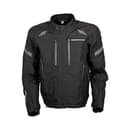
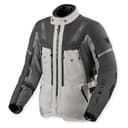
The touring kit is built around two decisions. The helmet is the Shoei Neotec 3: a composite-shell modular with DOT and ECE 22.06, a large internal sun visor and a purpose-built channel for its comms unit instead of a clamp. The jacket is the REV’IT! Sand 5 H2O, because it is the only Class AA garment we rank where both the thermal liner and the waterproof layer detach — which is what a day that starts at 40°F and ends at 85°F actually needs. Then the Alpinestars Andes V4 Drystar pants, the Klim Vanguard GTX Short gloves, a Cardo Packtalk Edge for mesh, and an Alpinestars Nucleon Flex Pro Vest because the jacket does not come with a back protector. The budget route in is the Scorpion EXO Optima. Every price here was pulled live from Amazon and last checked November 22, 2026.

Touring gear gets judged on the wrong hour. Almost everything feels fine for the first sixty minutes; what separates touring kit from commuting kit is what it does to you at hour eight, in weather that is no longer the weather you set off in. So the criteria here are different from every other page on this site, and they are not about maximum protection.

Four things decide it. Adaptability — can you take a layer out at a fuel stop without packing a second jacket, because a 500-mile day crosses more than one climate. Noise and head weight — the two things that actually make you stop early, and the reason the helmet slot is the most expensive line on this page. Waterproofing you are not carrying — a rain suit at the bottom of a pannier gets deployed about half the times it should. And fit in the riding position — armor that sits right when you are upright and slightly forward for hours, rather than armor that sits right standing in a shop.

What follows is one pick per layer, judged on what each maker publishes: the certification stack and the shell for the helmet, the EN 17092 garment class and the liner system for the jacket and pants, the EN 13594 clause for the gloves, the published range and battery for the comms. Every figure in the table above was read from the maker’s or a US retailer’s listing on a dated visit, and anything that was not published renders “Not published” rather than a guess.

How this is funded: we earn a commission if you buy through our links, at no extra cost to you. It never changes which helmet we recommend, and we’ll tell you plainly when a cheaper or lighter one is the better buy. Full disclosure.

Quick picks

Ranked on our spec score — certification, weight, features and value. Select a row to jump to the full write-up. We have not tested these pieces of gear; here is exactly how we compare them instead.

#ItemBest forCertification / armorMaterial / shellOur scorePrice
1
Shoei Neotec 3

Shoei Neotec 3

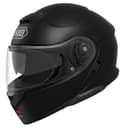
The touring modular the class is measured against. DOT and ECE 22.06, an AIM composite shell, a bigger QSV-2 sun visor and a Defogger-equipped shield — plus the cleanest integration for Shoei's own comms system. It is expensive and worth understanding why.

The helmetDOT, ECE 22.06AIM composite9.2
$935.00 · View on Amazon

Price as of November 22, 2026. #ad How we’re funded

2
REV'IT! Sand 5 H2O

REV'IT! Sand 5 H2O

The widest temperature range here. A Class AA garment (EN 17092-3:2020) with SEEFLEX CE Level 2 shoulder and elbow armor, a detachable thermal liner, and a detachable hydratex 3L waterproof layer that REV'IT! designed to be worn either inside the jacket or over it. The catches: the back protector is an extra purchase, and the waterproofing is a layer you manage rather than one built in.

The jacketSEEFLEX CE Level 2 shoulder + elbow (EN 1621-1:2012); prepared for SEESOFT Level 2 back and Level 1 divided chest protectors (sold separately); garment Class AA to EN 17092-3:2020High-density 600D polyester outer shell; detachable hydratex 3L waterproof layer; detachable thermal liner8.8
$567.19 · View on Amazon

Price as of November 22, 2026. #ad How we’re funded

3
Alpinestars Andes V4 Drystar

Alpinestars Andes V4 Drystar

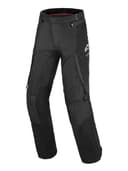
The all-weather workhorse. A fixed waterproof Drystar membrane means you are not carrying a rain shell, a removable full-length thermal liner takes it into cold mornings, and adjustable thigh vents open it back up when the sun comes out. Nucleon Flex Plus CE Level 1 knee armor is fitted; the abrasion class is the honest limitation.

The pantsNucleon Flex Plus CE Level 1 knee, EN 1621-1:2012 (included); hip armor not published; garment CE EN 17092 Class A450D polyfabric with ripstop reinforcement and stretch softshell panels8.3
$299.95 · View on Amazon

Price as of November 22, 2026. #ad How we’re funded

4
Klim Vanguard GTX Short

Klim Vanguard GTX Short

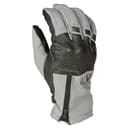
The only glove here that Klim describes as built for the touring rider specifically, and the spec sheet backs the claim: GORE-TEX bonded to the shell rather than hung inside it, a goat leather palm, and deliberately neither venting nor insulation so it works across a wide temperature band instead of a narrow one.

The glovesCE certified to EN 13594:2015, KP Level 1; semi-pliable rubber and foam knuckle protector with 5 mm XRD impact foam in the palm and knuckle padsGoat leather palm and fingers over a bonded GORE-TEX + GORE GRIP construction9.1
$169.99 · View on Amazon

Price as of November 22, 2026. #ad How we’re funded

5
Cardo Packtalk Edge

Cardo Packtalk Edge

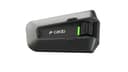
The mesh intercom most groups converge on. Second-generation DMC mesh keeps a 31-rider group connected without re-pairing, JBL speakers handle audio, and the Air Mount magnetic bracket is the best mounting system in the category. IP67 and voice-operated.

The commsNot publishedNot published9.2
$394.89 · View on Amazon

$439.9510% off

Price as of November 22, 2026. #ad How we’re funded

6
Alpinestars Nucleon Flex Pro Vest

Alpinestars Nucleon Flex Pro Vest

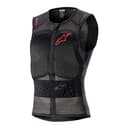
The slimmest way to get Level 2 on both the spine and the chest, and the only pick that publishes the temperature qualification: Alpinestars states EN 1621-2:2014 Level 2 back and EN 1621-3:2018 Level 2 chest, each marked T+ and T-, meaning the pads held their level when tested hot and cold rather than only at room temperature.

The back protectorEN 1621-2:2014 Level 2 back (T+ and T-); EN 1621-3:2018 Level 2 divided chest (T+ and T-)Hybrid Cell and Nucleon Flex polymeric protectors on a soft-touch perforated mesh chassis8.4
$249.00 · View on Amazon

Price as of November 22, 2026. #ad How we’re funded

7
Scorpion EXO Optima

Scorpion EXO Optima

The genuinely-waterproof value touring jacket. A seam-sealed laminate shell keeps rain out without a separate rain layer, and a removable EverHeat thermal liner stretches it into cold weather — three seasons in one jacket for around $250.

The cheapest way inCE Exo-Tec shoulder + elbow; back protector pocket (protector sold separately)Textile (seam-sealed waterproof laminate)8.2
$189.95 · View on Amazon

Price as of November 22, 2026. #ad How we’re funded

Specs read from each manufacturer or retailer listing on the date shown in that pieces of gear’s write-up below; “Not published” means the maker does not state that figure. Prices are pulled live from Amazon and were last checked November 22, 2026.

The picks in full

#1The helmetOur score9.2

Shoei Neotec 3

The touring modular the class is measured against. DOT and ECE 22.06, an AIM composite shell, a bigger QSV-2 sun visor and a Defogger-equipped shield — plus the cleanest integration for Shoei's own comms system. It is expensive and worth understanding why.

Strengths

  • DOT and ECE 22.06 in a composite AIM shell — not the polycarbonate most modulars use
  • QSV-2 internal sun visor is larger than the old QSV-1, and the CNS-3C shield is Pinlock-ready with a defogger
  • Purpose-built channel for the SRL3/COMLINK comms unit — no bulky external clamp

Trade-offs

  • The most expensive modular we cover — flagship money for a flip-up
  • Comms unit is a separate, Shoei-specific purchase
CertificationsDOT, ECE 22.06
Weight1700 g
ShellAIM composite
Head shapeIntermediate oval
SizesXS-2XL
Internal sun visorYes
Pinlock-readyYes

Notable. QSV-2 sun visor; CNS-3C Pinlock shield with defogger; SRL3/COMLINK-ready

Specs read from the manufacturer / retailer listing, on July 19, 2026. “Not published” means the maker does not state that figure.

#2The jacketOur score8.8

REV'IT! Sand 5 H2O

The widest temperature range here. A Class AA garment (EN 17092-3:2020) with SEEFLEX CE Level 2 shoulder and elbow armor, a detachable thermal liner, and a detachable hydratex 3L waterproof layer that REV'IT! designed to be worn either inside the jacket or over it. The catches: the back protector is an extra purchase, and the waterproofing is a layer you manage rather than one built in.

Strengths

  • Class AA certified according to EN 17092-3:2020
  • SEEFLEX CE Level 2 shoulder and elbow protectors, certified to EN 1621-1:2012
  • Detachable thermal liner that doubles as a separately wearable jacket off the bike
  • Detachable hydratex 3L waterproof layer wearable over or under the jacket, plus fold-down chest and back ventilation panels
  • Ready for the Avertum Tech-Air airbag system (REV'IT! says to go one size up)

Trade-offs

  • No back protector in the box: the jacket is only prepared for a SEESOFT CE Level 2 back insert and a divided Level 1 chest protector
  • Worn under the shell, the waterproof layer keeps you dry but leaves the outer fabric free to soak up rain
  • Three layers to manage (shell, thermal liner, waterproof layer), and REV'IT! publishes no weight
  • Amazon stock was thin on our check, with most size and color listings showing only a few units left
MaterialHigh-density 600D polyester outer shell; detachable hydratex 3L waterproof layer; detachable thermal liner
ArmorSEEFLEX CE Level 2 shoulder + elbow (EN 1621-1:2012); prepared for SEESOFT Level 2 back and Level 1 divided chest protectors (sold separately); garment Class AA to EN 17092-3:2020
WaterproofYes
Best forAdventure and touring riders who start cold, finish hot and want one jacket for the whole day

Notable. Over-or-under hydratex 3L waterproof layer plus a separately wearable thermal liner

Specs read from the manufacturer / retailer listing, on September 16, 2026. “Not published” means the maker does not state that figure.

#3The pantsOur score8.3

Alpinestars Andes V4 Drystar

The all-weather workhorse. A fixed waterproof Drystar membrane means you are not carrying a rain shell, a removable full-length thermal liner takes it into cold mornings, and adjustable thigh vents open it back up when the sun comes out. Nucleon Flex Plus CE Level 1 knee armor is fitted; the abrasion class is the honest limitation.

Strengths

  • Genuinely waterproof — a fixed Drystar breathable membrane rather than a rain layer you pack and hope you remember
  • Removable full-length thermal liner (100 g thighs, 60 g lower legs) plus adjustable thigh vents: a three-to-four season pant
  • Nucleon Flex Plus knee armor, CE Level 1 to EN 1621-1:2012, in three-position adjustable pockets
  • 450D polyfabric with ripstop reinforcement in the high-wear areas, and a size run that goes to 6XL

Trade-offs

  • CE-certified to EN 17092 as a Class A garment — the lowest street abrasion class, and a step below both jeans here
  • No hip armor published or supplied; the knee pads are the only protection in the box
  • A laminate touring pant runs warmer than a mesh overpant in peak summer even with the liner removed
Material450D polyfabric with ripstop reinforcement and stretch softshell panels
ArmorNucleon Flex Plus CE Level 1 knee, EN 1621-1:2012 (included); hip armor not published; garment CE EN 17092 Class A
WaterproofYes
Best forCommuters and adventure-touring riders who need one pant for rain, cold and everything between

Notable. Waterproof Drystar membrane; removable full-length thermal liner; adjustable thigh vents; sizes to 6XL

Specs read from the manufacturer / retailer listing, on August 24, 2026. “Not published” means the maker does not state that figure.

#4The glovesOur score9.1

Klim Vanguard GTX Short

The only glove here that Klim describes as built for the touring rider specifically, and the spec sheet backs the claim: GORE-TEX bonded to the shell rather than hung inside it, a goat leather palm, and deliberately neither venting nor insulation so it works across a wide temperature band instead of a narrow one.

Strengths

  • Klim prints the clause in full: "CE CERTIFIED TO EN13594:2015, KP LEVEL 1"
  • GORE-TEX + GORE GRIP bonds the membrane to the shell, so it cannot slide against the leather the way a loose liner can
  • Klim calls it "temperature neutral" with "neither venting nor insulation" — the design choice that makes it a three-season glove rather than a summer or winter one
  • Velcro-plus-YKK-zipper dual-entry short cuff, index-finger visor wiper and Mult-E-Touch pads

Trade-offs

  • Short under-cuff design, so it goes under the jacket sleeve and will not seal out rain running down the arm
  • No insulation at all — below roughly freezing this is the wrong glove and a winter glove is the right one
  • Klim publishes no weight for it
  • Premium money for a glove with no gadgets
MaterialGoat leather palm and fingers over a bonded GORE-TEX + GORE GRIP construction
ArmorCE certified to EN 13594:2015, KP Level 1; semi-pliable rubber and foam knuckle protector with 5 mm XRD impact foam in the palm and knuckle pads
WaterproofYes
Best forTourers who want one waterproof glove for most of the riding year and value feel on the bars

Notable. GORE-TEX + GORE GRIP bonded construction; "neither venting nor insulation" by design; Velcro + YKK dual-entry short cuff; index-finger visor wiper; XS-3XL

Specs read from the manufacturer / retailer listing, on October 7, 2026. “Not published” means the maker does not state that figure.

#5The commsOur score9.2

Cardo Packtalk Edge

The mesh intercom most groups converge on. Second-generation DMC mesh keeps a 31-rider group connected without re-pairing, JBL speakers handle audio, and the Air Mount magnetic bracket is the best mounting system in the category. IP67 and voice-operated.

Strengths

  • 2nd-gen DMC mesh auto-manages a group of up to 31 riders — no manual re-pairing, since Cardo's free Mesh Boost update raised the DMC cap from 15
  • 40 mm JBL speakers and 'Hey Cardo' natural-voice control
  • Air Mount magnetic bracket and IP67 water resistance

Trade-offs

  • No longer Cardo's outright flagship — the Packtalk Pro sits above it with crash detection, Auto On/Off and larger 45 mm JBL speakers
  • ~13 hours battery is fine for a day but not multi-day without charging
ConnectivityMesh + Bluetooth
Range (bike to bike)1 mile (bike to bike)
Max riders (intercom)31
Talk time13 hours
Water resistanceIP67
SpeakersJBL

Notable. Air Mount magnetic mount; 2nd-gen DMC mesh; 'Hey Cardo' natural voice

Specs read from the manufacturer / retailer listing, on September 3, 2026. “Not published” means the maker does not state that figure.

#6The back protectorOur score8.4

Alpinestars Nucleon Flex Pro Vest

The slimmest way to get Level 2 on both the spine and the chest, and the only pick that publishes the temperature qualification: Alpinestars states EN 1621-2:2014 Level 2 back and EN 1621-3:2018 Level 2 chest, each marked T+ and T-, meaning the pads held their level when tested hot and cold rather than only at room temperature.

Strengths

  • Level 2 at both the back and the chest — the only pick here where every certified zone is Level 2
  • T+ and T- marking on both protectors: the level was met in high and low temperature testing, not just ambient
  • Divided chest protectors are removable, so it can be run as a back-protector vest alone
  • Soft-touch perforated mesh chassis with an adjustable elasticated waistband, cut to disappear under a jacket
  • Runs from XS, the smallest size range on this page

Trade-offs

  • No shoulder or elbow armor at all — those zones are left to whatever is in your jacket
  • Alpinestars publishes no weight for it
  • No EN 17092 garment class, so it adds nothing to abrasion protection
  • XS-XL only: no 2XL, unlike the Bionic Plus V2
Armor certificationEN 1621-2:2014 Level 2 back (T+ and T-); EN 1621-3:2018 Level 2 divided chest (T+ and T-)
Zones protectedBack and chest only
Garment classNot published
MaterialHybrid Cell and Nucleon Flex polymeric protectors on a soft-touch perforated mesh chassis
WeightNot published
SizesXS-XL
WornUnder a jacket

Notable. Level 2 back and Level 2 chest, both certified at high and low temperature (T+ / T-)

Specs read from the manufacturer / retailer listing, on September 10, 2026. “Not published” means the maker does not state that figure.

#7The cheapest way inOur score8.2

Scorpion EXO Optima

The genuinely-waterproof value touring jacket. A seam-sealed laminate shell keeps rain out without a separate rain layer, and a removable EverHeat thermal liner stretches it into cold weather — three seasons in one jacket for around $250.

Strengths

  • Fully seam-sealed 100% waterproof/breathable laminate outer — no separate rain shell needed
  • CE-rated Exo-Tec shoulder and elbow armor, plus a removable EverHeat thermal liner
  • Two waterproof Direct Core Ventilation vents for airflow when it's dry

Trade-offs

  • Back protector is a separate purchase (the pocket is there for it)
  • Laminate touring jacket — bulkier and warmer than a summer mesh in peak heat
MaterialTextile (seam-sealed waterproof laminate)
ArmorCE Exo-Tec shoulder + elbow; back protector pocket (protector sold separately)
WaterproofYes
Best forCommuters and tourers who ride in the rain and want one three-season jacket

Notable. Seam-sealed waterproof laminate; waterproof vents; removable thermal liner

Specs read from the manufacturer / retailer listing, on July 19, 2026. “Not published” means the maker does not state that figure.

How we built the kit

One pick per layer, head down, and each one chosen against what the maker publishes rather than against how it is marketed. The helmet had to be a composite shell with a current certification, an internal sun visor and a comms path that is not a clamp. Outerwear had to carry a published EN 17092 garment class and a liner system that comes apart, because a touring jacket that cannot be reconfigured is a three-season jacket you wear for one season. Gloves had to print the EN 13594 clause and cover a wide temperature band rather than a narrow one. The comms unit had to publish range, group size, battery and a water rating.

Two slots are handled unusually and both are deliberate. There is no boot pick, because neither boot we rank is waterproof — explained above and not papered over. And there is a back protector slot, because the jacket picked here ships without one, and a kit page that quietly skipped that would be understating what the kit costs.

The helmet, and why it is the biggest line

The Shoei Neotec 3 is the most expensive single item on this page and the one we would argue hardest for. It is an AIM composite shell rather than the polycarbonate most modulars use, it publishes DOT and ECE 22.06 — the standard that adds rotational and multi-point impact testing — at a published 1,700 g, and it is built in three shell sizes. For touring specifically it does three things that matter after lunch: the QSV-2 internal sun visor is larger than the old one, the CNS-3C shield is Pinlock-ready with a defogger, and there is a purpose-built channel for Shoei’s own SRL3 comms unit, so the electronics sit inside the shell instead of bolted to the side of it.

The cons are honest and short: it is flagship money for a flip-up, and the comms unit is a separate Shoei-specific purchase, so if you already own a Cardo or a Sena you are either clamping it on or buying twice. If that decides it for you, the touring helmet ranking has the alternatives, and the quietest helmets page is the one to read if noise is your specific complaint.

The outerwear: the liner has to come out

The REV’IT! Sand 5 H2O is the jacket because it is the only piece we rank that is both Class AA to EN 17092-3:2020 — a full abrasion class above the Class A most textile jackets carry — and fully reconfigurable. SEEFLEX CE Level 2 shoulder and elbow protectors to EN 1621-1:2012 are included. The thermal liner detaches and works as a jacket on its own off the bike. The hydratex 3L waterproof layer detaches too, and REV’IT! designed it to be worn either inside the shell or over it, which is a genuinely useful option in a downpour. It is also ready for the Avertum Tech-Air airbag system.

Three real costs. There is no back protector in the box — the jacket is prepared for a SEESOFT Level 2 insert, which is the reason this page has a back-protector layer. Worn underneath, the waterproof layer keeps you dry but leaves the outer fabric free to soak up rain and get heavy. And three layers mean three things to manage and lose. Our all-season jacket ranking ranks it against the GORE-TEX laminate alternative directly.

The Alpinestars Andes V4 Drystar pants are the matching logic for the legs: a fixed Drystar membrane so there is no rain overpant to pack, a removable full-length thermal liner (Alpinestars publishes 100 g in the thighs and 60 g in the lower legs), adjustable thigh vents for the hot end of the day, and Nucleon Flex Plus CE Level 1 knee armor in three-position pockets so you can set the pad to your own leg. The published limitation is the abrasion class — EN 17092 Class A, the lowest street class, a class below the jacket above it — and there is no hip armor in the box. If abrasion class matters more to you than the liner, our riding pants ranking has the AA options.

Hands, voice and the missing protector

The Klim Vanguard GTX Short is the highest-scoring glove in our registry and it earns that here for a reason specific to touring: Klim describes it as “temperature neutral” with “neither venting nor insulation”, which is a deliberate design choice to cover a wide band rather than a narrow one. It prints the clause in full — CE certified to EN 13594:2015, KP Level 1 — and the GORE-TEX is bonded to the shell by GORE Grip, so the membrane cannot slide against the leather on the bars. Two honest cons: it is a short under-cuff glove, so it goes under the sleeve and will not stop rain running down your arm, and with no insulation at all it is the wrong glove below roughly freezing. Our touring glove ranking has the long-cuff and the cheaper certified options, and the winter glove ranking covers the cold end. If the Klim price is the problem rather than the glove, our Klim alternatives page names the cheaper gloves that print the same clause.

The Cardo Packtalk Edge is the comms pick: second-generation DMC mesh that manages a group of up to 31 riders without manual re-pairing, 40 mm JBL speakers, “Hey Cardo” natural-voice control, an IP67 rating and the Air Mount magnetic bracket, which is the best mounting system in the category and the one you appreciate at a cold fuel stop with gloves on. The gap to know about is battery: Cardo publishes about 13 hours, where Sena publishes 16 to 18 on its units. On a long touring day that is a charging stop, and it is the single best argument for the Sena side — which our Cardo vs Sena page makes properly. If the Neotec 3 is your helmet, note again that Shoei’s own SRL3 drops into the shell where this clamps to it.

The Alpinestars Nucleon Flex Pro Vest fills the pocket the jacket left empty, and it is the slimmest way we rank to do it: Level 2 at both the back (EN 1621-2:2014) and the chest (EN 1621-3:2018), with both protectors marked T+ and T-, meaning they held their level when tested hot and cold rather than only at room temperature. That temperature qualification is rare and it is exactly the right thing for a rider who is out in both. The chest protectors are removable if you only want the spine. It has no shoulder or elbow armor and no garment class at all — it is a protector, not a layer of abrasion protection — and it runs XS to XL only. Our armored base layer ranking has the four-zone alternatives.

The cheaper way to tour

The jacket: Scorpion EXO Optima. A genuinely seam-sealed 100% waterproof laminate outer — which is unusual at the price and means no separate rain shell — plus a removable EverHeat thermal liner and two waterproof Direct Core vents for the dry half of the day. CE-rated Exo-Tec shoulder and elbow armor is included. The back protector is a separate purchase and the pocket is there for it, which puts it in exactly the same position as the premium pick above. It is the cheapest route to the membrane-plus-liner formula this whole page is built on.

On the rest of the kit, the honest cheap substitutions are: a composite modular from one tier down rather than the Neotec 3 (our best helmets under $500 page covers that band, including the convertible and the comms-built-in options), the Alpinestars Tourer W-7 V2 Drystar instead of the Klim glove — it prints the same EN 13594:2015 Level 1 KP clause with a long cuff that goes over the sleeve — and a Bluetooth intercom instead of mesh if you tour alone or two-up. How much to spend on gear sets out the brackets layer by layer.

What this kit will not fix

Wet feet. Said once already and worth repeating, because it is the gap in this page: neither boot we rank is waterproof, so a tall waterproof touring boot is the one piece you will have to shop for elsewhere. It is also, pound for pound, one of the better upgrades on a long trip.

Noise. A quiet helmet is quieter, not quiet. At highway speed, wind noise inside any helmet is loud enough to matter over a full day, and earplugs do more about it than any amount of money spent on a shell — which is why they are first in the essentials above. Our guide on reducing wind noise covers what actually works and what does not.

The gap at the collar and the cuffs. Touring in changing weather is mostly a sealing problem. A short-cuff glove under a sleeve, a collar that is not closed, a jacket hem that lifts when you lean forward — each of those undoes a membrane you paid for. Fit the kit in the riding position, not standing up straight, and check where the water would run.
The three things a tourer notices on day two

None of these is expensive, and all three fix a problem that gets worse the longer the day runs: wind noise you stopped noticing but your ears did not, a visor that fogs at the one cold mountain stop, and a helmet with nowhere to live when you walk into the hotel.

We haven’t tested these any more than we’ve tested the helmets — they’re here because they solve the problem this page is about, and they’re cheap enough to be worth saying so. Prices are live and dated on each button.

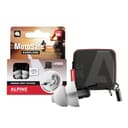
  • Alpine MotoSafe Tour earplugs

    Alpine MotoSafe Tour earplugs

    Wind noise — the fix that does more than a quieter helmet does

    Filtered riding plugs rather than foam: the point is to cut the wind roar without deleting the engine, your intercom and the traffic around you. This is Alpine's road/touring filter rather than the Race version, which is the right way round for all-day riding.

  • Close detail of a motorcycle helmet visor and shell

    Pinlock anti-fog insert

    A visor that grays over at every stoplight

    The one fix that solves fogging rather than delaying it — a second lens that seals inside the shield like double glazing. Inserts are made per shield, so this link is a search: check your visor for the two small Pinlock pins, then match the insert to your exact helmet and shield model.

  • ROCKBROS retractable helmet lock (2-pack)

    ROCKBROS retractable helmet lock (2-pack)

    Carrying your lid into every shop because there's nowhere to leave it

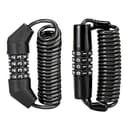
    A retractable cable with a 4-digit combination that loops the chin bar to the bike. It is a deterrent, not a vault — enough to stop the opportunist walk-past, which is the theft a commuter actually faces.

    $17.99 · View on Amazon

    Price as of November 22, 2026. #ad How we’re funded

Frequently asked questions

Is a modular helmet actually better for touring than a full-face?

For most tourers, yes, for reasons that have nothing to do with protection. You can lift the chin bar at a fuel stop, in a queue, or while reading a sign, without taking the helmet off and putting it back on twenty times a day — and a drop-down sun visor means you are not carrying a second shield for the afternoon. The honest counter-argument is weight and the chin-bar mechanism: the Neotec 3 is a published 1,700 g, and our modular-safety guide goes through what the hinge does and does not change. If you want the lightest possible head, a full-face is still lighter, and our touring helmet ranking has both.

Do I need a laminate jacket, or is a liner jacket fine for touring?

Either works; what matters is that you are not packing the rain layer separately. A laminate puts the membrane in the outer shell, so the jacket itself does not soak and it dries fast — the trade is that it is always that jacket. A detachable system, like the hydratex 3L layer on the jacket picked here, lets you strip back to a vented shell in summer, but worn underneath it keeps you dry while the outer fabric soaks up water and gets heavy. For a tourer crossing climates in one day, the detachable system is usually the better compromise. Our leather-vs-textile page covers the chassis question underneath all of this.

Why is there no boot pick on this page?

Because we do not rank one that belongs here, and we would rather say so. The only two boots in our registry are short sport boots — neither is waterproof and neither is insulated, which rules both out of a touring list where a wet foot at hour three ends the day. What the slot needs is a tall, waterproof, walkable touring boot. Until we have specced one properly, the page leaves it empty rather than handing you a pick that does not deserve it.

Do I need mesh comms or is Bluetooth enough for touring?

If you tour alone or two-up, Bluetooth is genuinely enough and you can save a lot of money — our Bluetooth-vs-mesh page is the whole argument. Mesh earns its price in a group of three or more, because a mesh network re-forms itself as riders drop back and catch up, where a Bluetooth chain drops out and has to be re-paired at the next stop. The Packtalk Edge picked here publishes 2nd-generation DMC mesh for up to 31 riders, 40 mm JBL speakers, IP67 and about 13 hours of talk time. That battery figure is the one to check against your riding day: Sena's units publish 16 to 18 hours.

Does my jacket already have a back protector?

Probably not, and this is the most common gap in a touring kit. Most jackets — including the Class AA one picked here — ship with shoulder and elbow armor and an empty back-protector pocket, which is why this page treats the back protector as its own layer rather than assuming it away. Check your own jacket: if the label names a shoulder and elbow clause but the back is described as a "pocket", "compartment" or "prepared for", there is foam in there at best. Our CE Level 2 ranking covers which makers fill it for you.

How much should a full touring kit cost?

There is a wide honest range and we are not going to print a single number, because every price on this page is a live Amazon pull that moves. What we can say is how the shape of the spend works: the helmet and the jacket are roughly half of it, the comms unit is the piece most people under-budget, and the back protector is the piece most people forget entirely. If the full kit is out of reach, the sensible order is to buy the helmet and gloves at the level you want and take the budget route on the jacket — the Scorpion EXO Optima here is a genuinely seam-sealed waterproof laminate with a thermal liner. Our page on how much to spend on gear puts honest brackets against each layer.

Sources

  • Shoei Helmets (USA) — Shoei's official US site — model lineup and published specifications (accessed July 19, 2026)
  • KLIM — The Idaho adventure-gear maker behind the Krios Pro helmet, the GORE-TEX jackets and gloves and the K Fifty 2 riding jean — and the maker that prints the most complete certification clauses of anyone we track (accessed October 17, 2026)
  • Klim — Vanguard GTX Short Glove — The top pick's own maker page: "CE CERTIFIED TO EN13594:2015, KP LEVEL 1", "GORE-TEX + GORE GRIP TECHNOLOGY", "GOAT LEATHER PALM AND FINGERS", "5MM XRD IMPACT PROTECTION FOAM IN PALM AND KNUCKLE PADS", "VELCRO + ZIPPER DUAL-ENTRY CUFF SYSTEM", "UNDER CUFF SHORT DESIGN", "INDEX FINGER VISOR WIPER" — and the line the whole ranking turns on: "Designed specifically for the touring rider, with neither venting nor insulation, these temperature neutral gloves maintain comfort across a wide range of conditions". No weight published (accessed October 7, 2026)
  • GORE-TEX — Grip gloves technology — Gore's own description of a bonded glove membrane: "The usual loose layers within gloves are tightly bonded together for a layered construction that eliminates friction and movement between layers" (accessed September 21, 2026)
  • Alpinestars — The maker behind most of our gear picks — published materials, CE armor and garment certifications (accessed July 19, 2026)
  • Alpinestars — Nucleon Flex Pro Protection Vest — EN 1621-2:2014 Level 2 back and EN 1621-3:2018 Level 2 divided chest, both marked T+ and T- for high and low temperature testing (accessed September 10, 2026)
  • Cardo Systems — Cardo's official site — Packtalk mesh intercom specifications (accessed July 19, 2026)
  • Cardo Systems - Packtalk Edge — Re-read for the Edge vs Neo comparison: "Air Mount. Patented magnetic mount. Simple and secure.", "40mm Sound by JBL speakers", "2nd Generation DMC", "Connect up to 31 riders", "Bluetooth 5.2", "Range of up to 1.6km/1 mi", "IP67 Waterproof", "Natural Voice Operation", a "robust USB Type-C port" with "2 hours of talk time after 20 minutes of charge", an "extended 3-year warranty" and a listed price of $439.95 (accessed October 7, 2026)
  • UNECE — Vehicle Regulations — The UN body behind ECE Regulation 22.06, the European helmet standard (accessed July 19, 2026)

Keep reading