The Lid Test

HJC Alternatives: What to Buy Instead

HJC sells composite shells and drop-down sun visors at prices the premium brands do not touch. Here is what HJC actually publishes, the six helmets we rank that beat it on certification, weight or money — and the one HJC that nothing under $900 replaces.

By Stephen V.Last verified How we compare

The verdict

If you are shopping away from the HJC RPHA 11 Pro, the answer is the Shoei RF-1400: the same kind of hand-laid composite shell, built in multiple shell sizes, and it adds the Snell M2025 rating no HJC in our registry publishes. If weight is the reason, the AGV K6 S is 162 g lighter than the lightest HJC and carries ECE 22.06. The budget pick is the LS2 Stream II, which gives you HJC’s two signature features — a drop-down sun visor and a Pinlock-ready shield — plus ECE 22.06, for under $150. One caveat stated up front: if what you want is the RPHA 91, a composite modular with a sun visor at its price, the next one we rank costs roughly $390 more. All prices were pulled live from Amazon and last checked November 22, 2026.

HJC is the brand people shop to on value and shop away from on certification, and both halves of that are visible in what the company publishes. This page handles the second half without pretending the first one is not real.

Built the same way as our Shoei, Arai and AGV substitution pages: take what HJC actually publishes as the yardstick, then go through the registry for the helmets that match each claim. HJC publishes composite shell layups — PIM+ carbon, fiberglass and aramid on the RPHA 11 Pro at 1,417 g, and P.I.M. EVO carbon, carbon-glass and linen on the RPHA 91 — at prices the premium brands charge for polycarbonate. It publishes drop-down sun visors, Pinlock-ready shields, and SMART HJC Bluetooth channels designed into the shell.

What HJC does not publish is the interesting part. No Snell rating on any HJC we rank. The RPHA 11 Pro publishes ECE 22.05, the superseded version of the standard. And the RPHA 91’s US listing publishes no ECE rating at all — DOT only, on a $545 composite modular. Every price here comes from a daily Amazon pull and carries its own date on the button.

How this is funded: we earn a commission if you buy through our links, at no extra cost to you. It never changes which helmet we recommend, and we’ll tell you plainly when a cheaper or lighter one is the better buy. Full disclosure.

Quick picks

Ranked on our spec score — certification, weight, features and value. Select a row to jump to the full write-up. We have not tested these helmets; here is exactly how we compare them instead.

#HelmetBest forCertificationsWeightShellOur scorePrice
1
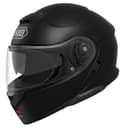
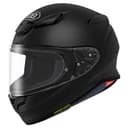
Shoei RF-1400

Shoei RF-1400

The full-face benchmark most riders are quietly measuring everything else against. Snell M2025 plus DOT, a hand-laid AIM+ composite shell, and Shoei's quietest, most refined shield system — it earns the price on the spec sheet, not the badge.

Closest like-for-likeDOT, Snell M20251651 gAIM+ multi-composite (interwoven fiberglass and organic fibers)9.3
$499.99 · View on Amazon

$549.999% off

Price as of November 22, 2026. #ad How we’re funded

2
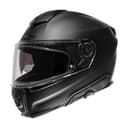
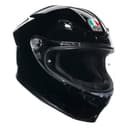
AGV K6 S

AGV K6 S

A carbon-aramid shell at roughly 1,255 g makes the K6 S one of the lightest DOT-and-ECE-22.06 full-faces you can buy, with a genuinely wide 190-degree eye port. If you notice helmet weight on a long day, this is the short list.

Lighter, and ECE 22.06DOT, ECE 22.061255 gCarbon-aramid fiber9.1
$639.00 · View on Amazon

Price as of November 22, 2026. #ad How we’re funded

3
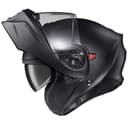
Shoei Neotec 3

Shoei Neotec 3

The touring modular the class is measured against. DOT and ECE 22.06, an AIM composite shell, a bigger QSV-2 sun visor and a Defogger-equipped shield — plus the cleanest integration for Shoei's own comms system. It is expensive and worth understanding why.

The RPHA 91 alternativeDOT, ECE 22.061700 gAIM composite9.2
$935.00 · View on Amazon

Price as of November 22, 2026. #ad How we’re funded

4
Schuberth S3

Schuberth S3

Schuberth's sport-touring full-face, and the German quiet-and-integration argument in its purest form: a carbon-reinforced DFP fiberglass shell, a Pinlock 120 already fitted to the clear shield, and speakers plus antennas laid into the shell so a comms unit plugs in rather than clamps on. What the US listing does not give you is a certification above DOT, or a published weight to rank it by.

Sun visor and comms, in a full-faceDOTNot publishedDFP (Direct Fiber Processing) glass fiber reinforced with carbon fiber8.6
$599.00 · View on Amazon

Price as of November 22, 2026. #ad How we’re funded

5
Scorpion EXO-GT930 Transformer

Scorpion EXO-GT930 Transformer

The trick here is a genuinely removable chin bar — the GT930 runs as a full-face or, with the bar off, a proper open-face, which few modulars actually allow. Add a sun visor and a sub-$300 price and it's the value convertible.

Cheaper flip-front with a sun visorDOT, ECE 22.051814 gAdvanced polycarbonate7.9
$279.95 · View on Amazon

Price as of November 22, 2026. #ad How we’re funded

6
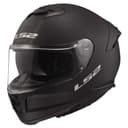
LS2 Stream II

LS2 Stream II

The value pick that punches above its ~$150 price: DOT and ECE 22.06 certification, a built-in drop-down sun visor, and LS2's AREM rotational-energy management — features usually reserved for helmets costing twice as much.

Budget pick: sun visor and ECE 22.06DOT, ECE 22.061550 gKinetic Polymer Alloy (KPA)8.2
$149.98 · View on Amazon

Price as of November 22, 2026. #ad How we’re funded

Specs read from each manufacturer or retailer listing on the date shown in that helmet’s write-up below; “Not published” means the maker does not state that figure. Prices are pulled live from Amazon and were last checked November 22, 2026.

The picks in full

#1Closest like-for-likeOur score9.3

Shoei RF-1400

The full-face benchmark most riders are quietly measuring everything else against. Snell M2025 plus DOT, a hand-laid AIM+ composite shell, and Shoei's quietest, most refined shield system — it earns the price on the spec sheet, not the badge.

Strengths

  • Carries both DOT and Snell M2025 — the stricter Snell impact protocol on top of the US legal minimum
  • AIM+ multi-composite shell in multiple sizes keeps the fit true and the weight sensible for a fiberglass lid
  • CWR-F2 shield and vortex generators are aimed squarely at wind noise, the thing most riders complain about

Trade-offs

  • Premium money — you're paying for the shell and finish, not gadgets
  • No drop-down internal sun visor (Shoei's design choice; you swap to a tinted shield instead)
CertificationsDOT, Snell M2025
Weight1651 g
ShellAIM+ multi-composite (interwoven fiberglass and organic fibers)
Head shapeIntermediate oval
SizesXS-3XL
Internal sun visorNo
Pinlock-readyYes

Notable. CWR-F2 shield with vortex generators; 3D Max-Dry liner; emergency quick-release cheek pads

Specs read from the manufacturer / retailer listing, on July 19, 2026. “Not published” means the maker does not state that figure.

#2Lighter, and ECE 22.06Our score9.1

AGV K6 S

A carbon-aramid shell at roughly 1,255 g makes the K6 S one of the lightest DOT-and-ECE-22.06 full-faces you can buy, with a genuinely wide 190-degree eye port. If you notice helmet weight on a long day, this is the short list.

Strengths

  • Carbon-aramid shell — AGV's published 1,255 g is class-leadingly light for the segment
  • Certified to ECE 22.06, the newest standard with rotational and multi-point impact testing
  • Ultravision visor gives a 190-degree horizontal field of view and ships Pinlock-ready

Trade-offs

  • No internal sun visor — a tinted shield is a separate purchase
  • Sport-leaning fit and shell shape suit an intermediate-oval head best
CertificationsDOT, ECE 22.06
Weight1255 g
ShellCarbon-aramid fiber
Head shapeIntermediate oval
SizesXS-2XL
Internal sun visorNo
Pinlock-readyYes

Notable. 190-degree Ultravision visor (Optical Class 1); 5-density EPS; ARK comms-ready

Specs read from the manufacturer / retailer listing, on July 19, 2026. “Not published” means the maker does not state that figure.

#3The RPHA 91 alternativeOur score9.2

Shoei Neotec 3

The touring modular the class is measured against. DOT and ECE 22.06, an AIM composite shell, a bigger QSV-2 sun visor and a Defogger-equipped shield — plus the cleanest integration for Shoei's own comms system. It is expensive and worth understanding why.

Strengths

  • DOT and ECE 22.06 in a composite AIM shell — not the polycarbonate most modulars use
  • QSV-2 internal sun visor is larger than the old QSV-1, and the CNS-3C shield is Pinlock-ready with a defogger
  • Purpose-built channel for the SRL3/COMLINK comms unit — no bulky external clamp

Trade-offs

  • The most expensive modular we cover — flagship money for a flip-up
  • Comms unit is a separate, Shoei-specific purchase
CertificationsDOT, ECE 22.06
Weight1700 g
ShellAIM composite
Head shapeIntermediate oval
SizesXS-2XL
Internal sun visorYes
Pinlock-readyYes

Notable. QSV-2 sun visor; CNS-3C Pinlock shield with defogger; SRL3/COMLINK-ready

Specs read from the manufacturer / retailer listing, on July 19, 2026. “Not published” means the maker does not state that figure.

#4Sun visor and comms, in a full-faceOur score8.6

Schuberth S3

Schuberth's sport-touring full-face, and the German quiet-and-integration argument in its purest form: a carbon-reinforced DFP fiberglass shell, a Pinlock 120 already fitted to the clear shield, and speakers plus antennas laid into the shell so a comms unit plugs in rather than clamps on. What the US listing does not give you is a certification above DOT, or a published weight to rank it by.

Strengths

  • DFP (Direct Fiber Processing) glass fiber reinforced with carbon fiber — a genuine composite shell, not the polycarbonate common even at this price
  • Ships with a Pinlock 120 anti-fog lens already installed in the clear shield, rather than merely being Pinlock-ready
  • Speakers and integrated antennas are built into the shell for a plug-and-play Bluetooth system, so nothing bolts to the outside
  • Two shell sizes cover seven head sizes from 52 to 65 cm, with a V-lock drop-down sun visor as standard

Trade-offs

  • Neither Schuberth's US listing nor RevZilla publishes a weight, so it cannot be ranked against the composites we do have figures for
  • The US listing states DOT only — no ECE 22.06 and no Snell for the helmet sold here, even though Schuberth's own S3 data sheet describes the model as its first ECE 22.06 full-face
  • Premium money for a certification stack that budget Snell helmets match on paper
CertificationsDOT
WeightNot published
ShellDFP (Direct Fiber Processing) glass fiber reinforced with carbon fiber
Head shapeIntermediate oval
SizesXS-3XL (52-65 cm)
Internal sun visorYes
Pinlock-readyYes

Notable. Pinlock 120 preinstalled; V-lock drop-down sun visor; in-shell speakers and antennas; filtered double chin intake; back spoiler air extractor

Specs read from the manufacturer / retailer listing, on August 30, 2026. “Not published” means the maker does not state that figure.

#5Cheaper flip-front with a sun visorOur score7.9

Scorpion EXO-GT930 Transformer

The trick here is a genuinely removable chin bar — the GT930 runs as a full-face or, with the bar off, a proper open-face, which few modulars actually allow. Add a sun visor and a sub-$300 price and it's the value convertible.

Strengths

  • Removable chin bar converts between full-face and open-face configurations
  • SpeedView drop-down internal sun visor and EXO-COM Bluetooth-ready pockets
  • DOT and ECE 22.05 certified at a budget price; includes a detachable peak

Trade-offs

  • Certified to the older ECE 22.05, not 22.06
  • Polycarbonate shell is heavy (~1,814 g) — one of the weightier lids here
CertificationsDOT, ECE 22.05
Weight1814 g
ShellAdvanced polycarbonate
Head shapeIntermediate oval
SizesXS-3XL
Internal sun visorYes
Pinlock-readyNo

Notable. Removable chin bar (full-face to open-face); SpeedView sun visor; EXO-COM-ready

Specs read from the manufacturer / retailer listing, on July 19, 2026. “Not published” means the maker does not state that figure.

#6Budget pick: sun visor and ECE 22.06Our score8.2

LS2 Stream II

The value pick that punches above its ~$150 price: DOT and ECE 22.06 certification, a built-in drop-down sun visor, and LS2's AREM rotational-energy management — features usually reserved for helmets costing twice as much.

Strengths

  • ECE 22.06 certified at a budget price — the newest standard, rarely found this cheap
  • Built-in drop-down sun shield, which most premium full-faces here don't have
  • Pinlock-ready face shield and a rear spoiler with flow-through ventilation

Trade-offs

  • Kinetic Polymer Alloy shell is heavier and less premium than a composite lid
  • Fit and finish are good for the price, not flagship-grade
CertificationsDOT, ECE 22.06
Weight1550 g
ShellKinetic Polymer Alloy (KPA)
Head shapeIntermediate oval
SizesXS-3XL
Internal sun visorYes
Pinlock-readyYes

Notable. AREM rotational-energy management; drop-down sun visor; Pinlock-ready shield

Specs read from the manufacturer / retailer listing, on July 19, 2026. “Not published” means the maker does not state that figure.

The yardstick: what HJC publishes

Three HJC helmets sit in our registry and they define the brand fairly. The RPHA 11 Pro is a PIM+ carbon, fiberglass and aramid hybrid at a published 1,417 g with ACS full airflow, an enlarged eye port and a RapidFire II tool-less shield. The RPHA 91 is a P.I.M. EVO carbon, carbon-glass and linen modular at 1,742 g with a drop-down sun visor, a Pinlock-ready shield and a SMART HJC Bluetooth channel. The IS-Cruiser is a 1,197 g half helmet with an integrated HJ-V4 light-smoke sun shield.

The pattern is consistent and it is a real engineering position: composite shells and integrated sun visors at a price point where competitors sell polycarbonate. The counter-pattern is just as consistent. No Snell on any of them. ECE 22.05 on the one that publishes ECE, which is the superseded standard. And on the RPHA 91 — a $545 helmet — a US listing that publishes DOT and nothing else.

The claim nothing cheaper matches

A composite modular with a sun visor at $545. We went looking for a substitute and there is not one below roughly $900. The Shoei Neotec 3 is the next composite-shell modular we rank, at $935, and it is a better helmet in almost every dimension — AIM composite, DOT plus ECE 22.06, the QSV-2 sun visor, an SRL3 comms channel rather than a clamp. It also costs roughly $390 more. Below the RPHA 91, every modular we rank is polycarbonate.

So if the RPHA 91 is what you were looking at, the honest advice is that you are already at the value point, and the question is whether you would rather spend down to a polycarbonate flip-front or up to a Shoei. Our modular ranking lays out both directions.

Match the substitute to the reason

You want a composite full-face with a stricter certification: the Shoei RF-1400. Hand-laid AIM+ multi-composite, multiple shell sizes, a CWR-F2 shield with vortex generators, emergency quick-release cheek pads, DOT plus Snell M2025, and a size run to 3XL. It is the highest-scoring full-face in our registry at 9.3. It is 234 g heavier than the RPHA 11 Pro and it costs more.

You want it lighter, and current: the AGV K6 S at a published 1,255 g in a carbon-aramid shell with a five-density EPS, a 190-degree Optical Class 1 visor, and DOT plus ECE 22.06 — the current version of the standard the RPHA 11 Pro publishes in its older form. It has no sun visor and stops at 2XL. See also our head-to-head on these two.

You want the RPHA 91’s job done properly: the Shoei Neotec 3. AIM composite, DOT plus ECE 22.06, the QSV-2 drop-down sun visor, a CNS-3C Pinlock shield with a defogger, and an SRL3 comms system that lives in a designed channel. It is the quietest, best-integrated modular we rank and it costs nearly twice the HJC.

You want a sun visor and comms without a modular: the Schuberth S3. A DFP glass-fiber shell reinforced with carbon, a V-lock sun visor, a preinstalled Pinlock 120, in-shell speakers and antennas, a filtered double chin intake and a rear spoiler extractor. It is the full-face answer to the RPHA 91’s feature list.

You want a flip front for much less: the Scorpion EXO-GT930 Transformer at $279.95 — and it does something the RPHA 91 does not, because the chin bar comes off entirely rather than merely lifting, so it runs as a genuine open-face. It publishes ECE 22.05 in advanced polycarbonate and weighs 1,814 g, which is the trade.

The budget pick: the LS2 Stream II. For under $150 it delivers both of HJC’s signature features — a drop-down sun visor and a Pinlock-ready shield — and adds AREM rotational-energy management and ECE 22.06, the current standard, which no HJC we rank publishes. Its KPA polymer shell is not a composite and it weighs 1,550 g. On features per dollar, it is the most direct challenge to HJC’s whole pitch.

Where HJC still wins

Two places, and both are real. The RPHA 11 Pro is the second-lightest helmet in our registry at 1,417 g, and only one helmet we rank beats it. The RPHA 91 is the only composite-shell modular with a sun visor we can find under $600, in a market where the next one costs $935. Neither of those is marketing; both are published figures. Our HJC brand page covers the range, including the RPHA 12 that now sits above the 11 Pro.

The honest caution is narrower than “HJC is not safe”, which would be nonsense — every helmet named here meets DOT. It is that HJC publishes less of its certification story than its competitors do at the same price, and on a site that ranks on published facts, that costs it positions. Our helmet ratings guide explains why DOT, ECE 22.06 and Snell are three different questions rather than three grades of the same one.
Frequently asked questions

What is the closest alternative to the HJC RPHA 11 Pro?

The Shoei RF-1400. Both are hand-laid composite full-face helmets built around a wide eye port and a tool-less shield, both are Pinlock-ready, and both are aimed at the same sport-touring rider. The Shoei adds Snell M2025 on top of DOT, which no HJC in our registry carries, and extends to 3XL. The HJC's advantage is weight — it publishes 1,417 g against the Shoei's 1,651 g — and historically, price. But at our last price refresh the RPHA 11 Pro carried no live price at all, which is why it is not a pick on any price-gated page we publish.

Is there a cheaper alternative to the HJC RPHA 91?

Cheaper, yes. Equivalent, no — and this is the one place HJC genuinely cannot be substituted in our registry. The RPHA 91 is a composite-shell modular (P.I.M. EVO carbon, carbon-glass and linen) with a drop-down sun visor and a Pinlock-ready shield, at $545 at our last check. The next composite-shell modular we rank is the Shoei Neotec 3 at $935. Below the RPHA 91 the modulars are polycarbonate: the Scorpion EXO-GT930 Transformer at $279.95 and the Sena Outrush R at $359. If you want composite and a flip front, the RPHA 91 is the cheapest route we know of.

Does HJC make a Snell-rated helmet?

Not among the HJC helmets we rank. The RPHA 11 Pro publishes DOT and ECE 22.05; the RPHA 91 and IS-Cruiser publish DOT. If a current Snell rating is what you are after, the Scorpion EXO-R430 carries Snell M2025 for under $200, the Shoei RF-1400 and both Arais carry Snell M2025, and the Shoei X-Fifteen carries Snell M2025R. Our Snell-approved ranking lists every one we can verify. That said, Snell is not a ranking of safety — it is a different test protocol from ECE, and our ratings guide explains what each one actually measures.

Is a lighter helmet than the HJC RPHA 11 Pro available?

One, and it is the AGV K6 S at a published 1,255 g — 162 g less. After that the gap opens up fast: the next lightest helmet we can price is the Arai Contour-X at 1,515 g, which is nearly 100 g heavier than the HJC. The RPHA 11 Pro is genuinely one of the lightest composite full-face helmets on the market and we are not going to pretend otherwise. If weight is the whole brief, the choice is between it and the AGV.

I want a sun visor. Do I have to buy HJC?

No — the drop-down sun visor is the most widely available feature in this comparison, not a scarce one. The LS2 Stream II has one at under $150 with ECE 22.06. The Scorpion EXO-GT930 Transformer has one and converts between full-face and open-face. The Schuberth S3 has a V-lock sun visor plus a preinstalled Pinlock 120 and in-shell speakers. The Shoei Neotec 3 has the QSV-2. Sixteen of the helmets we list publish a drop-down sun visor; our sun-visor ranking has the full set.

Is HJC a good brand?

On what it publishes, yes — with one consistent gap. HJC is the only maker in our registry selling a genuine composite shell in a modular with a sun visor under $600, and its PIM+ and P.I.M. EVO layups are real multi-fiber constructions rather than reinforced polycarbonate. Its gap is certification disclosure: no Snell anywhere, ECE 22.05 rather than 22.06 on the RPHA 11 Pro, and no ECE at all on the RPHA 91's US listing. If you buy HJC for the shell and the features, you are getting what you paid for. If you buy for the certification stack, buy elsewhere.

Sources

Keep reading